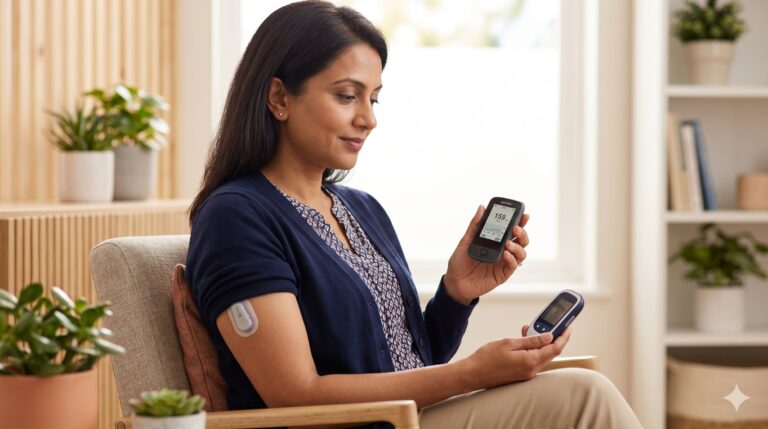

Understanding diabetes blood test results can be confusing. This guide explains how HbA1c, fasting glucose, and oral glucose tolerance tests are used to diagnose diabetes and prediabetes. Learn what the numbers mean, how ranges are …

How is diabetes diagnosed? This post mainly addresses Type 2 Diabetes
If you have had a blood test and your GP has mentioned your results, you may be wondering: how is diabetes diagnosed, and what do these numbers actually mean? It is not always obvious, and this post explains it clearly.
Understanding how diabetes is diagnosed matters because catching it early — or spotting prediabetes before it progresses — gives you the best chance of taking action in time.
This post explains how diabetes and prediabetes are diagnosed, what the tests involve, and how to make sense of your results.
The main diagnostic test: HbA1c
The most commonly used test for diagnosing diabetes in the UK is the HbA1c. This is a blood test that reflects your average blood sugar level over the past two to three months.
Unlike a standard blood sugar test that gives you a snapshot of one moment, the HbA1c gives a longer view. It measures how much glucose has attached to your red blood cells over time.
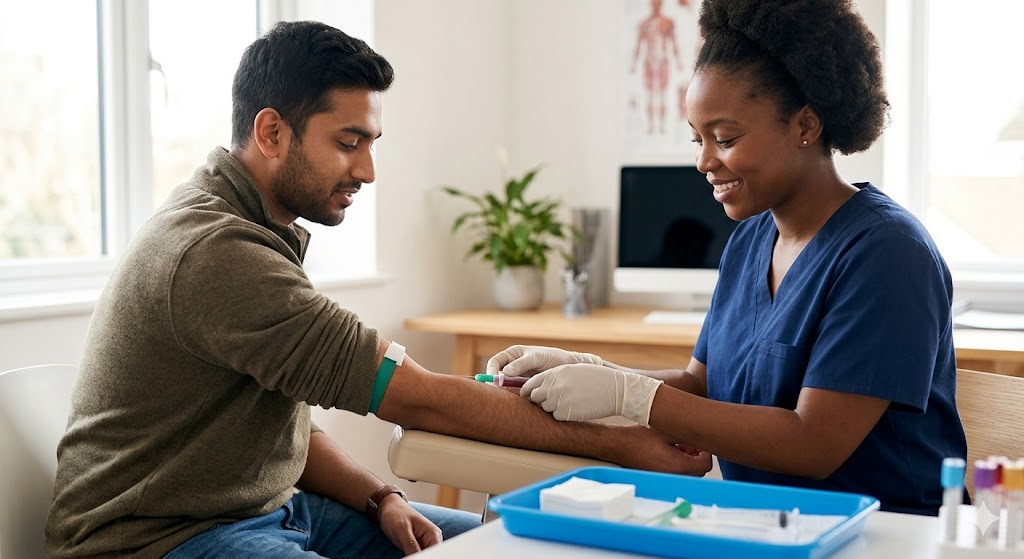
The results are reported in mmol/mol. Here is how the ranges break down:
- Below 39 mmol/mol: normal range
- 40 to 47 mmol/mol: prediabetes (sometimes called non-diabetic hyperglycaemia)
- 48 mmol/mol and above: type 2 diabetes
A single HbA1c result in the diabetes range is usually enough to make a diagnosis if you have symptoms.
If you have no symptoms, a second test is needed to confirm it.
Fasting blood glucose
Another method used when asking how diabetes is diagnosed is the fasting plasma glucose test.
This requires you to fast overnight before having blood taken. It measures the amount of glucose in your blood at that single point in time.
- Below 5.5 mmol/L: normal
- 5.5 to 6.9 mmol/L: prediabetes range
- 7.0 mmol/L or above: diabetes
This test is less commonly used as a primary diagnostic tool in the UK than HbA1c, but it is still used in certain clinical situations and for monitoring.
Oral glucose tolerance test
The oral glucose tolerance test is mainly used in pregnancy to check for gestational diabetes or when the diagnosis is unclear from other tests. You drink a sugary solution, and your blood sugar is measured before and two hours after.
A result of 11.1 mmol/L or above at two hours confirms diabetes.
What affects your results?
A few things are worth knowing. which can affect the diagnosis of Type 2 diabetes, and HbA1c can be inaccurate in people with certain conditions affecting red blood cells, including
- Iron or B12 deficiency anaemia, Pregnancy
- chronic kidney disease,
- Sickle cell trait, thalassaemia or haemolytic anaemia. In these cases, alternative tests may be used.
Recent illness, significant stress, or certain medications can also temporarily affect blood sugar readings. If your result seems unexpected, it is always worth discussing the full picture with a doctor.
What happens next?
Knowing how diabetes is diagnosed is only the first step. A diagnosis of diabetes or prediabetes is not just a number. It is a starting point for understanding what is happening in your body and what can be done about it. A clinician with a special interest in diabetes can map out your health trajectory and devise a management plan.
A single blood result, on its own, does not tell you about your risk of complications, how long the condition may have been developing, or which interventions are most appropriate for you. That requires a proper clinical conversation.
The Key Points
- The question of how is diabetes diagnosed in the UK is answered primarily through the HbA1c blood test, which reflects your average blood sugar over two to three months.
- A fasting plasma glucose test is another option, measuring blood sugar at a single point after an overnight fast.
- The oral glucose tolerance test is used mainly in pregnancy or when other results are unclear.
- Certain health conditions and medications can affect the accuracy of blood sugar tests, so it is worth discussing unexpected results with a doctor.
- A diagnosis is just the starting point, and a proper clinical conversation is needed to understand your full picture and next steps.
Author: Dr Imran Mughal, Private Specialist GP
Website: www.imclinic.co.uk
Book a consultation: https://notes.thanksdoc.co.uk/book/clinic/im-clinic
References
American Diabetes Association. Standards of Care in Diabetes 2025. Diabetes Care. 2025. https://diabetesjournals.org/care
NHS. Diagnosis: Type 2 Diabetes. 2023. https://www.nhs.uk/conditions/type-2-diabetes/diagnosis
Diabetes UK. Diagnosing Diabetes. 2024. https://www.diabetes.org.uk
NICE. Type 2 Diabetes in Adults: Management. NG28. 2022. https://www.nice.org.uk/guidance/ng28