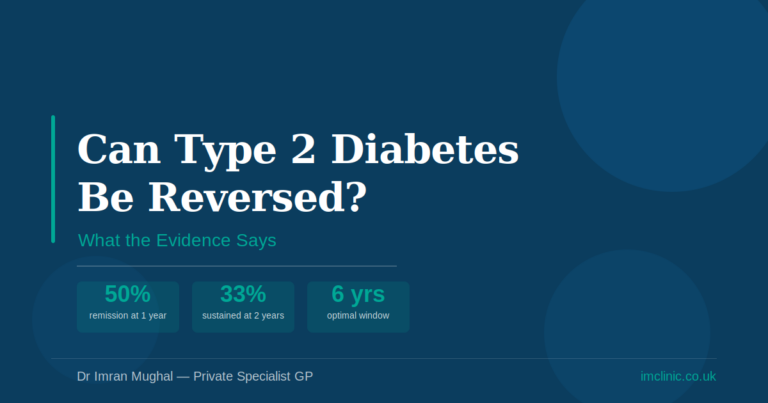

Type 2 diabetes stems from insulin resistance influenced by genetics, lifestyle, and environment. Major risks include abdominal fat, inactivity, and poor sleep, alongside biological factors like family history and ethnicity. Recognizing these variables, including prediabetes …

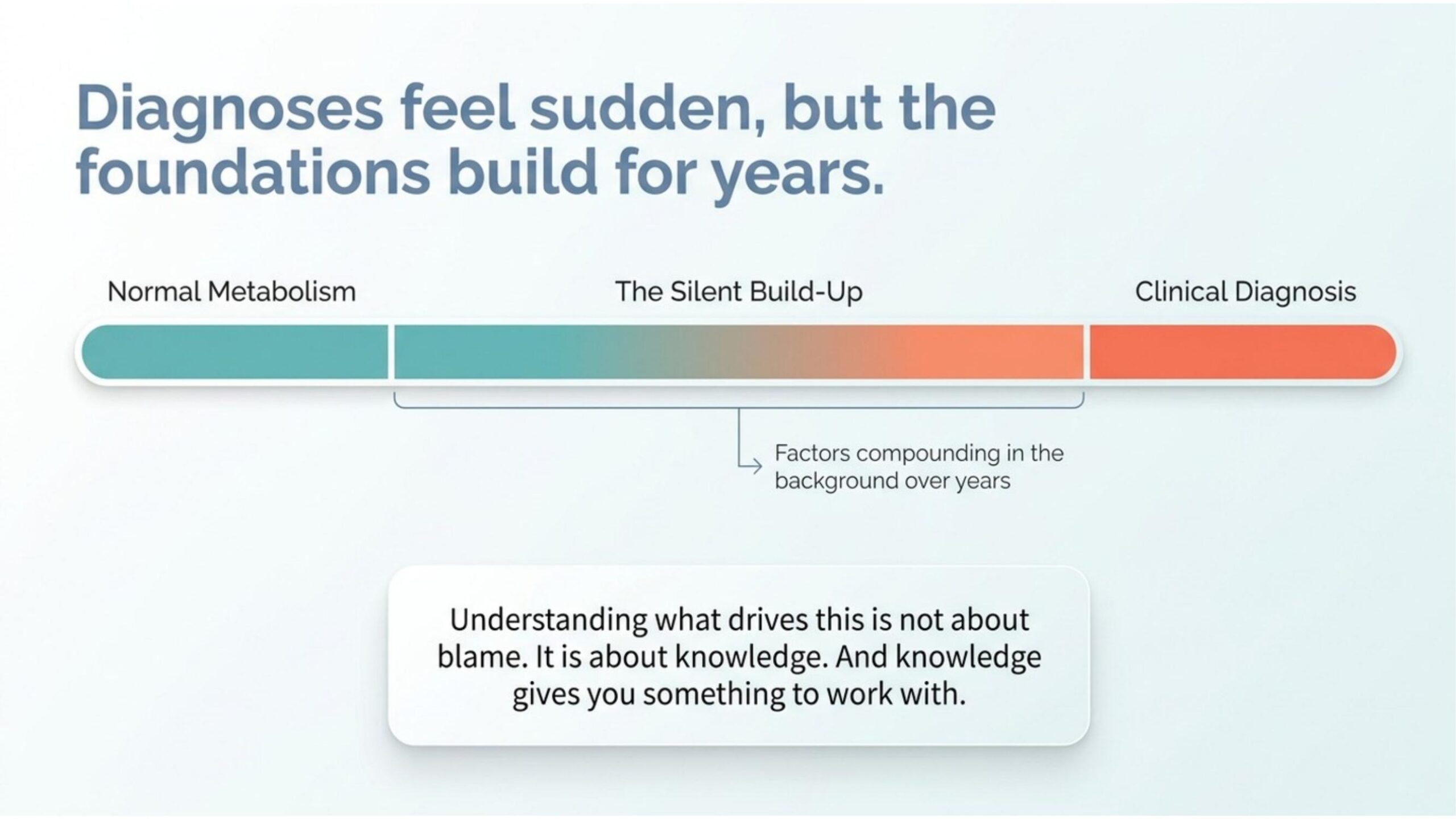
Type 2 diabetes risk factors are something every adult should understand — not just those already diagnosed. In most cases, type 2 diabetes does not appear from nowhere. The foundations build quietly in the background, sometimes for years, before a blood test reveals a problem.
Knowing what drives it gives you something to work with.
It is not simply about sugar
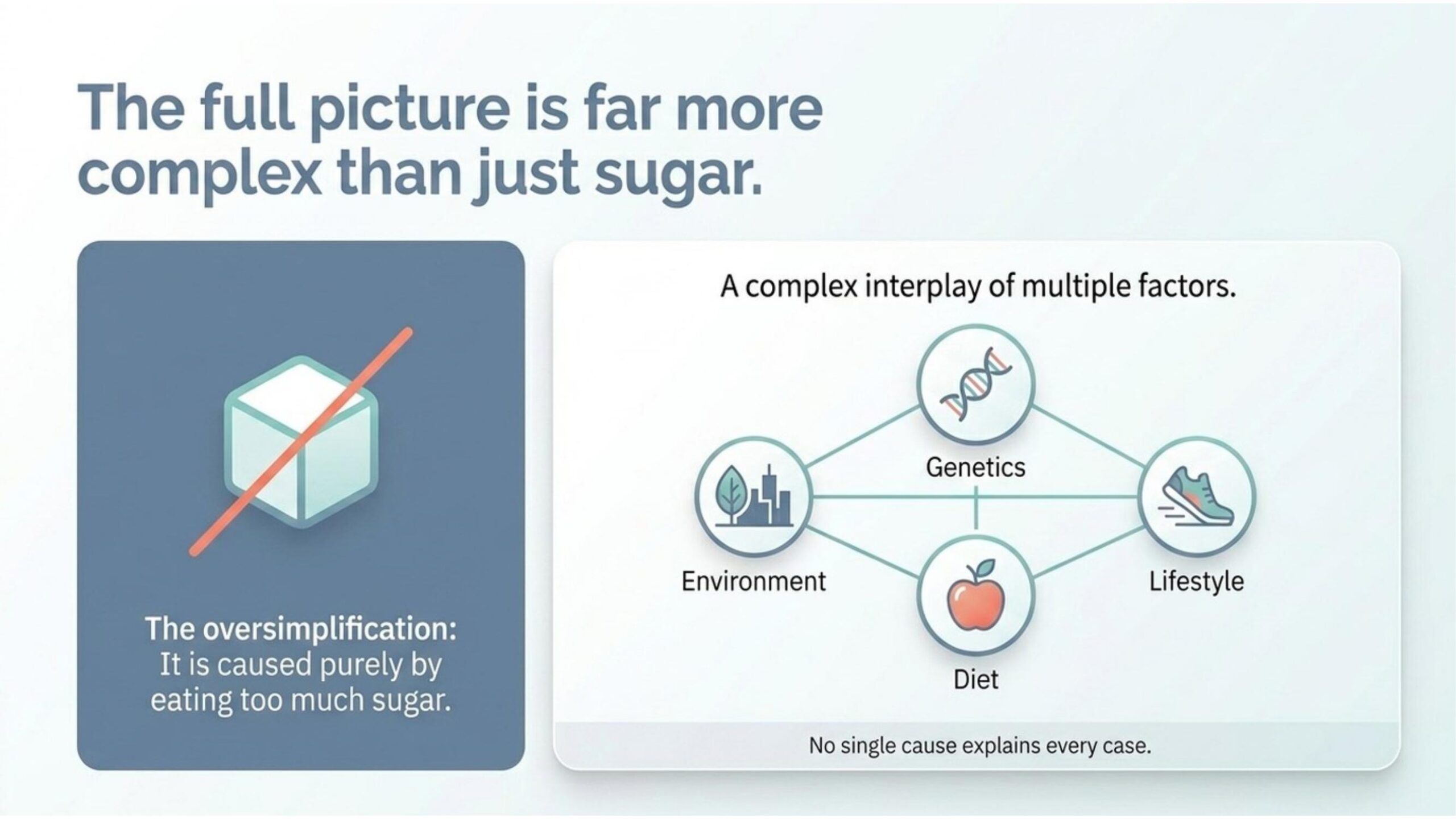
One of the most common misconceptions about type 2 diabetes is that sugar causes it. That is an oversimplification. Sugar plays a role, but the full picture is far more complex.
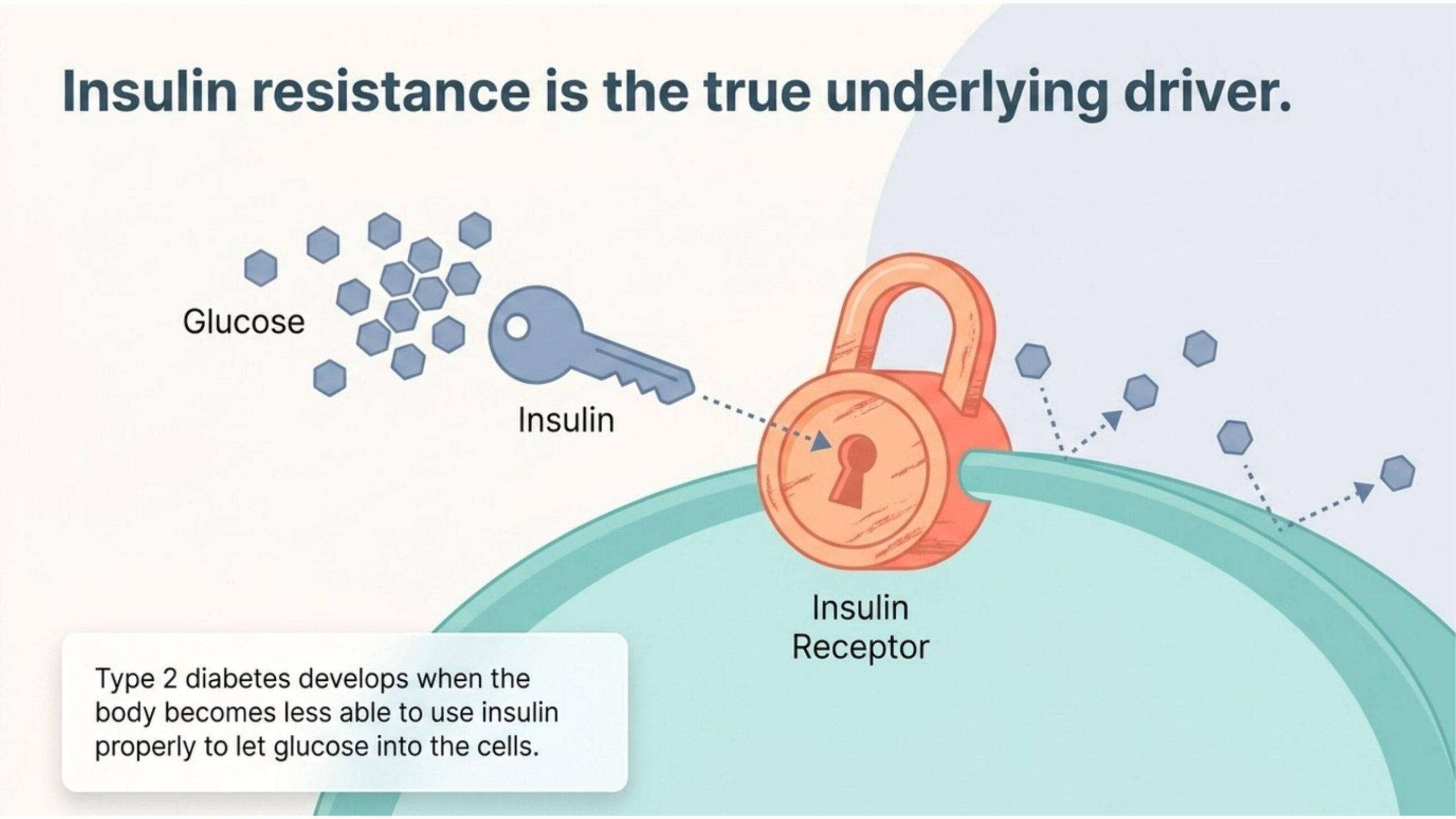
Type 2 diabetes develops when the body becomes less able to use insulin properly. That process is called insulin resistance. It is driven by a combination of genetics, lifestyle, diet and environment. No single cause explains every case.
Insulin resistance is the true underlying driver
Most people focus on blood sugar levels. But insulin resistance is what comes first. When your cells stop responding properly to insulin, your body has to produce more and more of it just to keep blood sugar stable. Over time, the system becomes overwhelmed — and that is when type 2 diabetes develops.
The key type 2 diabetes risk factors
Understanding your personal risk profile matters. These are the factors most strongly linked to developing the condition:
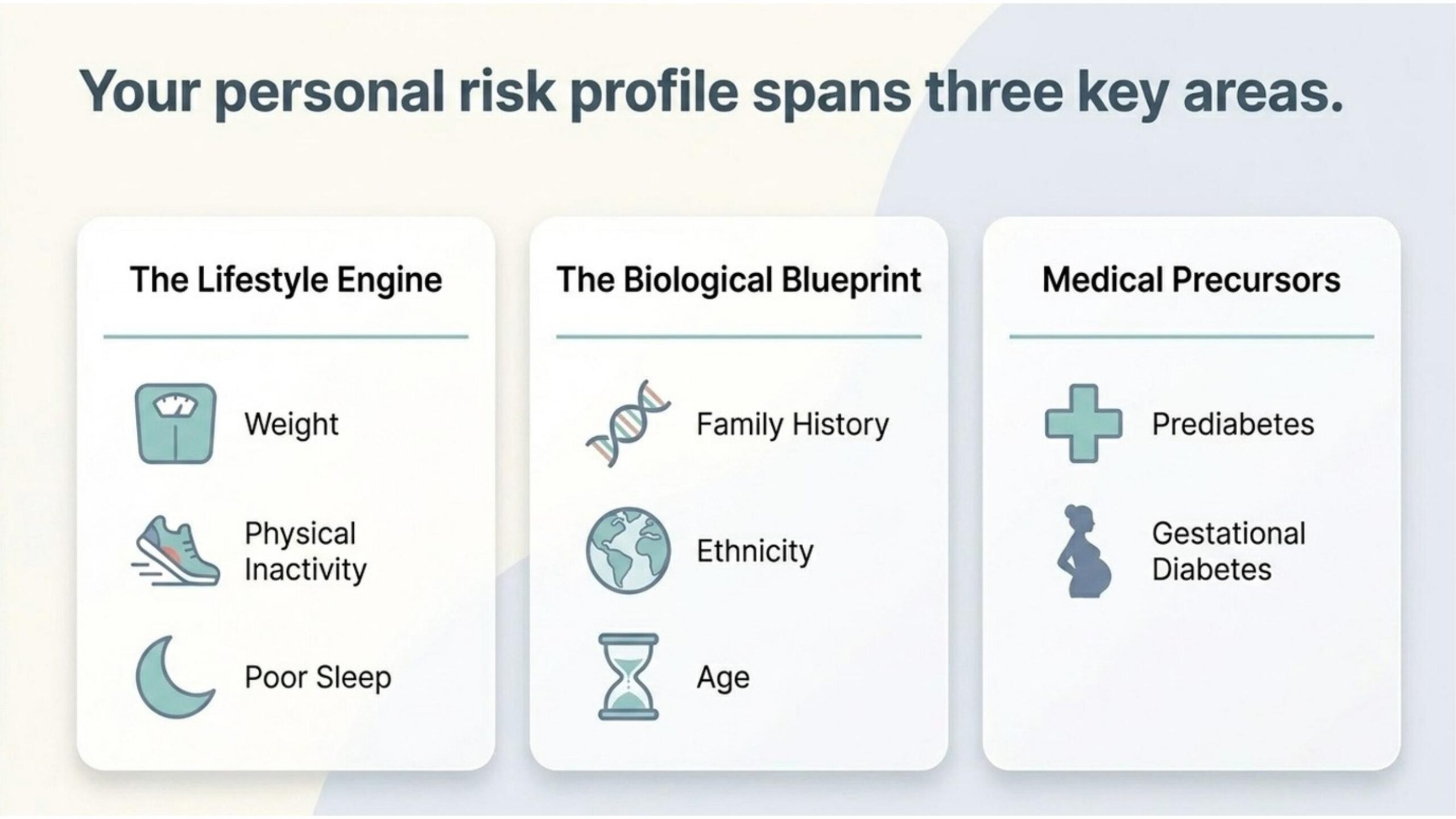
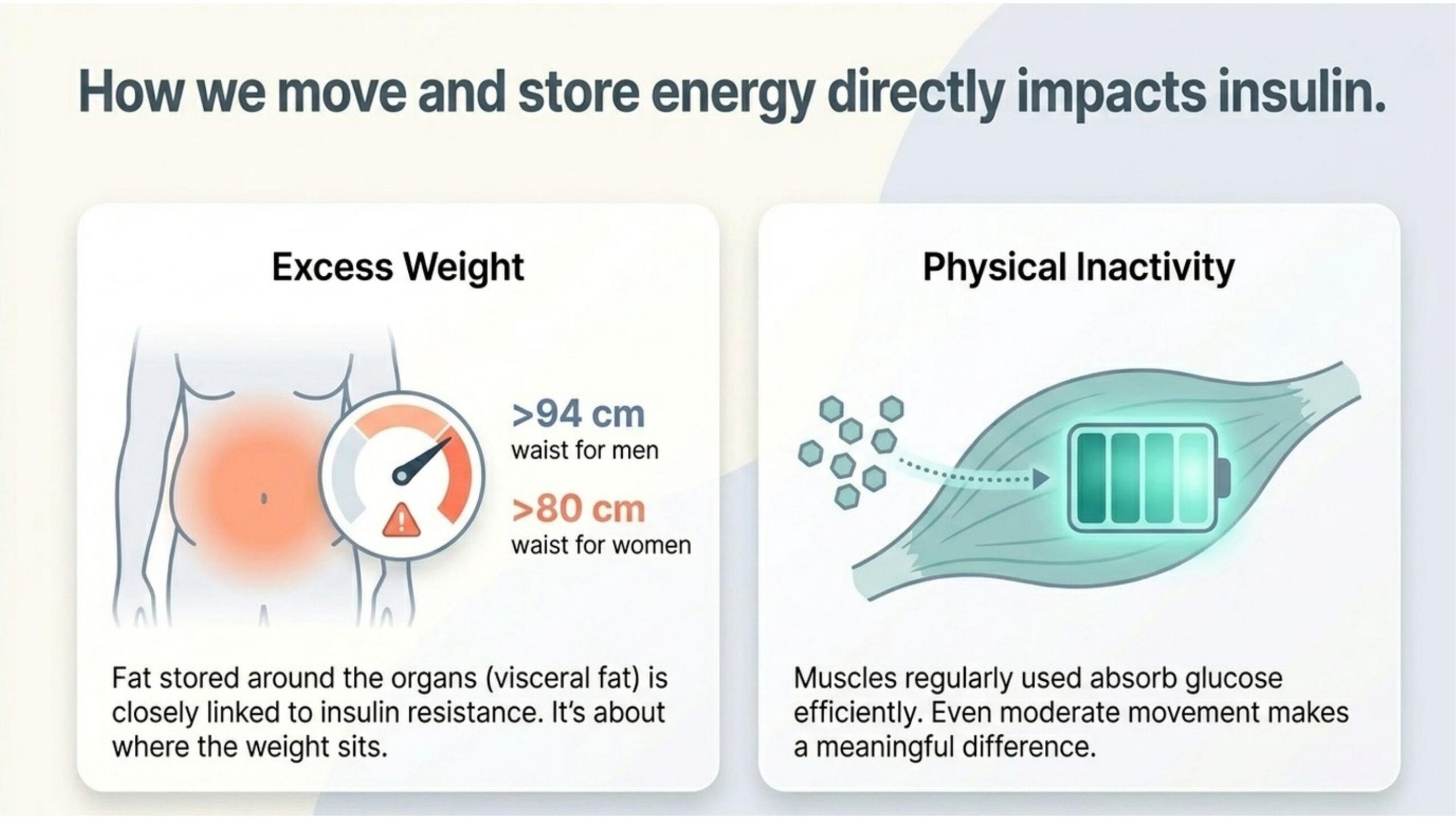
- Excess weight around the abdomen. Fat stored around the organs — known as visceral fat — is closely linked to insulin resistance. It is not simply about overall weight but where that weight sits. A waist above 94 cm in men or 80 cm in women raises risk significantly.
- Physical inactivity. Muscles that are regularly used absorb glucose efficiently. When activity is low, blood sugar regulation becomes harder. Even moderate movement makes a meaningful difference.
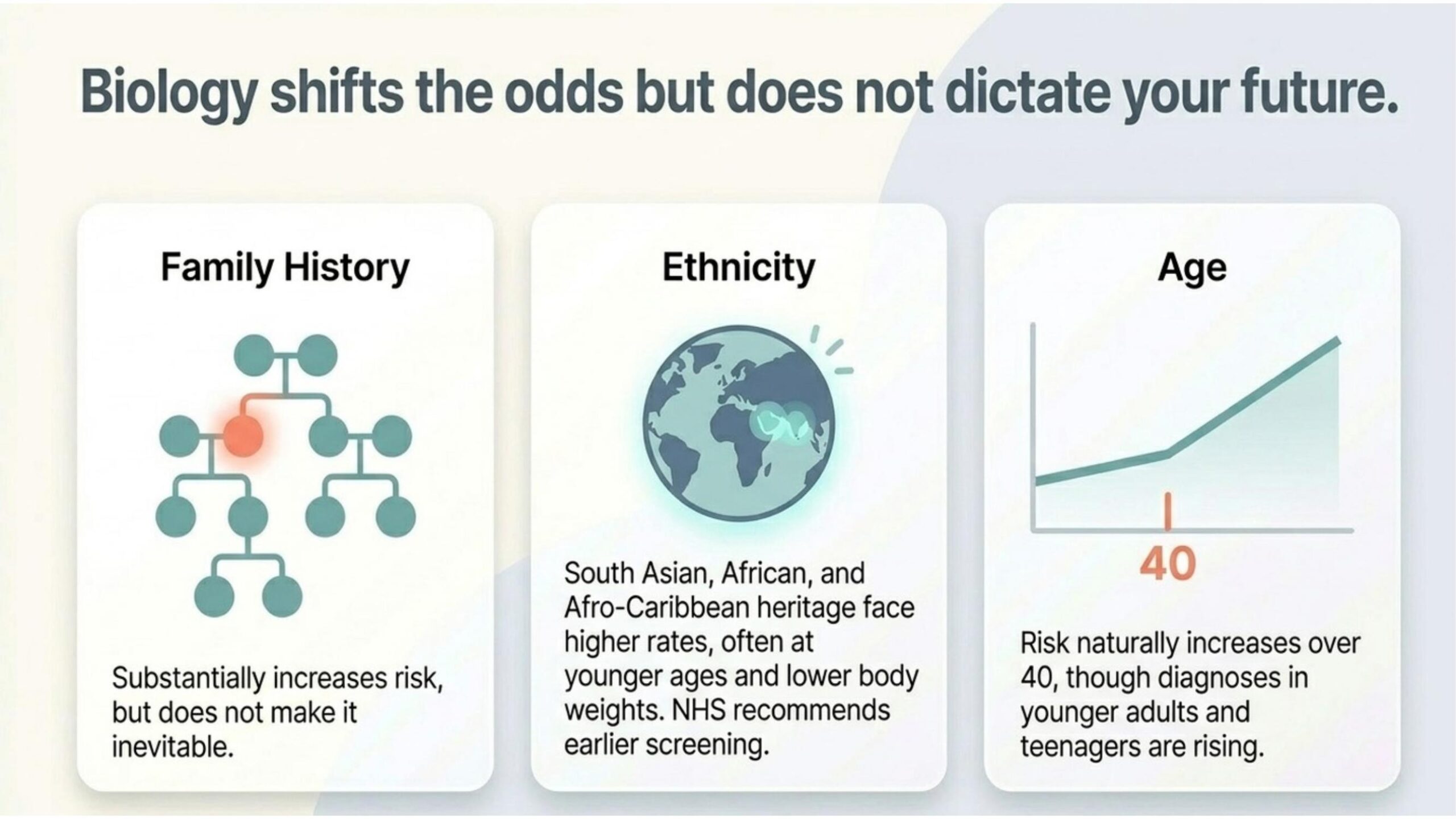
- Family history. Having a parent or sibling with type 2 diabetes increases your risk substantially. Genetics does not make it inevitable, but it does shift the odds.
- Ethnicity. People of South Asian, African or Afro-Caribbean heritage develop type 2 diabetes at higher rates, often at a younger age and lower body weight than the white European population. NHS guidelines recommend earlier screening for these groups.
- Age. Risk increases with age, particularly after 40. However, type 2 diabetes is increasingly diagnosed in younger adults and teenagers too.
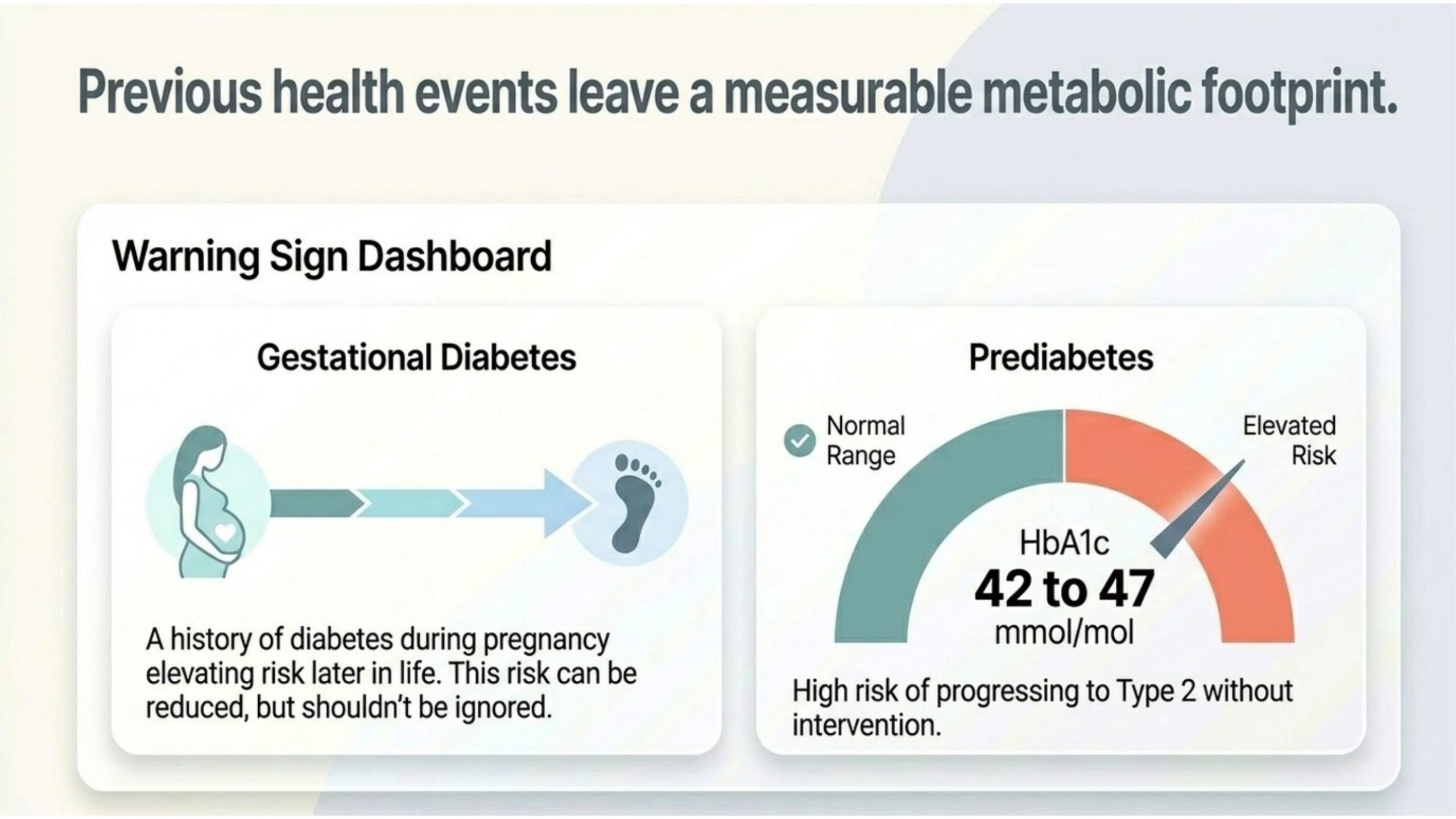
- Gestational diabetes. Women who develop diabetes during pregnancy are at higher risk of type 2 diabetes later in life. This risk can be reduced but should not be ignored.
- Prediabetes. If your HbA1c is already in the 42 to 47 mmol/mol range, you are at significantly elevated risk of progressing without intervention. See our post on What Is Prediabetes and Why It Matters.
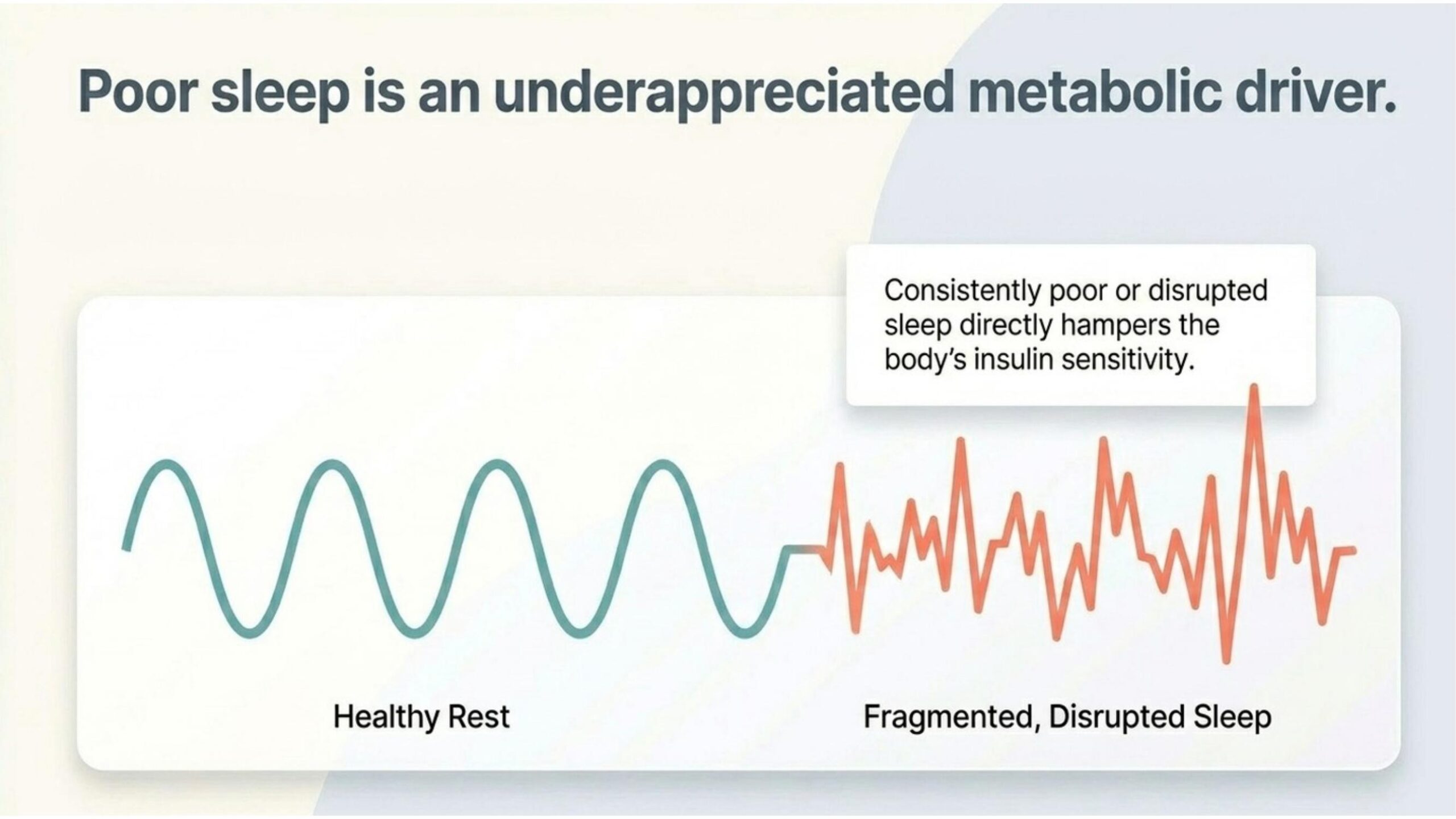
- Poor sleep. Consistently disrupted sleep directly affects insulin sensitivity. This is an underappreciated but well-documented risk factor for type 2 diabetes.
Biology shifts the odds but does not dictate your future
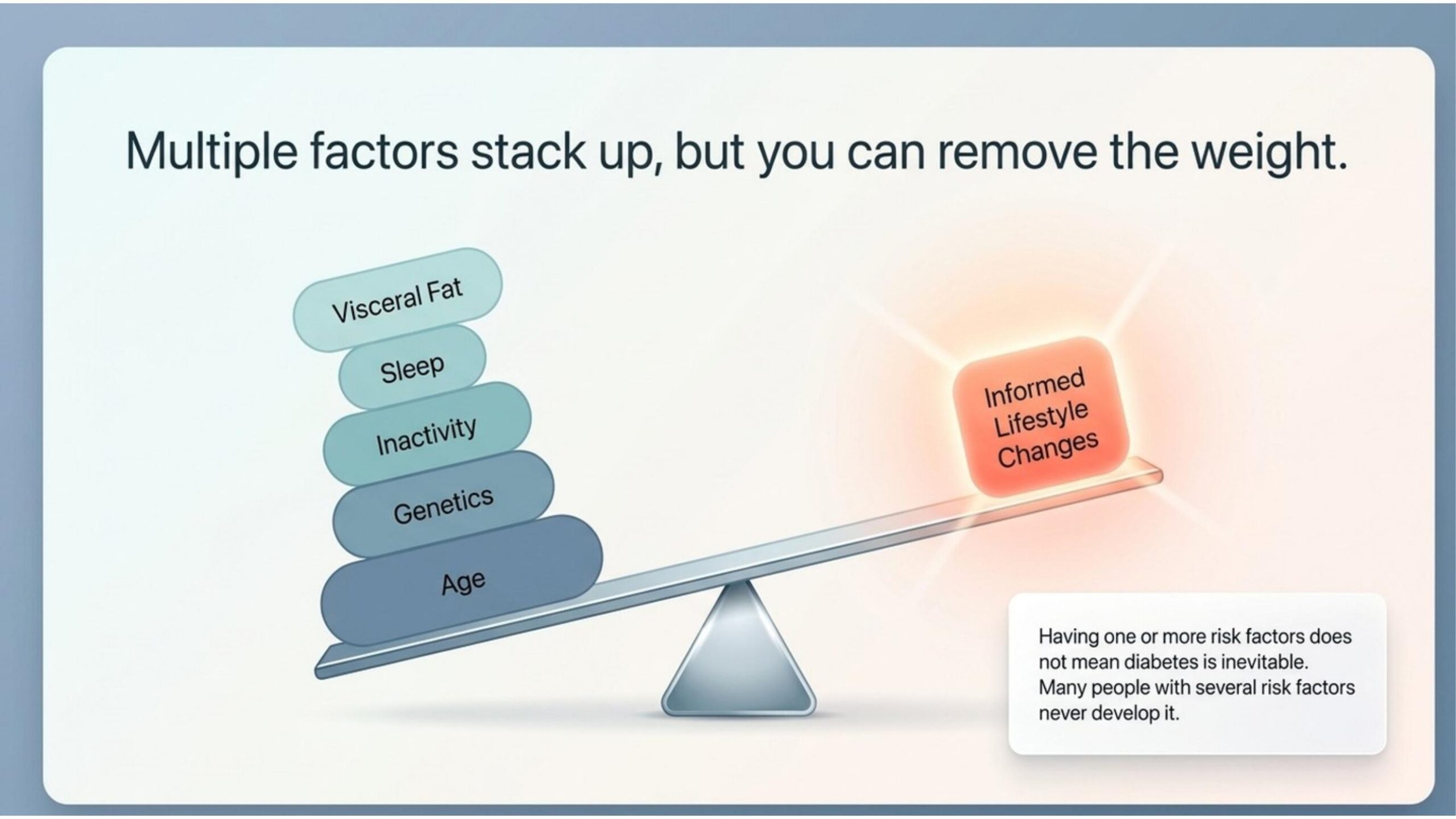
Some type 2 diabetes risk factors — like age, ethnicity and family history — cannot be changed. But they do not make the condition inevitable. Many people with several biological risk factors never develop type 2 diabetes, particularly when they make informed lifestyle changes early.
Previous health events leave a metabolic footprint
Gestational diabetes and a prediabetes diagnosis are not just historical footnotes. They leave a measurable impact on how your body handles blood sugar and insulin resistance. If either applies to you, regular monitoring of your HbA1c is important.
What this means for you
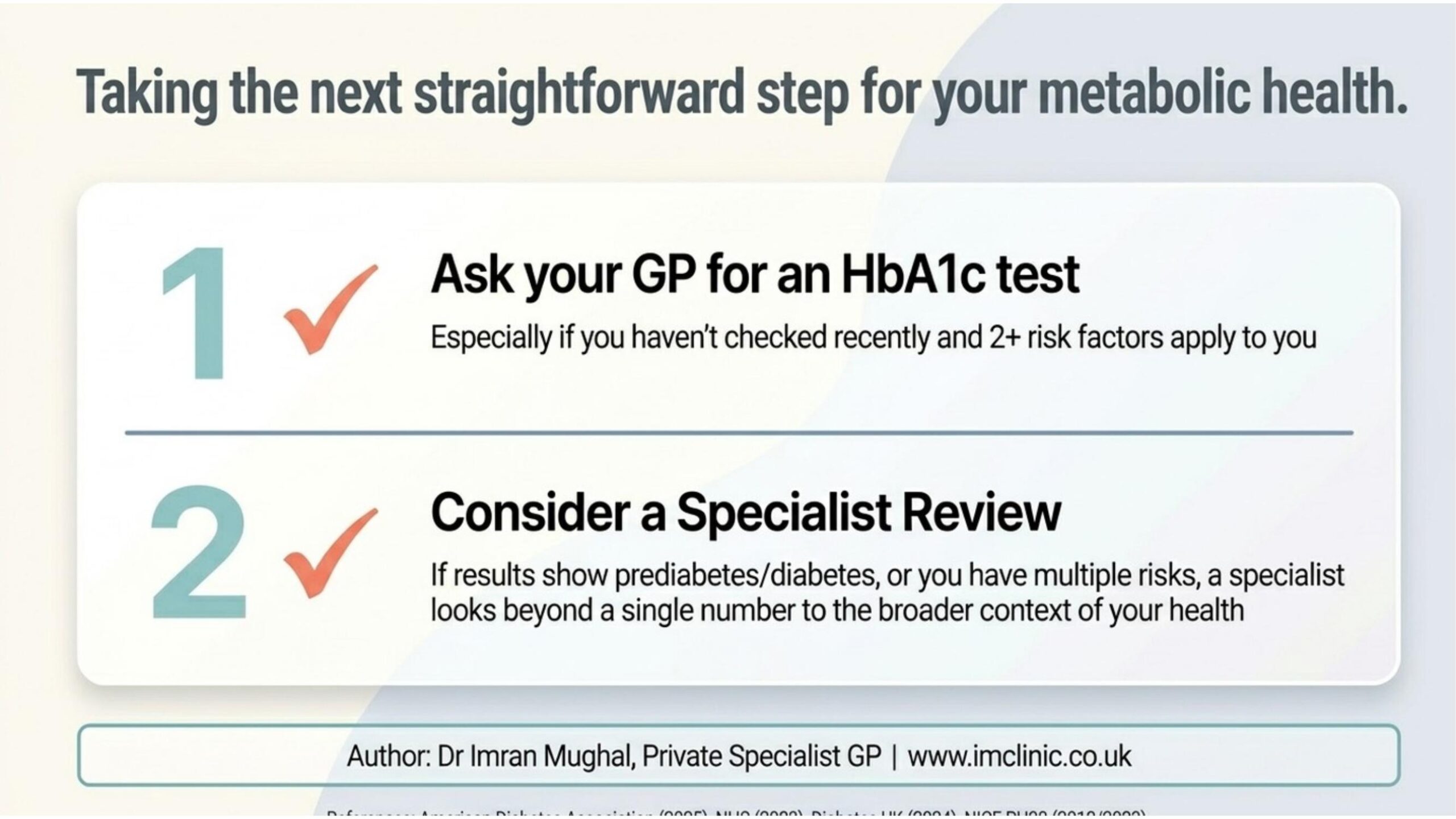
Having one or more of these type 2 diabetes risk factors does not mean the condition is inevitable. But they are worth knowing about. If you have not had your blood sugar checked recently, and two or more of the above apply to you, asking for an HbA1c test is a straightforward and worthwhile step.
When to see a specialist
If your results come back in the prediabetes or diabetes range, or if you have multiple risk factors for type 2 diabetes and want a clearer picture of your metabolic health, a specialist review goes beyond a single number. It looks at the full context of your health and helps you understand what to do next.
At IM Clinic, that is exactly what we do.
The Key Points
- Type 2 diabetes risk factors include excess abdominal fat, physical inactivity, poor sleep, family history, ethnicity, age, gestational diabetes and prediabetes.
- Insulin resistance is the underlying process that drives type 2 diabetes, not sugar alone.
- Having risk factors does not mean diabetes is inevitable, but knowing them allows you to act early.
- An HbA1c blood test is the most important first step if two or more risk factors apply to you.
References
American Diabetes Association. Standards of Care in Diabetes 2025. Diabetes Care. 2025. https://diabetesjournals.org/care
NHS. Type 2 Diabetes: Causes. 2023. https:/https://www.nhs.uk/conditions/type-2-diabetes/causes//www.nhs.uk/conditions/type-2-diabetes/causes
Diabetes UK. Risk Factors https://www.diabetes.org.uk/diabetes-the-basics/types-of-diabetes/type-2/causesfor Type 2 Diabetes. 2024. https://www.diabetes.org.uk
NICE. Type 2 Diabetes Prevention: Population and Community Interventions. PH38. 2012 (updated 2023). https://www.nice.org.uk/guidance/ph38