

A single diabetes consultation cannot cover everything. Proper diabetes care is a structured process — from full assessment to regular follow up. Here is what that process actually looks like.

Have you ever left a doctor’s appointment feeling like you only scratched the surface?
With diabetes, that feeling is very common. And often, it reflects reality.
A single consultation cannot cover everything. Proper diabetes care is a process. Here is what that process looks like.
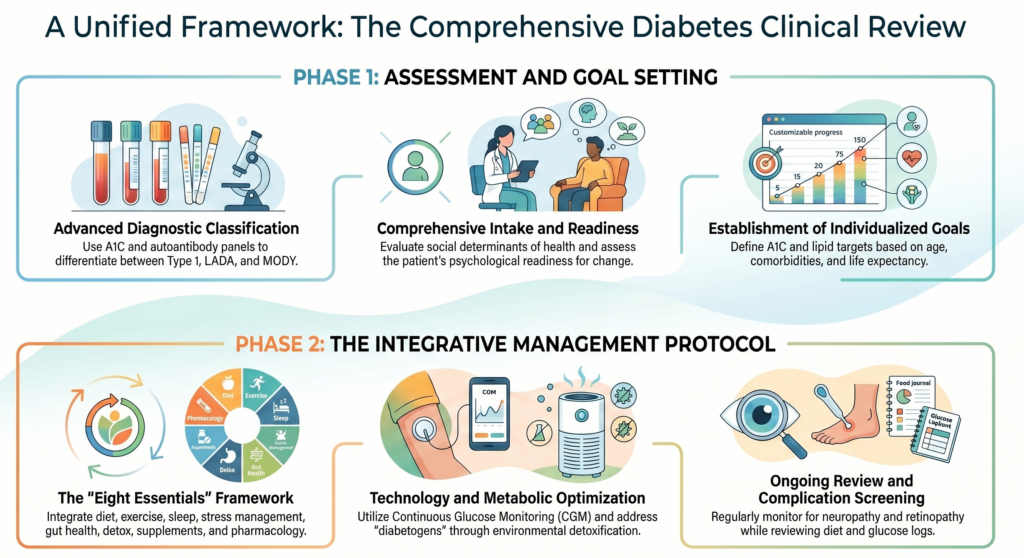
Step one: building the full picture
The first appointment is about understanding you, not just your blood sugar.
A thorough history will cover:
- Your full medical and family history
- Your lifestyle: diet, sleep, stress, and physical activity
- Your work: including shift patterns. Disrupted body clocks are a recognised driver of Type 2 diabetes
- Current medications and any side effects
- Symptoms you may have been putting down to something else
A full set of tests will also be arranged, including:
- HbA1c: to confirm your average blood sugar level
- Confirming the type of diabetes, if not already done
- Kidney function, liver markers, and cholesterol
- Urine test for early signs of kidney involvement
- Blood pressure check and foot examination
- Assessment for existing or future risk of complications
This cannot happen in ten minutes. The findings from this step shape everything that follows.
Step two: diabetes literacy
This is one of the most important steps, and one of the most overlooked.
I take time to understand what you already know about your condition. What does your HbA1c actually mean to you? Do you understand where you sit in terms of your diagnosis?
Filling in those gaps matters. A patient who understands their condition is far better placed to manage it.
Step three: Setting your personal targets
Targets are not the same for everyone.
Your HbA1c goal, blood pressure target, and cholesterol aim will all depend on:
- Your age and overall health
- Any other conditions you have
- What is realistic and sustainable for your daily life
Step four: putting the plan into action
With targets agreed, the plan takes shape. It is built around your life, not a generic handout.
This may include:
- Dietary changes suited to your routine
- A structured approach to movement and exercise
- Guidance on monitoring your blood sugar at home
- Medication review, including doses, side effects, and combination options
- Referrals were needed, such as to a dietitian or eye screening service
Why follow-up is not optional
Diabetes does not stay the same. Your body changes. Your circumstances change.
What works in month one may need to be adjusted by month three. Complications can develop quietly, with no obvious symptoms. They can only be caught through regular review.
Follow-up appointments allow a clinician to:
- Review your results and assess progress
- Check for early signs of complications: kidneys, eyes, nerves, heart
- Adjust or introduce medication where needed
- Address any new concerns or barriers since the last visit
Skipping follow-up does not mean your diabetes is stable. It means nobody is checking whether it is.
When to seek specialist input
If your current care does not seem to cover all of these steps, it may be time for a proper specialist review.
A specialist gives you the time and space to go through everything properly. You leave with a clear plan, built around you, not a general template.
Good diabetes care takes time, structure, and ongoing support. That is exactly what a specialist review is designed to provide.
The Key Points
- A proper diabetes consultation starts with building the full picture, covering your history, lifestyle, and a comprehensive set of blood tests.
- Diabetes literacy matters, and understanding your own HbA1c and diagnosis puts you in a far better position to manage your condition.
- Personal targets for HbA1c, blood pressure, and cholesterol are set based on your individual circumstances, not a one size fits all standard.
- The care plan is built around your life and covers diet, movement, home monitoring, medication review, and any necessary referrals.
- Diabetes changes over time, and regular follow-up is not optional if complications are to be caught early and the plan kept on track.
- If your current care does not cover all of these steps, a specialist review is worth considering.
Author: Dr Imran Mughal, Private Specialist GP
Website: www.imclinic.co.uk
Book a consultation: https://notes.thanksdoc.co.uk/book/clinic/im-clinic
References
American Diabetes Association Professional Practice Committee. Standards of Care in Diabetes. Diabetes Care. 2024. https://doi.org/10.2337/dc24-S001




We would love to hear your thoughts. A few things to keep in mind before you post: