


Low Testosterone Explained: Why “Andropause” Is the Wrong Word
- Testosterone deficiency explained: many men mistake it for simply getting older
- You are more tired than you used to be.
- Your motivation has dipped, your weight has crept up, and your mood feels flatter than normal.
- You put it down to getting older.
- If a friend has mentioned the male menopause, or you have come across the word andropause online, that term is misleading.
- What is really happening in your body has a different name and a different explanation. This is testosterone deficiency explained properly, and understanding it is the first step toward feeling like yourself again.
Wondering if your symptoms fit a recognised pattern?
Testosterone Deficiency Explained: What It Actually Means
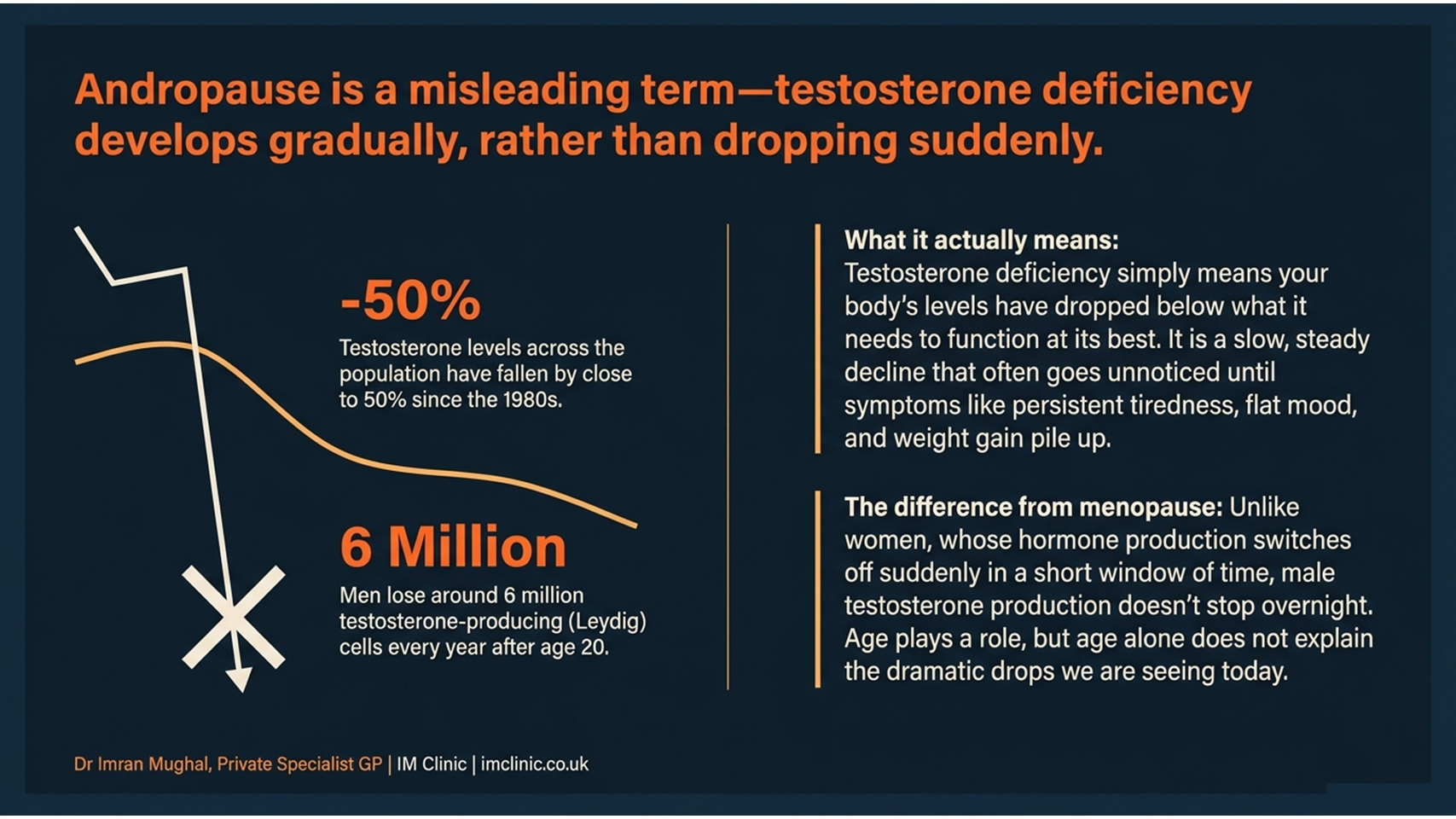
- Andropause suggests a sudden drop in hormones, similar to what women experience at menopause.
- That picture is not accurate for men.
- The correct clinical term is testosterone deficiency, often shortened to TD or simply low testosterone.
- It means your testosterone level is too low for what your body needs, not that production has switched off overnight.
- It usually develops gradually. After the age of 20, men lose around 6 million testosterone producing cells, called Leydig cells, every year.
- Some decline with age is normal.
- But age alone does not explain what we are seeing. Testosterone levels across the population have fallen by close to 50% since the 1980s, a shift too steep to put down to ageing on its own.
Why Does Low Testosterone Happen?
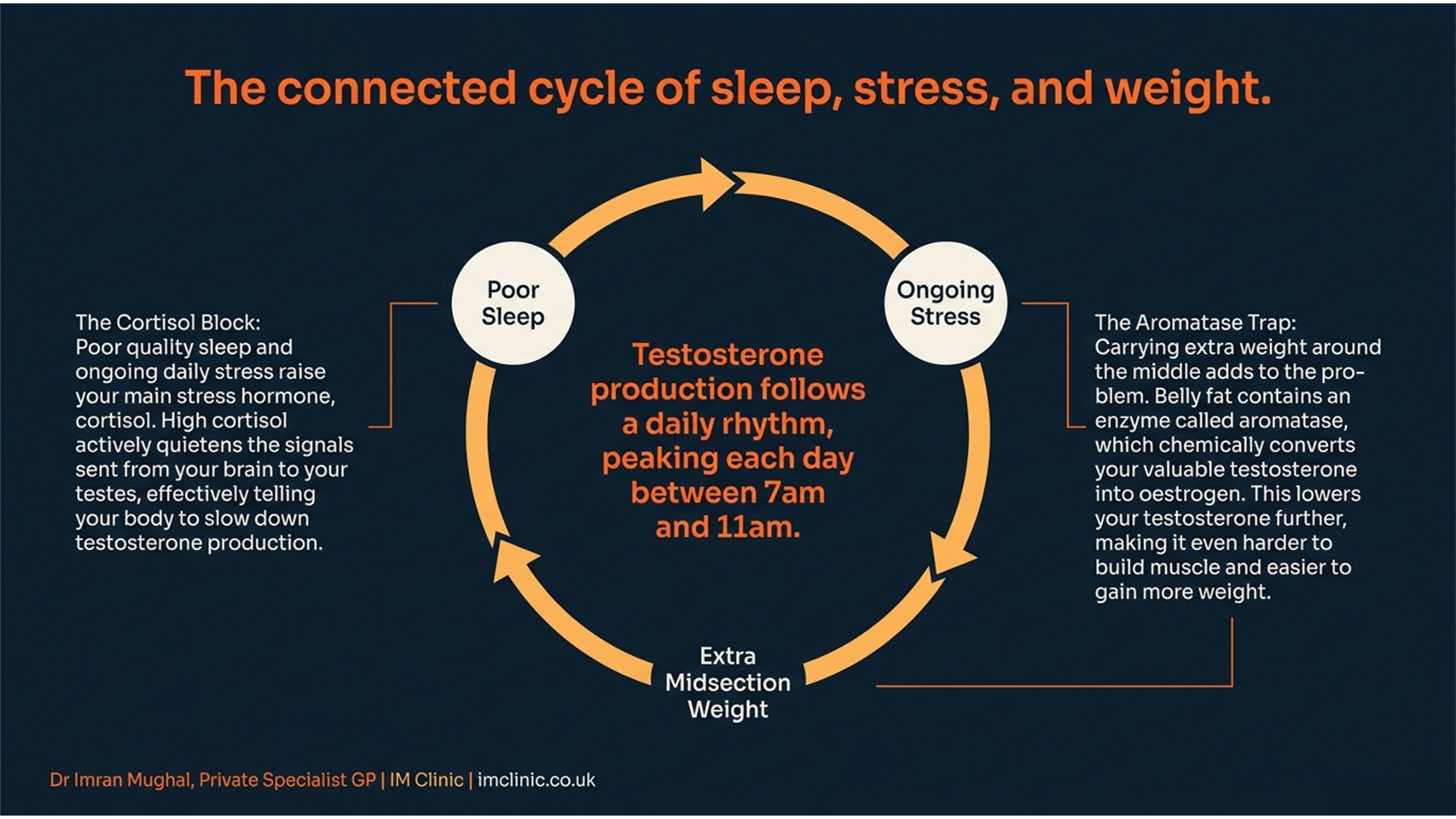
Testosterone production follows a daily rhythm, peaking each morning between 7am and 11am. A few everyday factors can throw this rhythm off balance:
- Poor sleep: raises cortisol, your main stress hormone, which quietens the signal from your brain to your testes that drives testosterone production.
- Ongoing stress: keeps cortisol elevated, reinforcing the same suppression day after day.
- Extra weight around the middle: fat tissue contains an enzyme called aromatase, which converts testosterone into oestrogen, and the more weight carried around the abdomen, the more this conversion increases.
- The connected cycle: lower testosterone makes it harder to build and keep muscle and easier to gain weight, and that extra weight then pushes testosterone lower still.
Why Testosterone Deficiency Matters
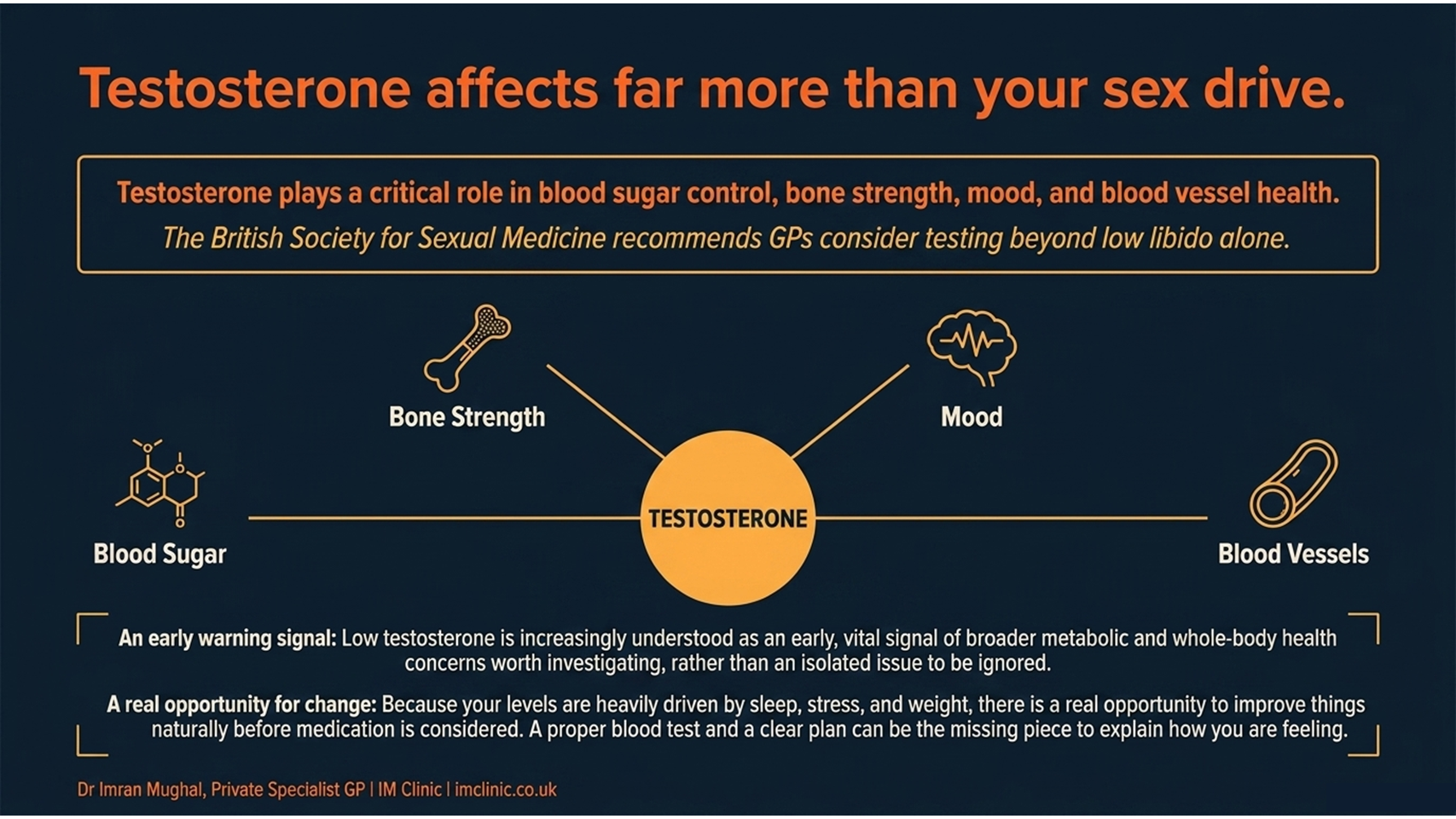
- Testosterone does far more than influence sex drive.
- It plays a role in blood sugar control, bone strength, mood, and the health of your blood vessels.
- The British Society for Sexual Medicine recommends GPs consider testing in men who show relevant symptoms or risk factors, not only those who raise concerns about libido.
- Low testosterone is increasingly understood as an early signal worth investigating, not an isolated issue.
- If you want to understand where your own symptoms sit, our low testosterone symptom checker takes under two minutes and gives you a scored result.
- For a closer look at the symptoms themselves, see our post on the warning signs of low testosterone men often miss.
The Key Points
- Andropause is a misleading term. Testosterone deficiency develops gradually rather than dropping suddenly.
- Poor sleep, ongoing stress, and extra weight around the middle all lower testosterone through a connected cycle.
- Low testosterone affects far more than sex drive, including blood sugar control, bone health, and mood.
Wondering if your symptoms fit a recognised pattern?
What This Means For You
- If some of this sounds familiar, whether that is persistent tiredness, low mood, or weight that will not shift no matter what you try, it may be worth looking at your testosterone rather than putting it down to age.
- The encouraging part is that because so much of this is driven by sleep, stress, and weight, there is real opportunity to improve things before any medication is considered.
- For some men, a proper blood test and a clear plan is the missing piece.
- For others it is simply confirmation that what they are feeling has an explanation.
- If you would like to talk through your symptoms and find out whether testing makes sense for you, IM Clinic offers private testosterone assessment.
Author: Dr Imran Mughal, Private Specialist GP
Website: www.imclinic.co.uk
Book a consultation: notes.thanksdoc.co.uk/book/clinic/im-clinic



We would love to hear your thoughts. A few things to keep in mind before you post: