


What Does Ferritin Mean? Understanding Your Iron Blood Test Results
- If your GP has ever mentioned ferritin, iron, or TIBC (Total Iron Binding Capacity), you have probably left the consultation more confused than when you went in.
- So, what does ferritin mean? It is the protein that stores iron in your body. It is not the same thing as iron itself.
- A ferritin test tells you how much iron you have in reserve, not how much is actually available for your body to use right now.
- Individuals are often told their iron is “fine” based on one number, when the full picture usually needs several.
What Does Ferritin Mean on a Blood Test?
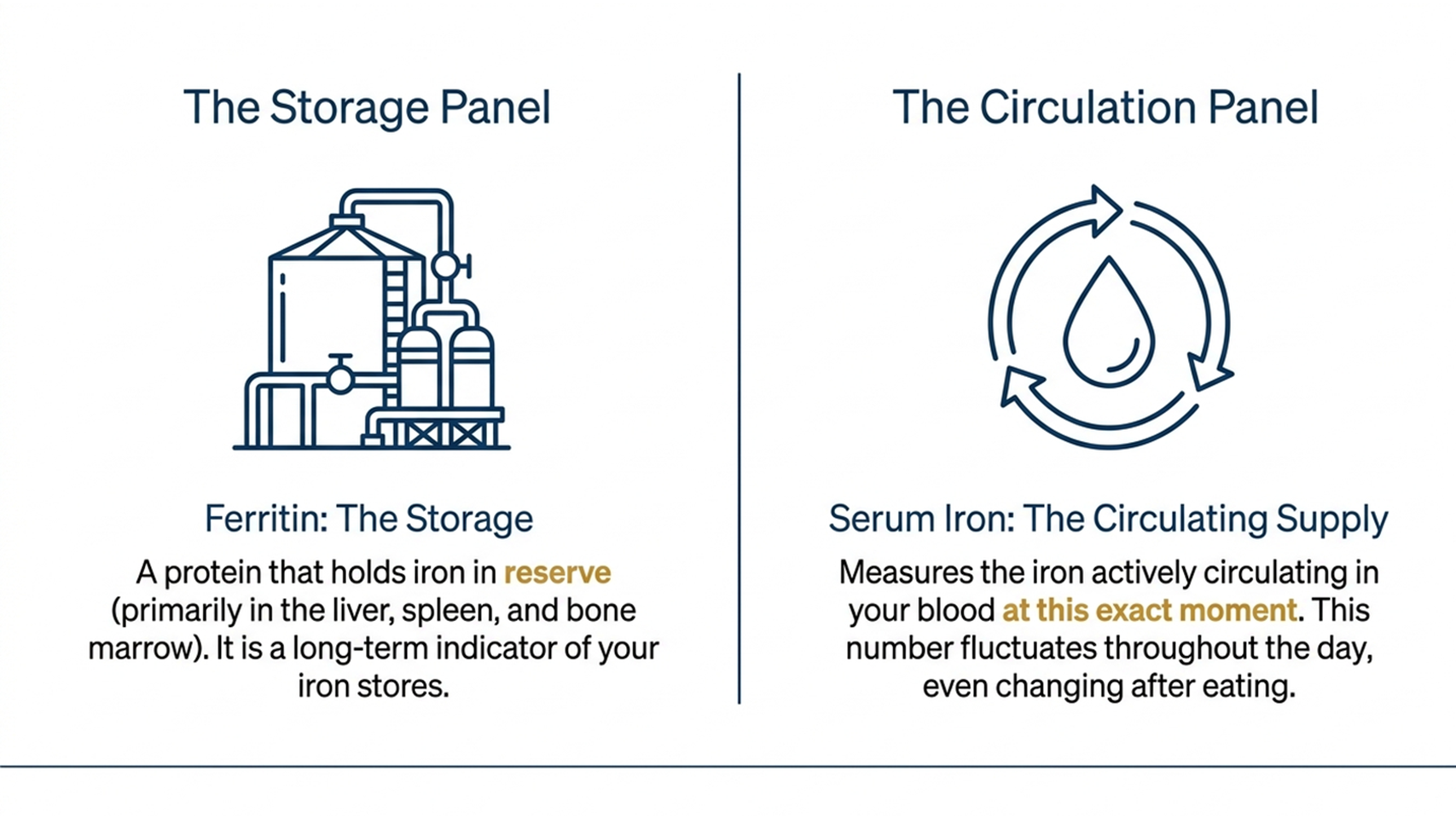
- Ferritin reflects your stored iron, held mainly in the liver, spleen and bone marrow.
- Serum iron is different. It measures what is circulating in your blood right at that moment, and it changes through the day depending on when you last ate.
- Because ferritin represents stores rather than a single snapshot, it is usually the more useful of the two on its own.
- There is a catch. Ferritin can rise during infection, inflammation, or liver strain, even when true iron stores are low. This is why one ferritin result rarely tells the whole story.
The Full Iron Panel: Transferrin, TIBC and Saturation Explained
- A single ferritin result rarely settles the picture. Individuals are often sent for a fuller iron panel alongside it.
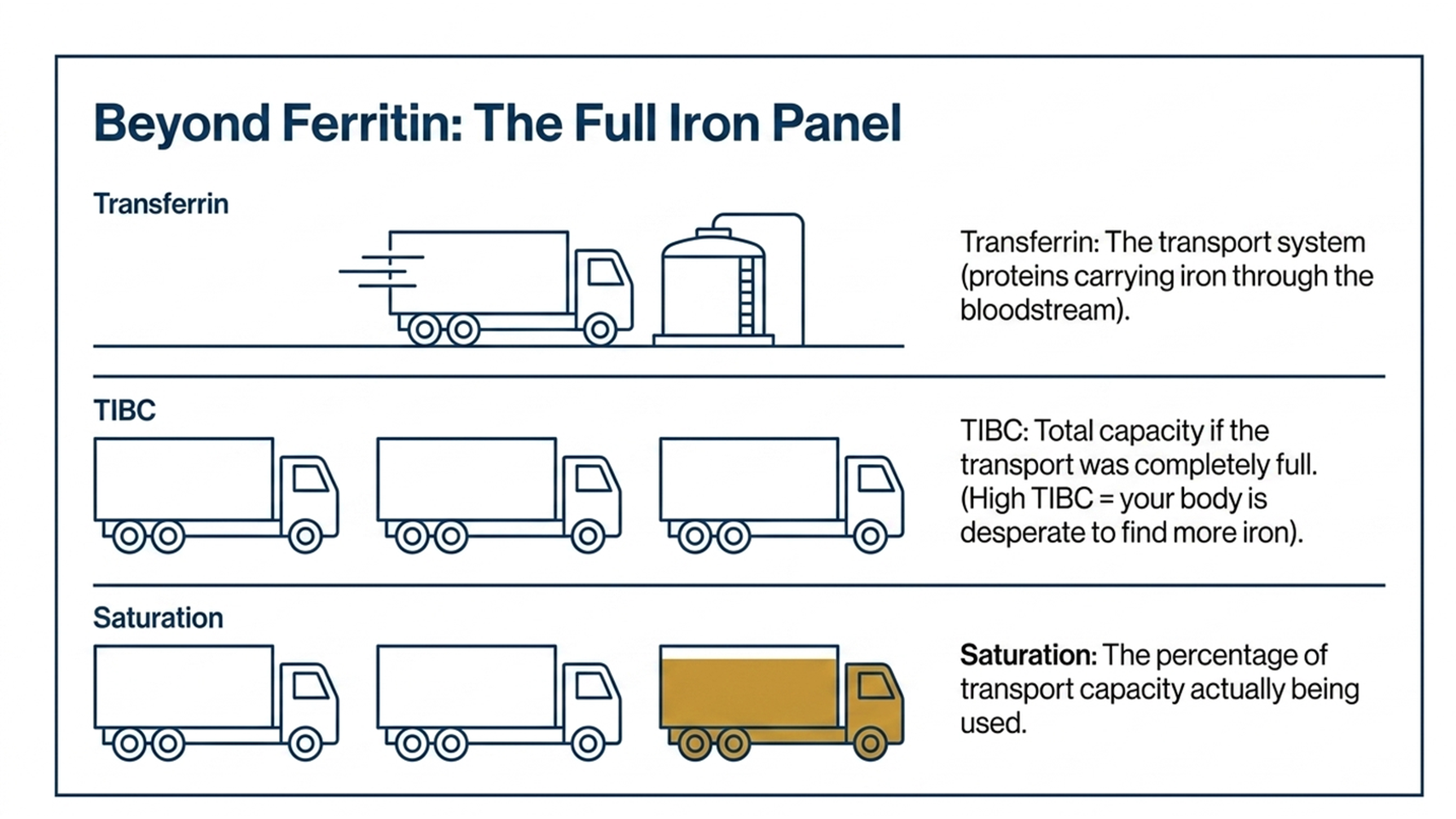
- Transferrin is the protein that carries iron through your bloodstream. Think of it as the transport, not the stock.
- Total Iron Binding Capacity, or TIBC, measures how much iron your transferrin could carry if it were full.
- A raised TIBC usually means your body is actively hunting for iron, a sign of true depletion.
- Transferrin saturation is the percentage of that transport capacity actually being used. This is the most practical test to review to understand if the ferratin is low or high.
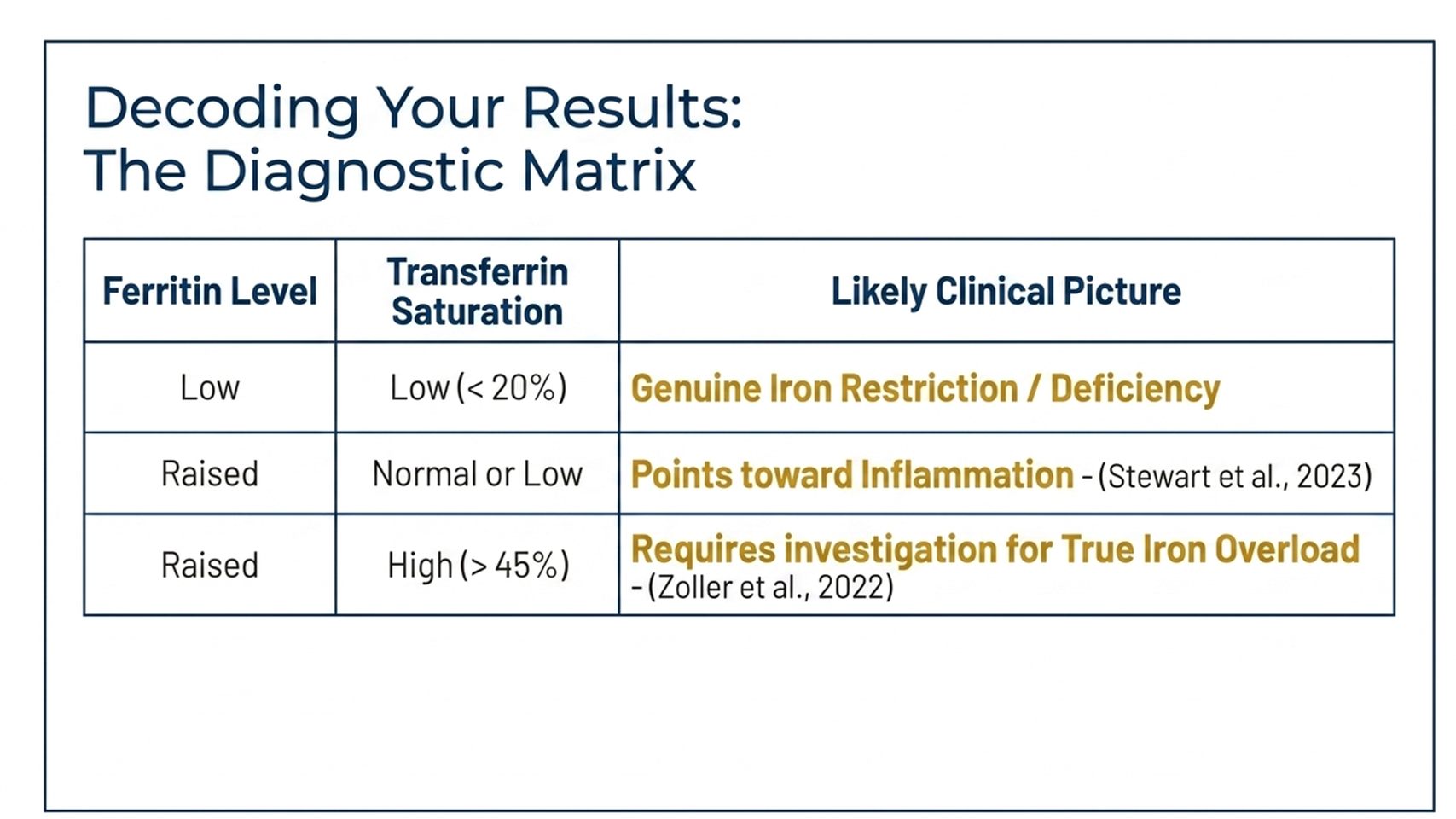
- A low transferrin saturation, generally under 20%, points towards genuine iron restriction.
- A high transferrin saturation, generally above 45%, is a recognised trigger for further investigation into iron overload, including genetic testing (Zoller et al, EASL Clinical Practice Guidelines on Haemochromatosis, Journal of Hepatology, 2022).
- Taken together, these four results, ferritin, iron, TIBC and saturation, build a much clearer picture than any one number alone.
Continuity of Care With One GP
- See the same GP every time. No repeating your history to someone new at every appointment.
- Book when it suits you. Flexible appointments that fit around work, not the other way round.
- One doctor who knows your full picture. Blood results, symptoms, and follow-up tracked together, not treated as separate problems.
Why Can Ferritin Be Misleading? Inflammation Versus True Overload
- A raised ferritin does not automatically mean too much iron.
- Ferritin is an acute phase reactant. Your body raises it during infection, inflammation, and some liver conditions, regardless of how much iron you are actually carrying. This is also why raised ferritin is one of the blood clues seen in fatty liver disease.
- This means a raised ferritin alongside a normal or low transferrin saturation usually points towards inflammation, not iron overload.
- A raised ferritin alongside a high transferrin saturation is the pattern that warrants proper investigation for true iron overload (Stewart et al, Managing Raised Ferritin in Primary Care, BMJ, 2023).
- This is exactly why your GP rarely acts on ferritin alone. The pattern across the whole panel is what actually guides the next step.
So What Does Ferritin Mean If Yours Is Low or High?
Traditional Medical View
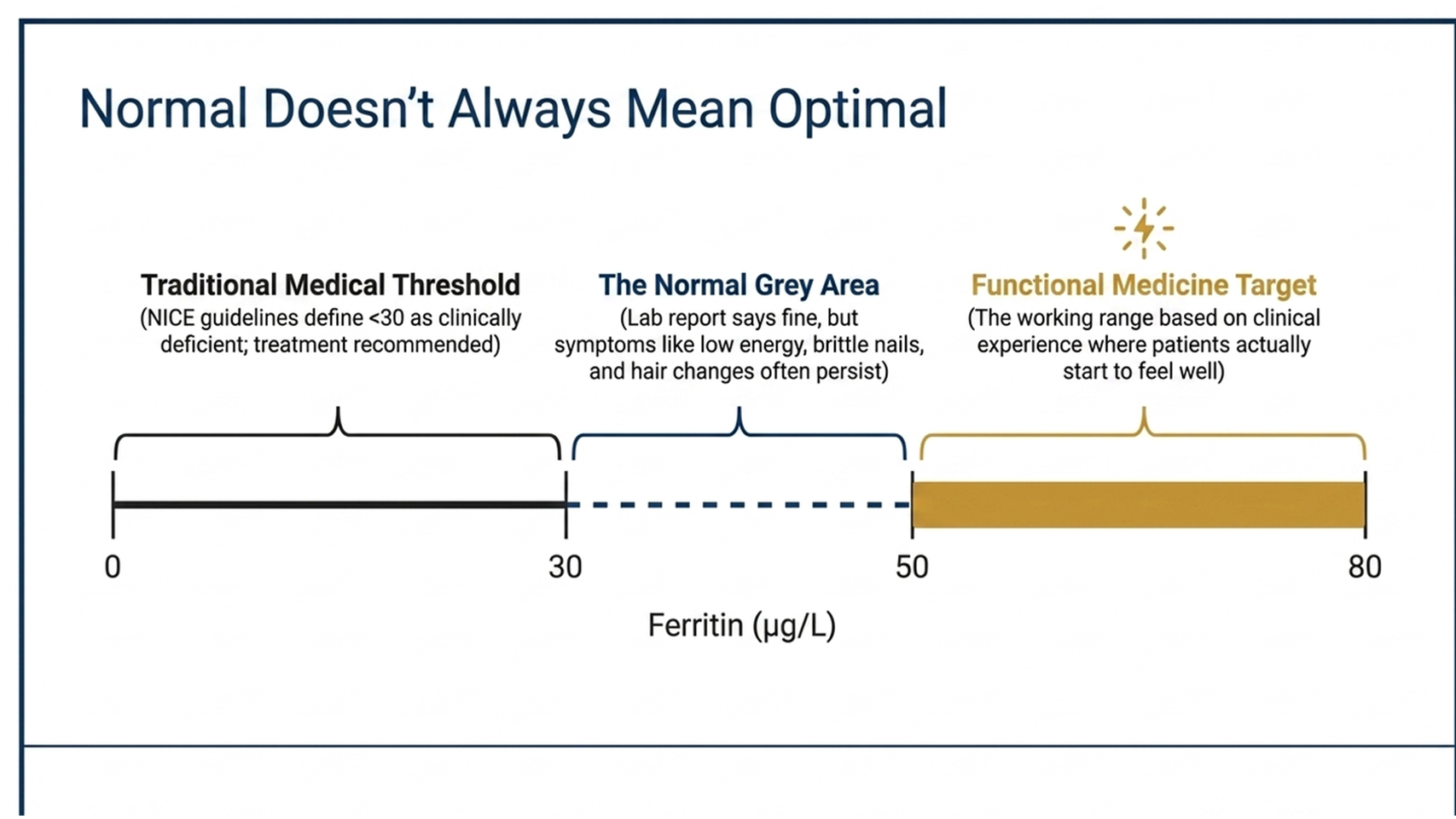
- NICE Clinical Knowledge Summaries define iron deficiency as a serum ferritin below 30 micrograms per litre.
- Below this threshold, treatment is usually indicated, particularly if you also have symptoms or a low haemoglobin.
- Above roughly 30, most laboratories will report your ferritin as within normal range.
Functional Medicine View
- Many practitioners working in integrative and functional medicine aim for a higher working target, generally in the region of 50 to 80 micrograms per litre.
- This is based on clinical experience of when individuals actually start to feel well, rather than simply clearing the lab’s lower cut-off.
- Being just inside the normal range does not always mean you are functioning optimally. Nails, hair, skin and energy can all still reflect low-grade iron restriction even when the lab flags nothing.
- These two views are not in conflict. The traditional threshold tells you when treatment is clinically indicated. The functional target reflects where many individuals actually start to feel their best.
The Key Points
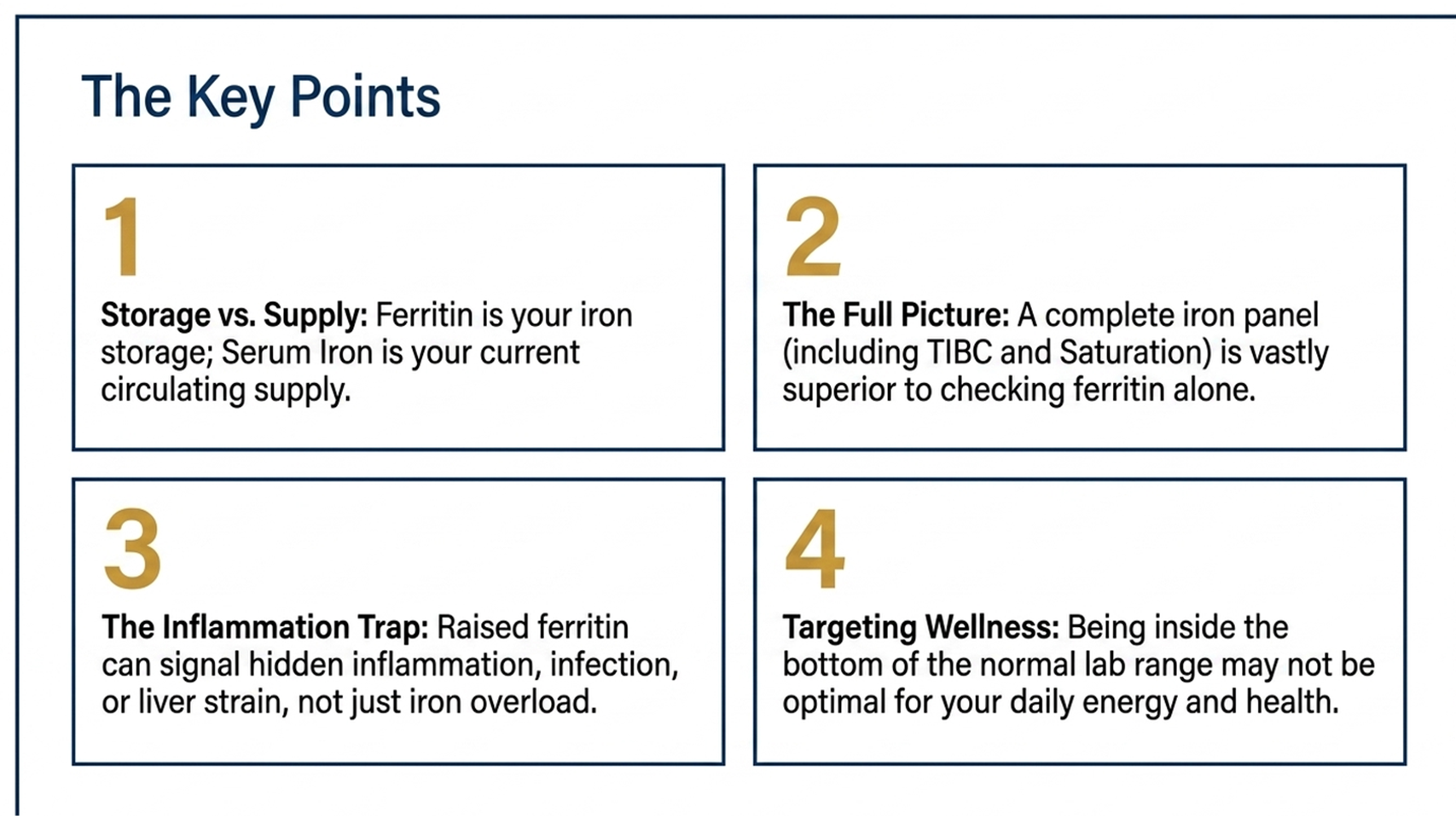
- Ferritin measures your stored iron, while serum iron only reflects what is circulating at that moment.
- The full iron panel, ferritin, iron, TIBC and transferrin saturation, gives a far clearer picture than any single result.
- A raised ferritin can reflect inflammation rather than iron overload, which is why the whole pattern matters, not one number in isolation.
Continuity of Care With One GP
- See the same GP every time. No repeating your history to someone new at every appointment.
- Book when it suits you. Flexible appointments that fit around work, not the other way round.
- One doctor who knows your full picture. Blood results, symptoms, and follow-up tracked together, not treated as separate problems.
What This Means For You
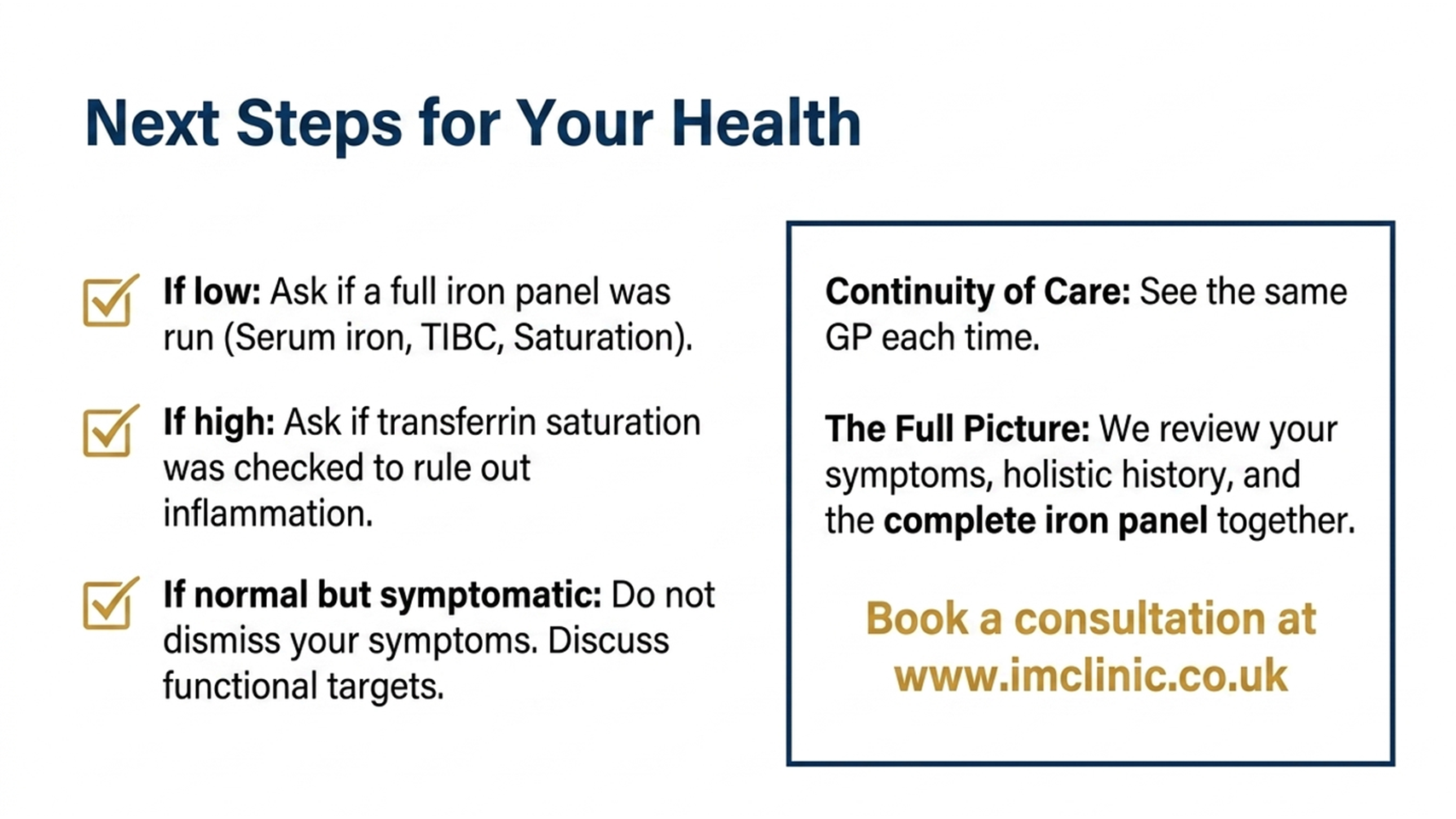
- If your ferritin comes back low, ask whether a full iron panel, iron, TIBC and transferrin saturation, has been done alongside it.
- If your ferritin comes back high, ask whether transferrin saturation was checked before assuming iron overload. Inflammation is a common and often overlooked explanation.
- Being within the “normal” range does not always mean optimal. If you have ongoing symptoms despite a normal ferritin, this is worth discussing rather than dismissing.
- Understanding your own results is the first step. In our next post in this series, we look at why iron levels actually become low across different life stages, and when treatment should not wait for a root cause to be found.
- At IM Clinic, results are reviewed as a full picture with the same GP each time, not as isolated numbers on a page.
Author: Dr Imran Mughal, Private Specialist GP
Website: www.imclinic.co.uk
Book a consultation: Book a consultation
References
Stewart S, Evans W, Turnbull I, Bradbury C, Hayward J, Shearman J. Managing Raised Ferritin in Primary Care. BMJ. 2023;382:e076750. https://doi.org/10.1136/bmj-2023-076750
Zoller H, Schaefer B, Vanclooster A, Griffiths B, Bardou-Jacquet E, Corradini E, et al. EASL Clinical Practice Guidelines on Haemochromatosis. Journal of Hepatology. 2022;77(2):479-502. https://doi.org/10.1016/j.jhep.2022.03.033
NICE Clinical Knowledge Summaries. Anaemia — Iron Deficiency. https://cks.nice.org.uk/topics/anaemia-iron-deficiency/

We would love to hear your thoughts. A few things to keep in mind before you post: