


Migraine: Why You Need Two Treatment Plans, Not One
Why Does Migraine Treatment Never Seem To Work Properly?
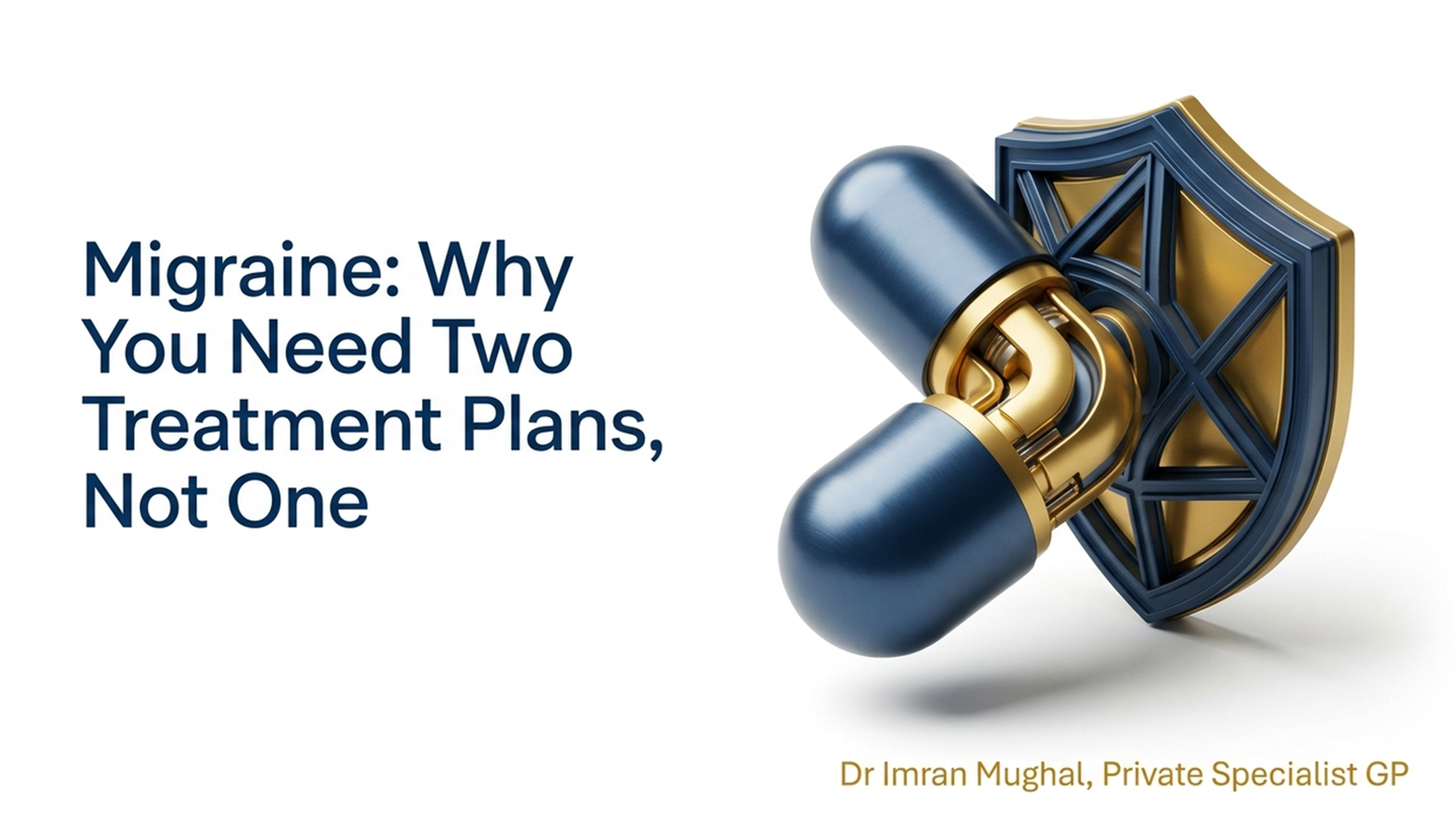
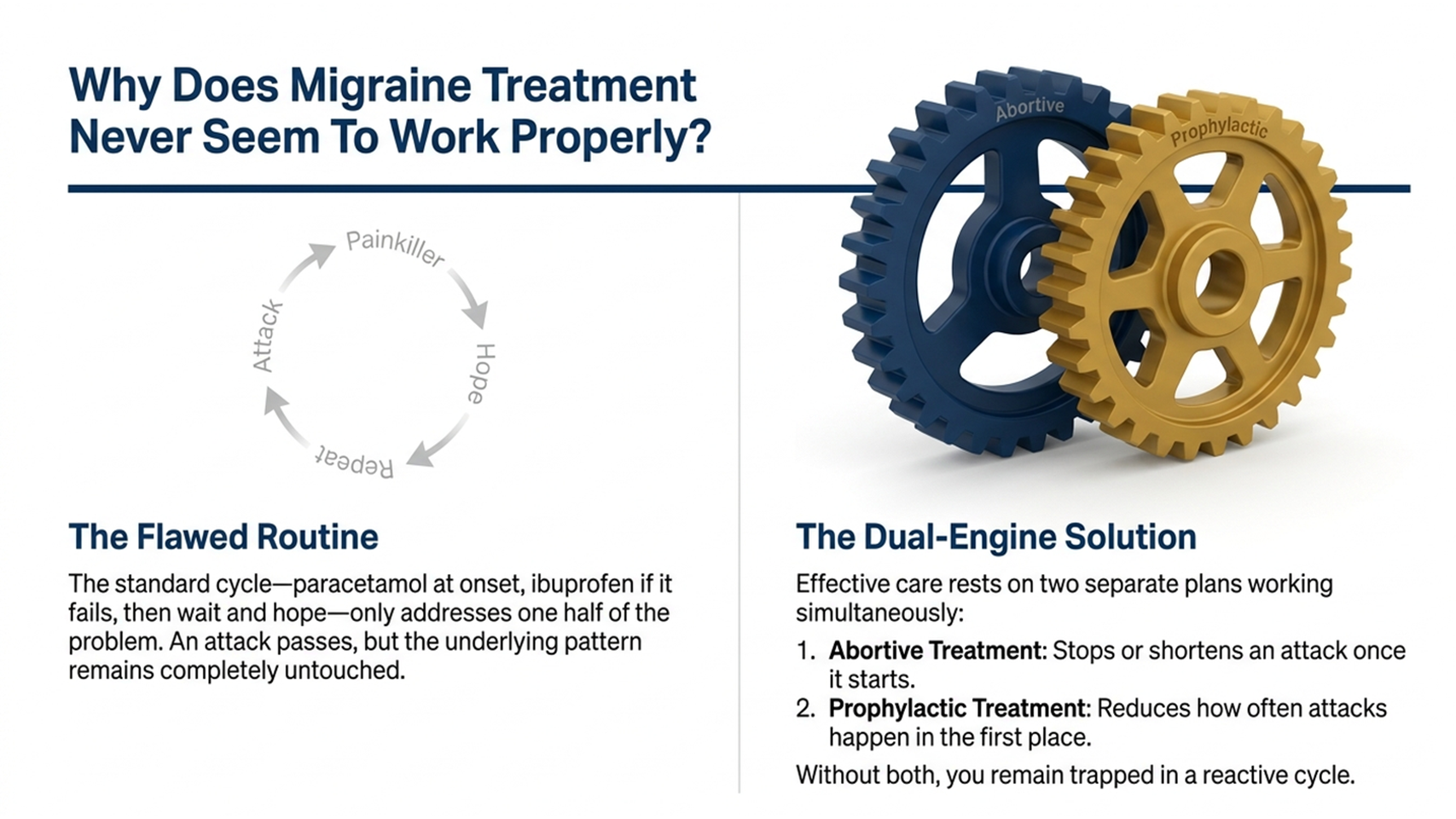
- Most people who live with migraine manage it the same way for years: paracetamol when it starts, ibuprofen if that fails, and hope
- This becomes the routine for months, sometimes for years, before anyone realises there was ever a different approach available
- The problem is not that these medications do not work. It is that they only ever address one half of proper migraine treatment
- Effective migraine treatment rests on two separate treatment plans, working together, not one medication used repeatedly:
- Abortive treatment, which stops or shortens an attack once it starts
- Prophylactic treatment, which reduces how often attacks happen in the first place
- Without both in place, individuals often find themselves stuck in the same cycle: an attack begins, a painkiller is taken, the attack passes, and the underlying pattern is never actually addressed
How Do You Actually Stop A Migraine Attack?
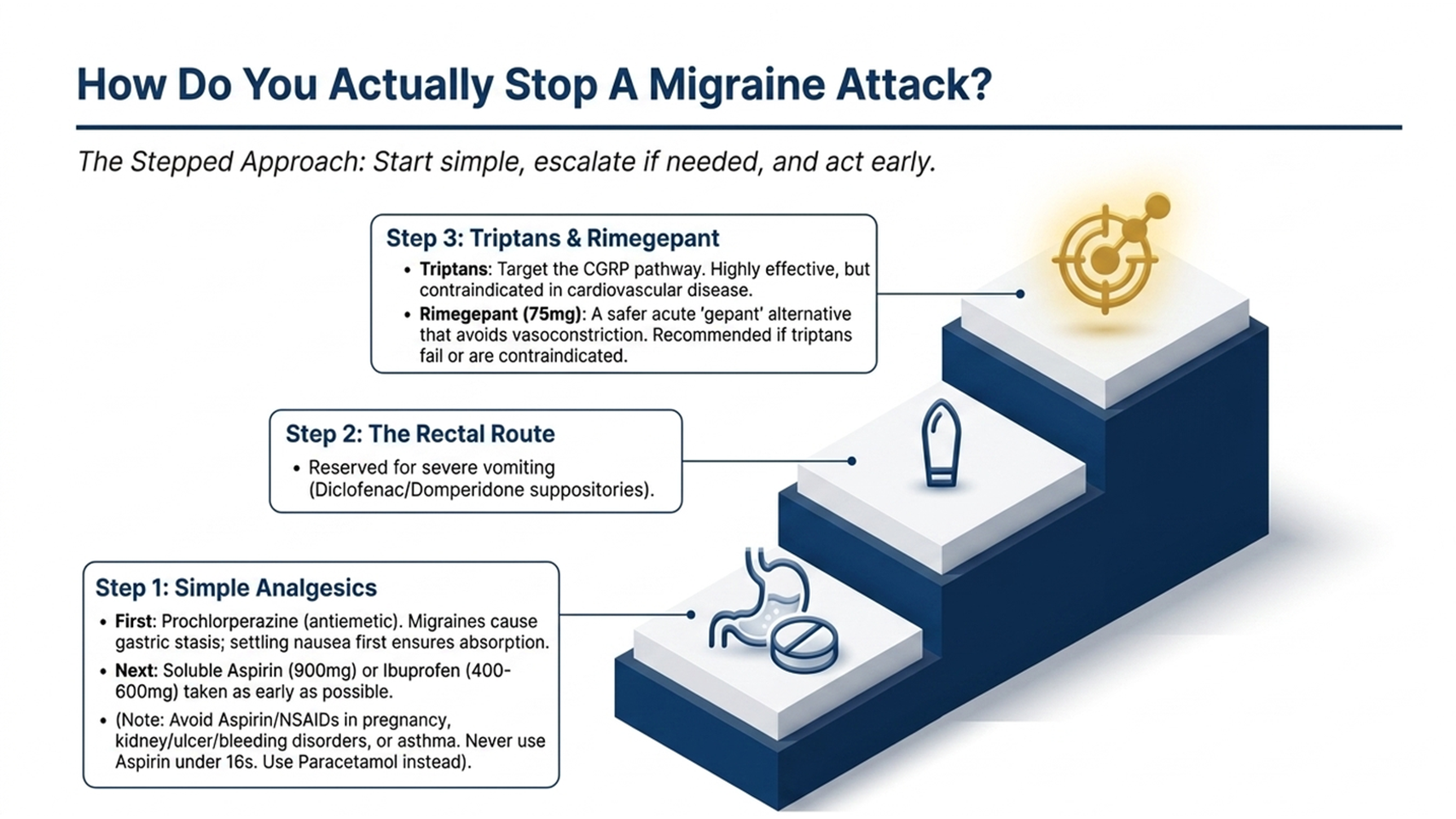
Abortive treatment follows a stepped approach. Start simple, escalate only if needed, and use the medication early in the attack rather than waiting to see if it becomes severe.
Step One: Simple Analgesics
- Take prochlorperazine (an antiemetic) first, ahead of the analgesic itself
- This is a deliberate sequencing point, not just an add-on for nausea. Migraine causes gastric stasis, which slows everything in the gut, including absorption of whatever you take next
- Settling the nausea first makes it practically easier to keep fluids down and to tolerate the analgesic that follows, rather than risking it coming back up
- Once that is on board, follow with soluble aspirin 900mg or ibuprofen 400 to 600mg, taken as early in the attack as possible
- Suitable for mild to moderate attacks. Individuals with moderate to severe migraine from the outset should move straight to step three
- Aspirin and NSAIDs are not suitable for everyone. Avoid or seek medical advice first if any of the following apply:
- Known allergy or hypersensitivity to aspirin or NSAIDs, including a history of asthma triggered by these medications
- Current or previous stomach ulcer, or a history of gastrointestinal bleeding
- Bleeding disorders, or use of anticoagulant medication
- Significant kidney disease
- Pregnancy, particularly the third trimester
- Aspirin specifically should never be used in children or teenagers under 16 due to the risk of Reye’s syndrome
- In these situations, paracetamol is generally the safer first-line option, alongside the antiemetic
Step Two: Rectal Route
- Reserved for those who cannot tolerate oral medication due to vomiting
- Diclofenac and domperidone suppositories are the standard combination
- Not commonly needed, but useful to know exists
Step Three: Triptans and Rimegepant
- Triptans are the preferred option once simple analgesics have failed, or from the outset for moderate to severe attacks
- They work by targeting the same CGRP pathway involved in the attack itself, and are most effective when taken during the established headache phase
- Contraindicated in uncontrolled hypertension, coronary heart disease, and cerebrovascular disease
- Rimegepant 75mg, taken as needed, is the acute gepant option once triptans have not worked. NICE recommends it only after 2 or more triptans have failed, or where triptans are contraindicated or not tolerated, and standard NSAIDs and paracetamol have also failed
- On effectiveness, a large systematic review of 137 randomised controlled trials involving almost 90,000 patients found that triptans remain more effective than gepants for both early and sustained pain relief, with gepants performing roughly in line with standard NSAIDs for acute relief. At 2 hours, around 21% of individuals taking rimegepant 75mg were pain-free, compared with 13% on placebo
- The real advantage of rimegepant is safety rather than superior effectiveness. It does not cause vasoconstriction, making it a genuine option for individuals with cardiovascular disease where triptans are contraindicated, and unlike triptans, NSAIDs or opioids, it does not appear to drive medication overuse headache
Alongside Abortive Treatment: Identify Your Triggers
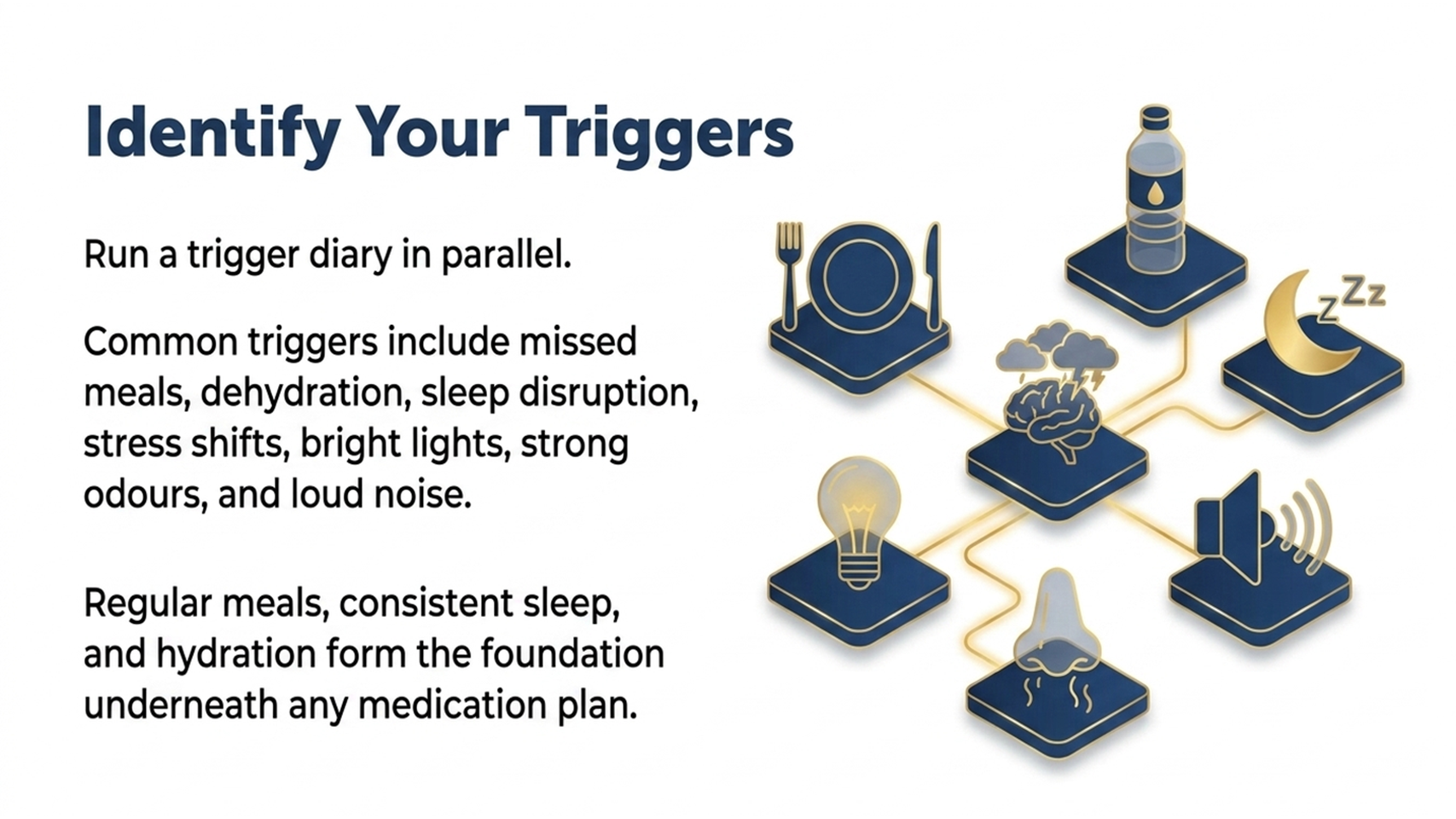
- A trigger and attack diary should run in parallel with any abortive plan, not as an afterthought
- Common, well recognised triggers include:
- Missed meals and dehydration
- Sleep deprivation, or oversleeping
- Stress, and the drop in stress after a demanding period
- Bright or flickering light, strong odours, loud noise
- Not every trigger can be avoided, but identifying a genuine pattern allows for targeted lifestyle changes rather than guesswork
- Regular meals, consistent sleep timing, and adequate hydration form the practical foundation underneath any medication plan
For individuals whose attacks remain frequent or severe despite this approach, the next step is prophylactic treatment, covered below, guided by NICE criteria.
Why Should Opioids Be Avoided In Migraine Treatment?
- Opioids are sometimes reached for when other treatments have not worked quickly enough, or are prescribed without full consideration of what migraine actually needs
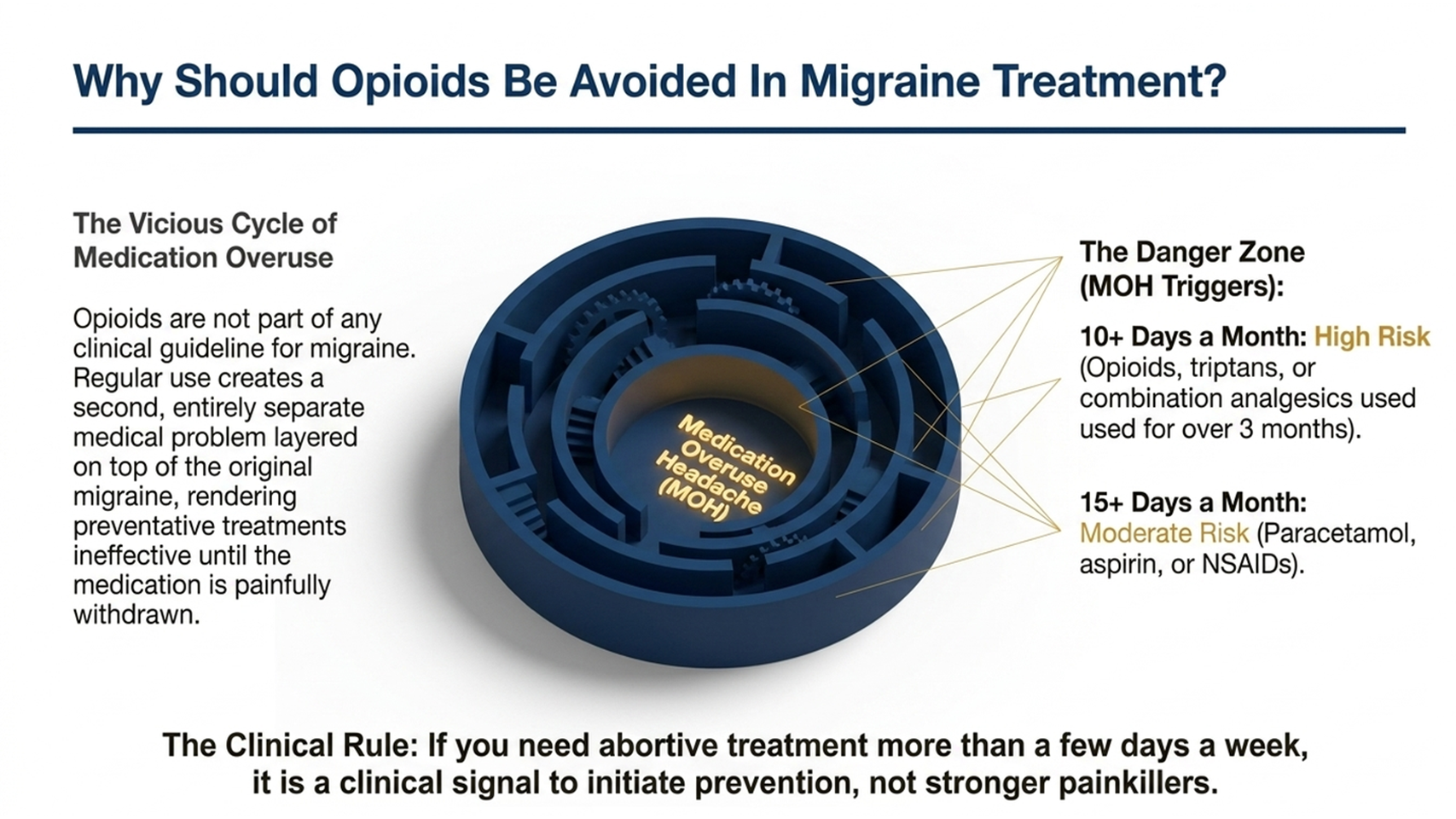
- This is a genuine trap, not a minor caveat. Opioids are not part of any current guideline recommended stepped approach to migraine, and regular use creates a second, separate problem on top of the original one
- Medication overuse headache (MOH) develops when acute treatment is used too frequently:
- Opioids, triptans, combination analgesics or ergotamines used on 10 or more days a month for over 3 months
- Simple analgesics such as paracetamol, aspirin or NSAIDs used on 15 or more days a month for over 3 months
- Opioids carry the highest risk of driving this pattern among all acute treatments, alongside a genuine risk of dependence with longer term use
- Once MOH develops, the clinical picture becomes considerably harder to manage. The individual is no longer dealing with migraine alone, but with a headache disorder driven partly by the treatment itself. Withdrawal of the overused medication becomes a necessary, often difficult, step before any prophylactic treatment can be expected to work properly
- The practical takeaway: if an abortive treatment is being reached for more than a few days a week, this is not simply a sign to take more, it is a sign to review the whole management plan, ideally with your GP, and to consider whether prophylactic treatment should now be part of the picture
Living With Frequent Migraine?
- Continuity of care means your treatment plan evolves as your migraine pattern changes
- A structured review catches medication overuse risk before it becomes a separate problem
- Prevention and abortive treatment are managed together, not in isolation
When Should Prevention Become Part Of The Plan?
- Prophylactic treatment is a daily, ongoing medication taken to reduce how often attacks happen, not to treat one already underway
- NICE guidance recommends considering prophylaxis when:
- Migraine attacks occur more than once a week on average, or are prolonged and severe despite well managed acute treatment
- Acute treatments are contraindicated, poorly tolerated, or simply not working
- There is a risk of medication overuse headache developing from frequent acute drug use
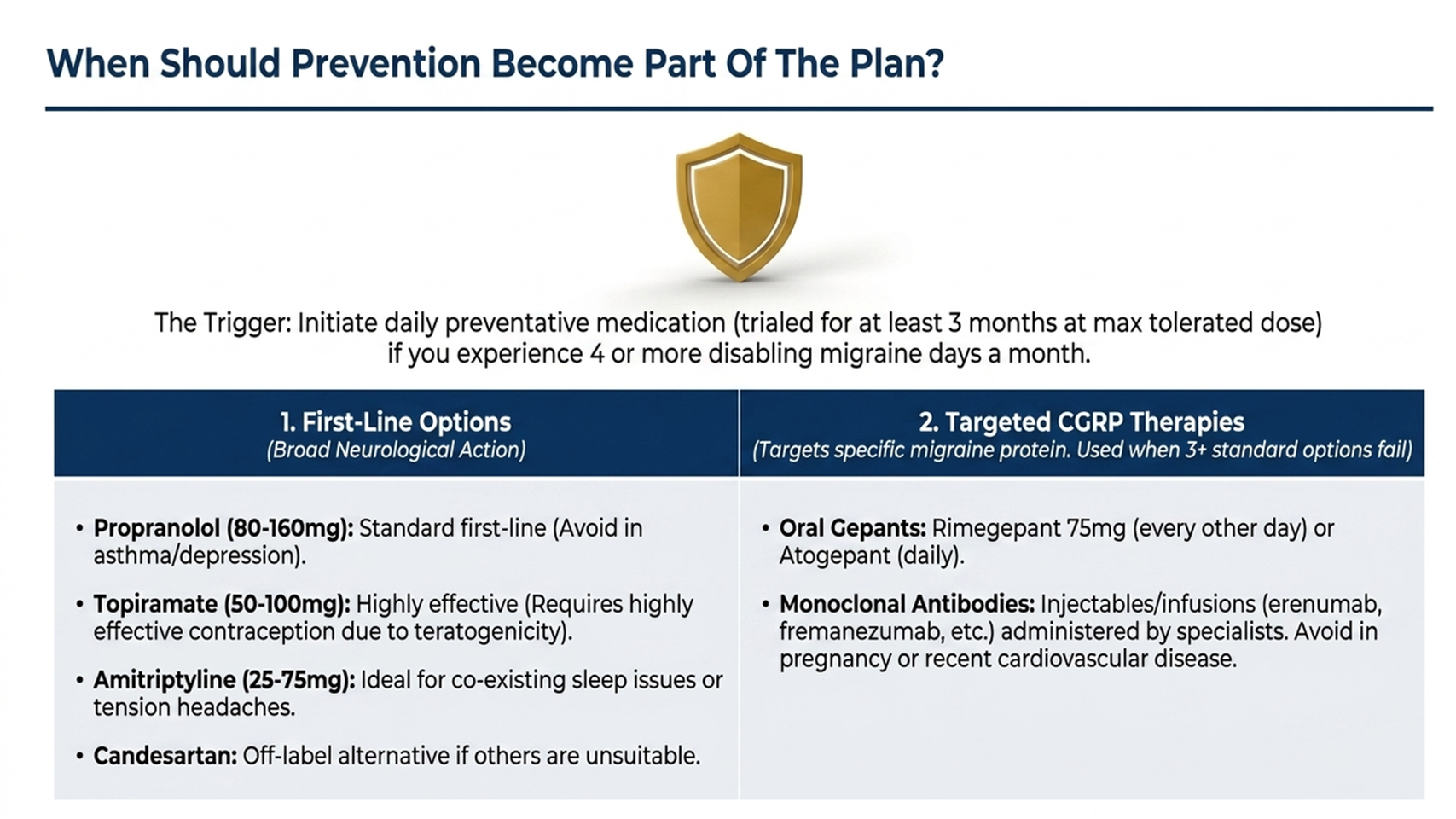
- As a working figure, individuals experiencing 4 or more disabling migraine days a month should have this conversation with their GP
First-line Options
- Propranolol 80 to 160mg daily is generally first-line, though it should be avoided in asthma or significant depression
- Topiramate 50 to 100mg daily is an effective alternative, but carries a teratogenicity risk and requires highly effective contraception in anyone of childbearing potential
- Amitriptyline 25 to 75mg at night suits individuals with coexisting sleep difficulty or tension-type headache, alongside migraine
- Candesartan can also be considered, particularly where beta-blockers or topiramate are unsuitable, though evidence supporting its use is more limited and it remains an unlicensed indication for migraine
Setting Realistic Expectations
- Prophylactic treatment is started at a low dose and increased gradually
- It should be trialled for at least 3 months at the maximum tolerated dose before deciding whether it is working
- A good response is defined as a 50% reduction in attack frequency and severity, not complete resolution
- Review is typically considered at 6 to 12 months, with many individuals able to gradually come off treatment once attacks have been well controlled for a sustained period
When Standard Options Are Not Enough: CGRP-Targeted Therapies
- This route applies to prevention, not to treating an attack in progress. If 3 or more standard prophylactic medications, such as propranolol, topiramate, amitriptyline or candesartan, have been properly trialled without reaching adequate benefit, referral to a specialist headache clinic is appropriate, and a newer class of preventative treatment becomes available
- These therapies work by directly targeting CGRP, the same protein responsible for the vessel widening and nerve irritation that drives migraine pain, rather than acting on broader neurological pathways the way propranolol, topiramate or amitriptyline do
- Two prophylactic gepants are available, both oral, small-molecule CGRP antagonists:
- Rimegepant 75mg, taken every other day, approved by NICE for preventing episodic migraine in adults with 4 to 15 attack days a month, once 3 or more standard oral preventatives have failed
- Atogepant, taken daily, approved by NICE in May 2024 for preventing both episodic and chronic migraine in adults with 4 or more migraine days a month, again after 3 or more standard preventatives have failed
- Both must be reviewed and stopped at 12 weeks if attack frequency has not fallen by at least 50% in episodic migraine, or 30% in chronic migraine
- Prophylactic gepants are notably cheaper than injectable CGRP monoclonal antibodies, roughly £180 a month compared with £385 to £450 a month, which supports their endorsement for primary care prescribing subject to local formularies
- CGRP monoclonal antibodies, including erenumab, fremanezumab, galcanezumab and eptinezumab, target the same pathway but are given by injection or infusion, monthly or three-monthly depending on the agent, and remain specialist-initiated treatments
- Co-prescribing is generally straightforward: rimegepant can be used acutely alongside a prophylactic gepant or a CGRP monoclonal antibody, and individuals who benefit from triptans can continue using them alongside prophylactic gepants or monoclonal antibodies
- Gepants, like monoclonal antibodies, should be avoided in pregnancy and breastfeeding, and avoided in individuals with significant cardiovascular or cerebrovascular disease within the preceding 6 months
- These represent a genuinely different mechanism from older prophylactic options, and for individuals who have exhausted standard treatment without success, they are worth actively raising with your GP or requesting specialist referral for, rather than assuming nothing further is available
Are Supplements Worth Considering Alongside Standard Migraine Treatment?
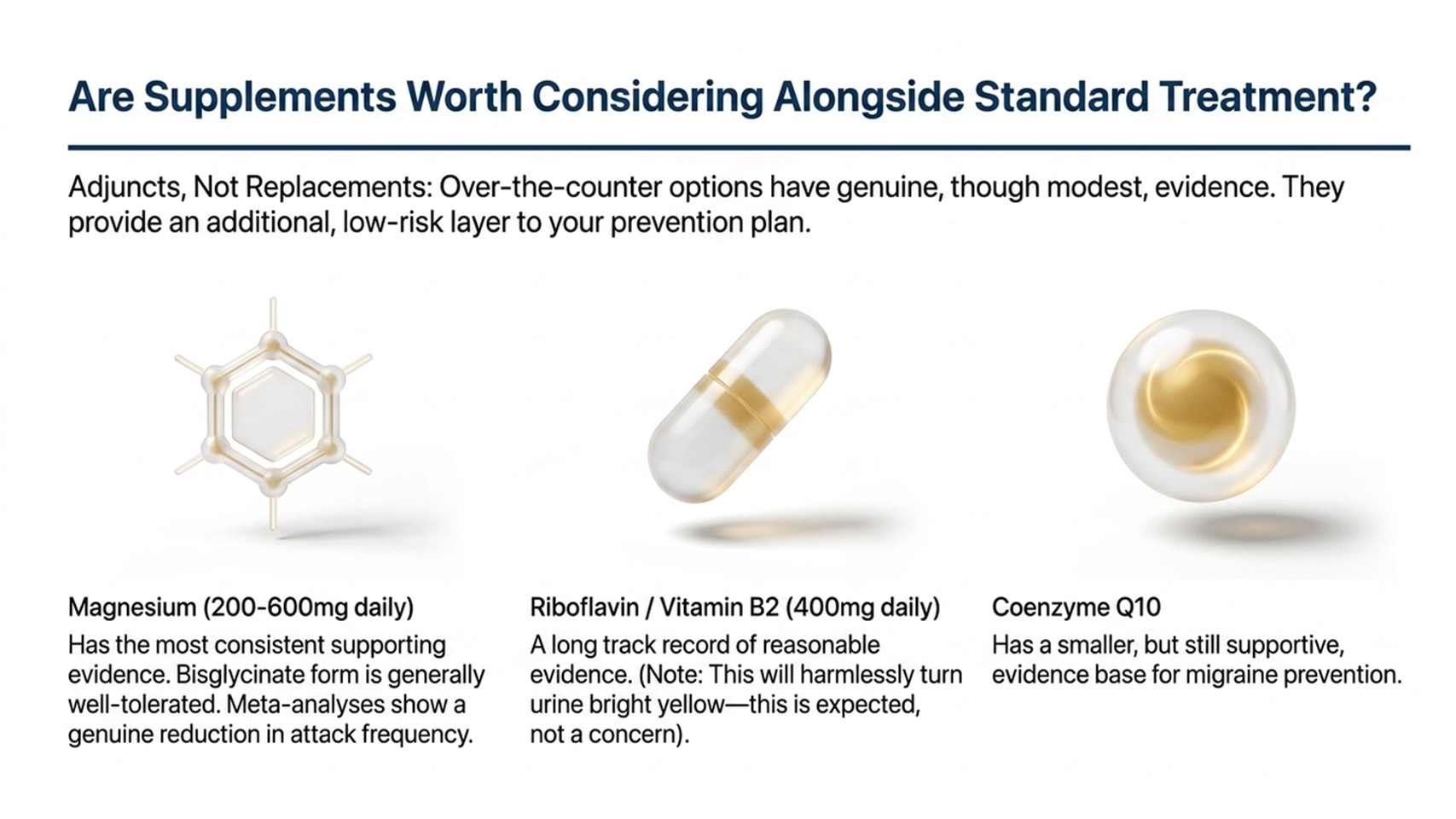
- Some over the counter options have genuine, though modest, evidence behind them and are reasonable to discuss as adjuncts, not replacements, for standard treatment
- Magnesium (200 to 600mg daily, bisglycinate form generally well tolerated) has the most consistent supporting evidence among supplement options, with meta-analyses showing a genuine reduction in attack frequency
- Riboflavin (vitamin B2) 400mg daily has a long track record and reasonable evidence, though it will noticeably turn urine bright yellow, worth mentioning so it is not mistaken for a concern
- Coenzyme Q10 has a smaller but supportive evidence base
- None of these supplements come close to the evidence base of standard prophylactic medication or CGRP-targeted treatment. They are reasonable adjuncts for individuals who want an additional, low-risk layer to their prevention plan, not a substitute for it
The Key Points
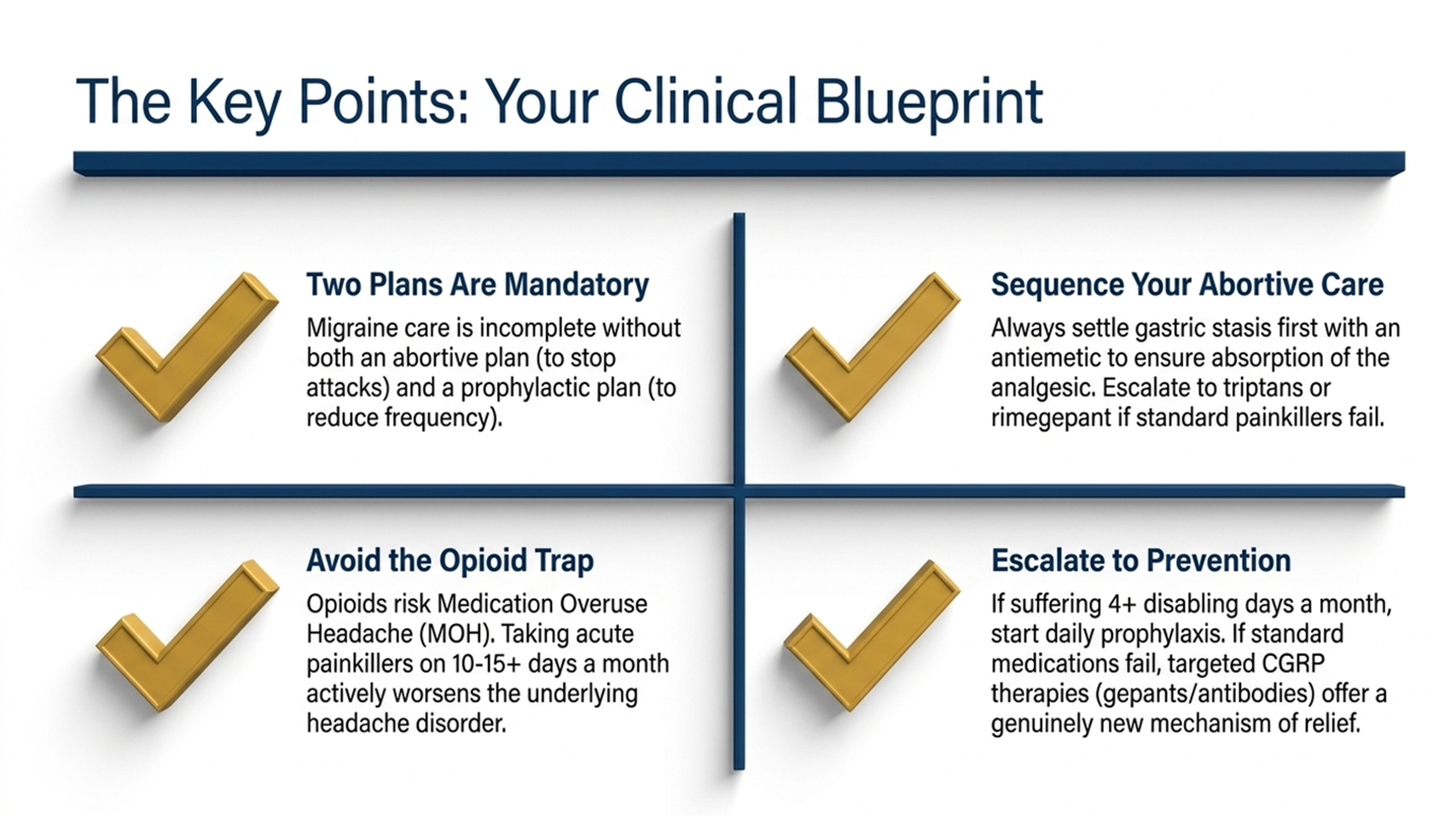
- Migraine management requires two separate plans working together: abortive treatment to stop an attack, and prophylactic treatment to reduce how often attacks happen.
- Abortive treatment follows a stepped approach, starting with an antiemetic and simple analgesic, escalating to triptans and then rimegepant, while avoiding aspirin or NSAIDs in those with a clear contraindication.
- Opioids should be avoided in migraine treatment, since regular use risks causing medication overuse headache, a separate and harder to treat problem layered on top of the original migraine.
- Prophylactic treatment should be considered once attacks occur more than once a week, or reach 4 or more disabling migraine days a month, with propranolol, topiramate, amitriptyline and candesartan as first-line options.
- Prophylactic gepants and CGRP monoclonal antibodies offer a genuinely different mechanism, and a more affordable oral route via gepants, for individuals who have not responded to standard prophylaxis.
What This Means For You
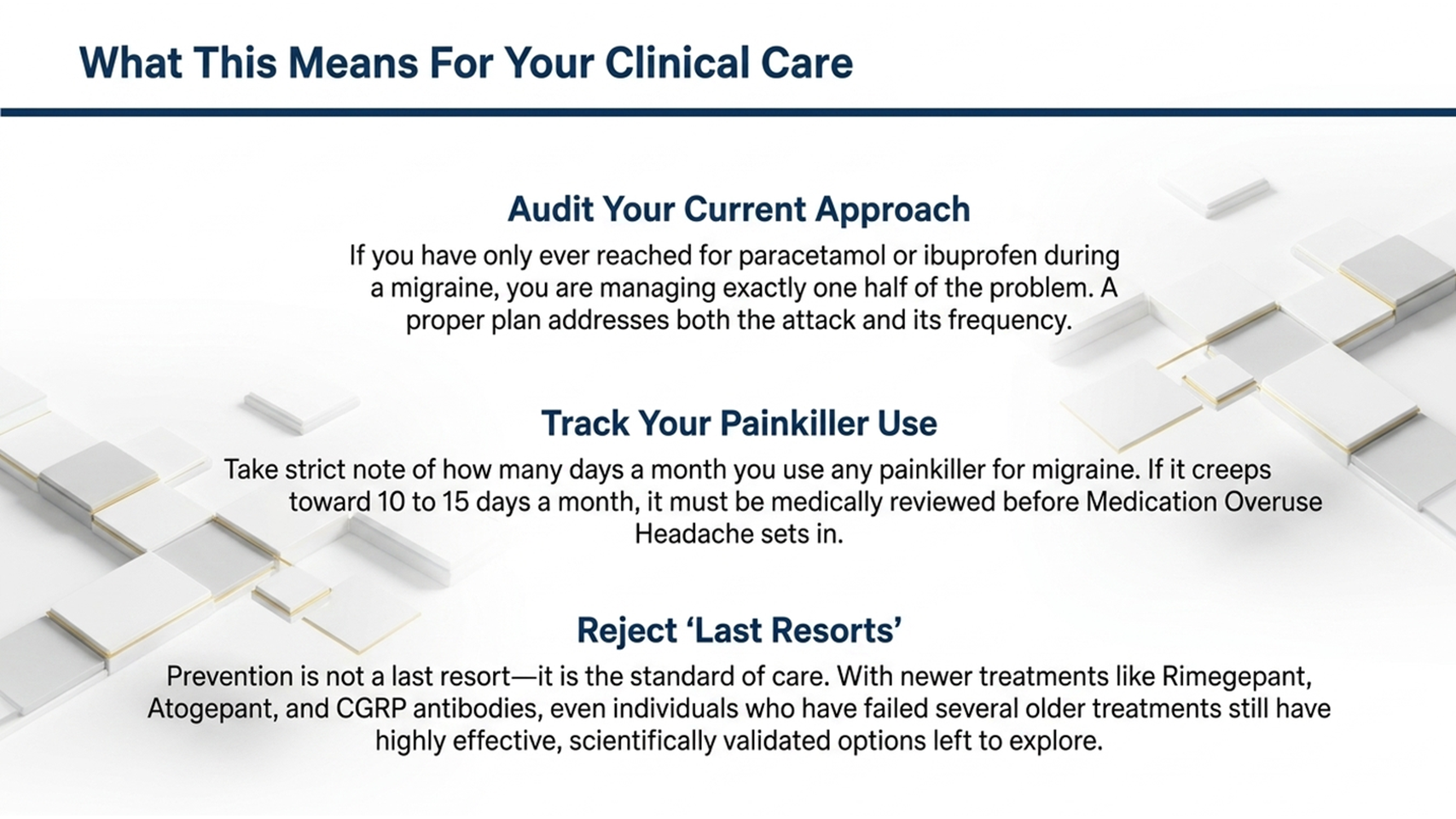
- If you have only ever reached for paracetamol or ibuprofen during a migraine, you are managing one half of the problem. A proper migraine treatment plan addresses both the attack itself and how often it happens
- Take note of how many days a month you are using any painkiller for migraine. If it is creeping toward 10 to 15 days a month, this is worth raising with your GP before it becomes medication overuse headache rather than after
- If you are currently using opioids for migraine, or have been offered them, this is worth a specific conversation with your GP about safer, more effective alternatives
- If your attacks are frequent, severe, or disrupting your work and daily life, prevention is not a last resort. It is a standard, well evidenced part of migraine care that many individuals are simply never offered
- Newer treatments such as rimegepant, atogepant and CGRP antibodies mean that even individuals who have tried and failed several older treatments, whether for stopping attacks or preventing them, still have genuine options left to explore
- For a fuller understanding of migraine as a condition, The Migraine Trust offers further patient information
- At IM Clinic, migraine assessment includes a full review of both your abortive and preventative treatment plan, tailored to your specific pattern of attacks rather than a one size fits all approach
Ready To Build A Proper Migraine Plan?
- Every migraine pattern is different, and so is the right combination of abortive and preventative treatment
- Ongoing review means your plan adapts as NICE guidance and treatment options evolve
- Specialist referral pathways are discussed where standard options have not worked
Dr Imran Mughal, Private Specialist GP
Website: www.imclinic.co.uk
Book a consultation: https://notes.thanksdoc.co.uk/book/clinic/im-clinic
References
Migraine management. Patient.info. 2025.
Migraine prophylaxis in adults. Patient.info. 2024.
Headaches in over 12s: diagnosis and management. NICE Clinical Guideline CG150. 2021.
Rimegepant for preventing migraine. NICE Technology Appraisal Guidance TA906. 2023.
Atogepant for preventing migraine. NICE Technology Appraisal Guidance TA973. 2024.
Talandashti MK, Shahinfar H, Delgarm P, Jazayeri S. Effects of selected dietary supplements on migraine prophylaxis: a systematic review and dose-response meta-analysis of randomized controlled trials. Neurol Sci. 2024;46(2):651-670.


We would love to hear your thoughts. A few things to keep in mind before you post: