


Why Is My Iron Low? The Real Causes of Iron Deficiency at Every Age
- Iron deficiency is one of the most common issues we see in general practice.
- Why is my iron low? Understanding the answer matters just as much as knowing the number itself.
- The cause is not the same for everyone. It depends on what is going on in your body and, often, on your age and stage of life.
- In our last post, we looked at what your ferritin and iron results actually mean.
- This post looks at the reasons behind those results, starting with what actually drives iron deficiency, before looking at who is most affected and why.
What Causes Low Iron?
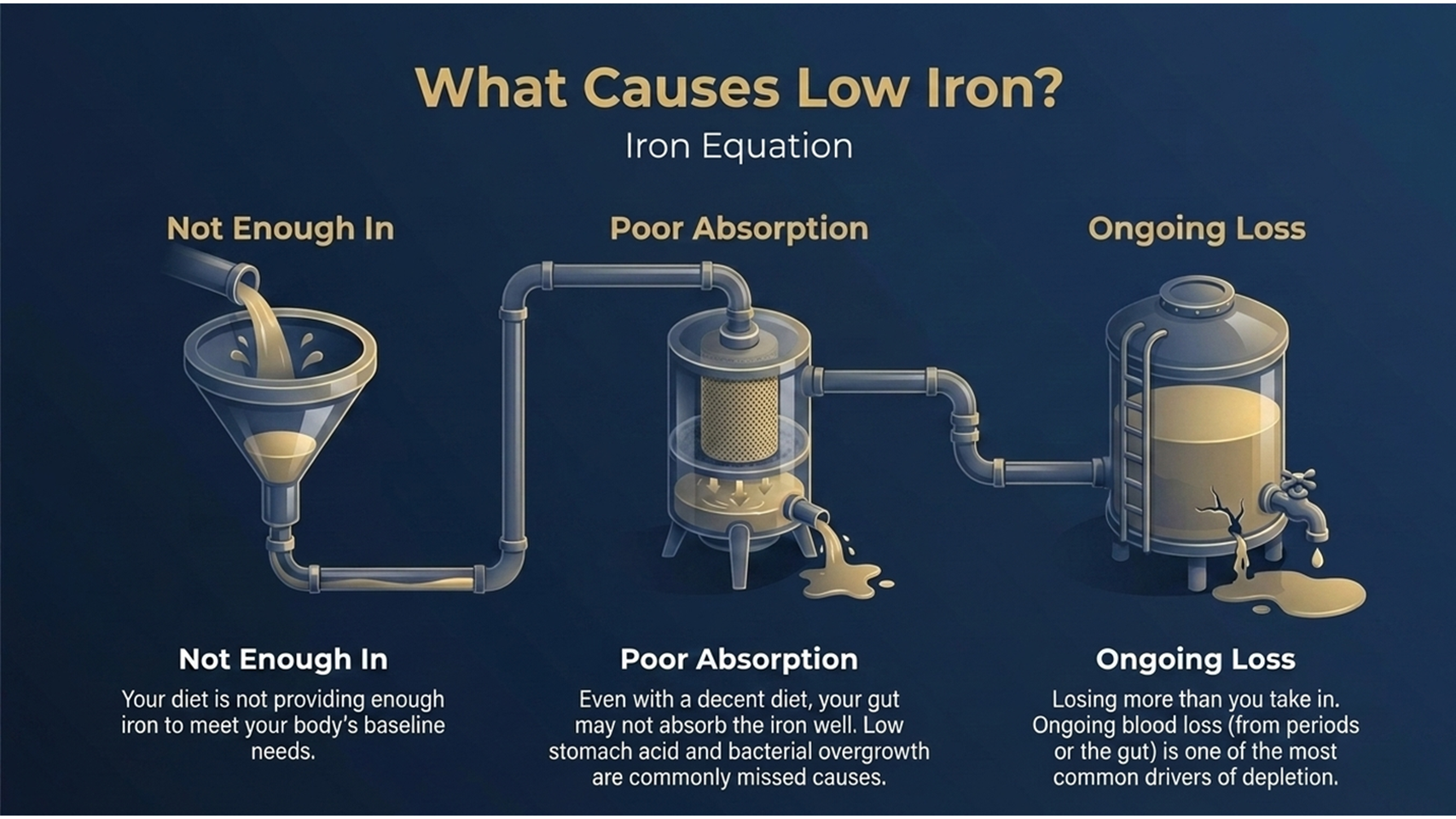
- There are really just three main ways your iron can become depleted.
- Not enough coming in. Your diet is not giving you enough iron to meet your body’s needs.
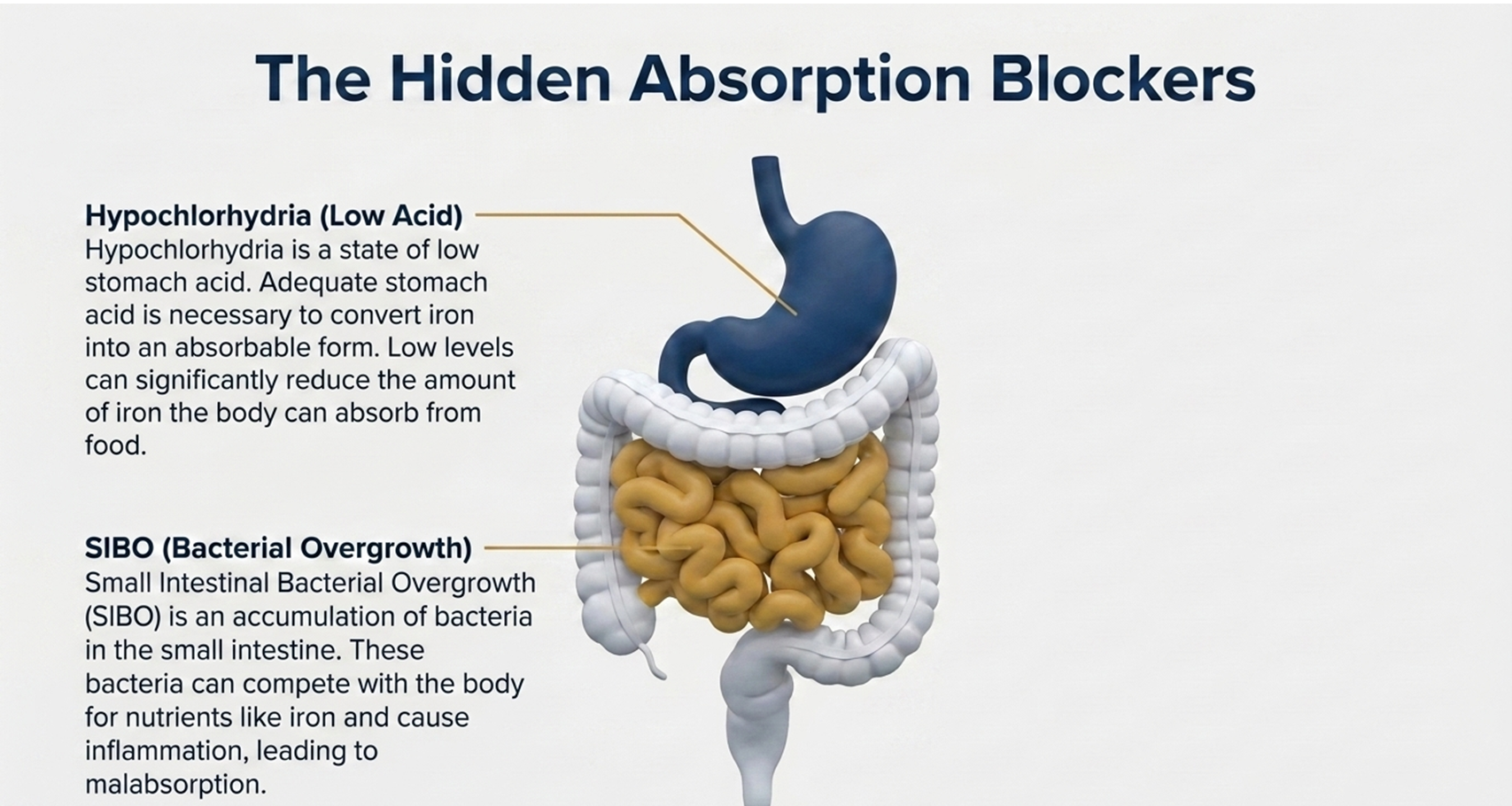
- Not being absorbed properly. Even with a decent diet, your gut may not be absorbing the iron well. Low stomach acid (hypochlorhydria) and small intestinal bacterial overgrowth (SIBO) are two commonly missed causes.
- Losing more than you take in. Ongoing blood loss, from periods or the gut, is one of the most common reasons individuals become iron deficient.
- In most cases, low iron comes down to one of these three mechanisms, or a combination of them.
Why Is My Iron Low? It Depends on Your Age and Stage of Life
- The same three causes show up very differently depending on who you are.
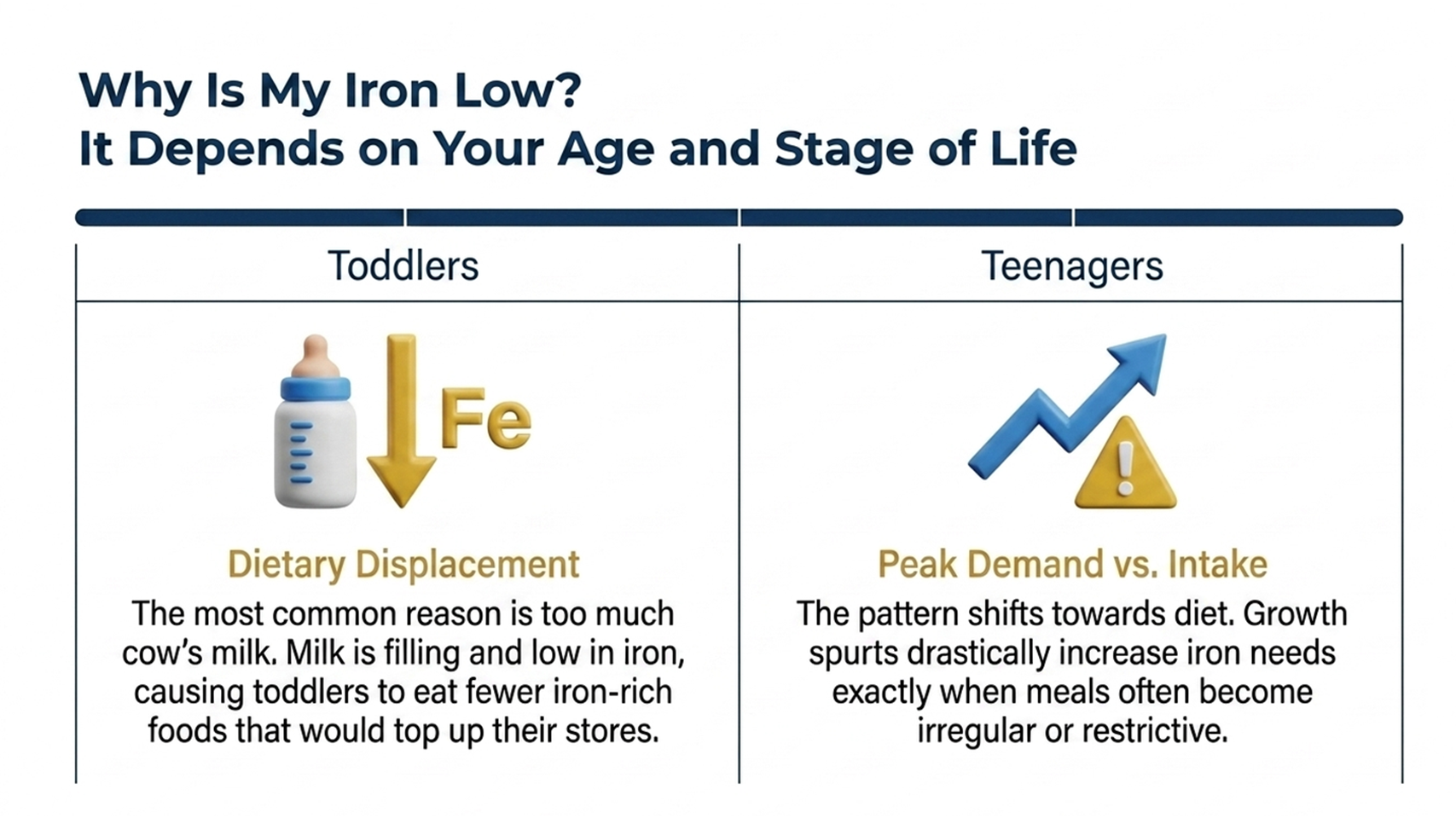
- Toddlers. The most common reason is simply too much cow’s milk. Milk is filling and low in iron, so toddlers who drink a lot of it often eat less of the iron-rich foods that would otherwise top up their stores (Bondi and Lieuw, Clinical Pediatrics, 2009).
- Teenagers. The pattern usually shifts towards diet. Growth spurts increase iron needs at exactly the age when meals can become irregular or restrictive.
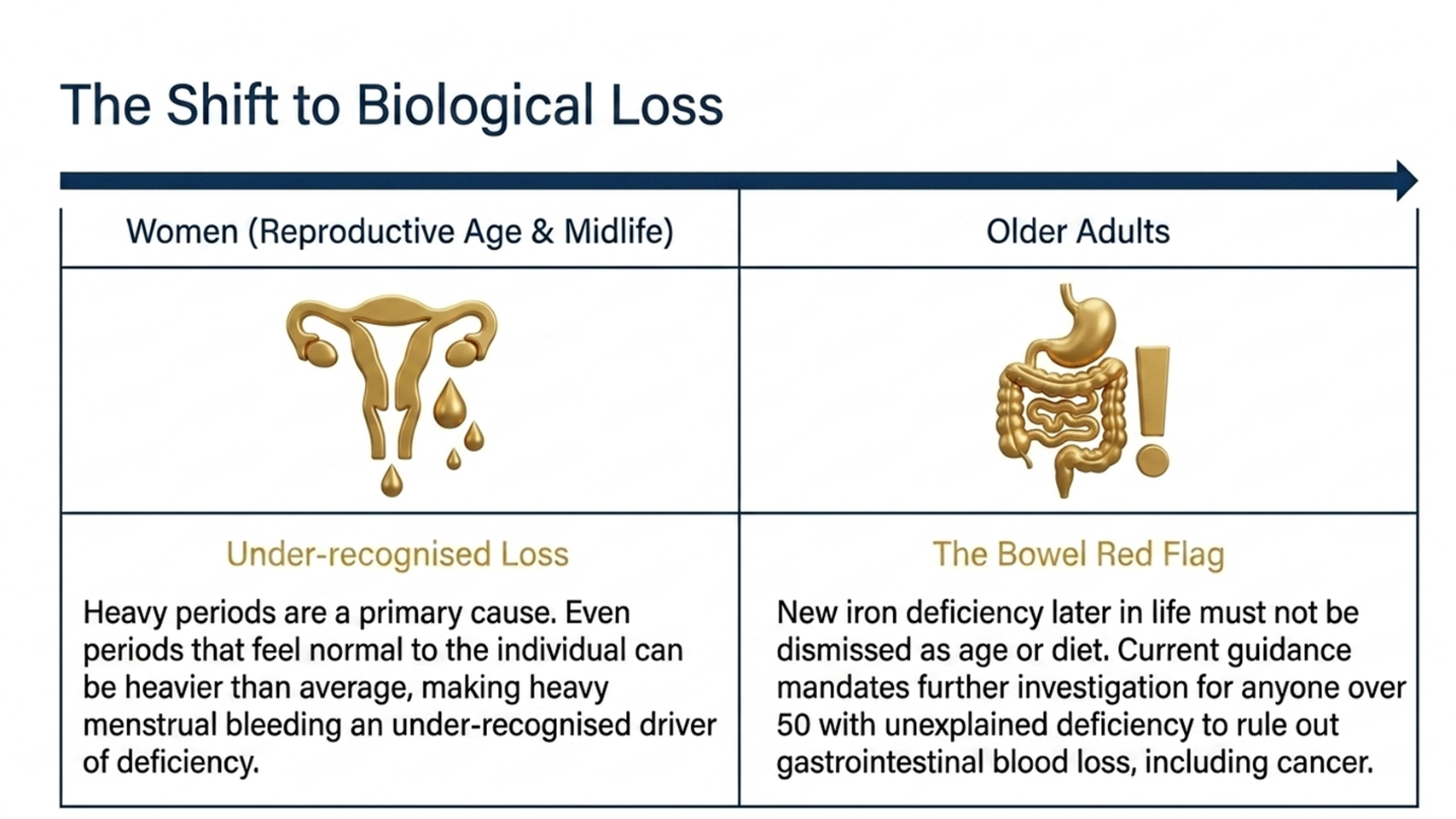
- Women of reproductive age and midlife. Heavy periods are one of the most common reasons individuals are found to be iron deficient. Even periods that feel normal to you can be heavier than average, and heavy menstrual bleeding is a recognised cause of iron deficiency that is often under-recognised (NICE Guideline NG88, Heavy Menstrual Bleeding).
- Older adults. The focus shifts to the bowel. New iron deficiency later in life should not simply be put down to age or diet alone. Because gastrointestinal blood loss, including from bowel or stomach conditions such as cancer, is a recognised cause of iron deficiency in this age group, current guidance recommends further investigation for anyone over 50 with new, unexplained iron deficiency (Snook et al, British Society of Gastroenterology Guidelines for the Management of Iron Deficiency Anaemia in Adults, Gut, 2021). Older individuals with iron deficiency, even without anaemia, are also more likely to have an underlying gastrointestinal cause found on investigation than younger individuals (Alexandre et al, European Journal of Internal Medicine, 2020).
- That is why individuals with new iron deficiency later in life are usually investigated more thoroughly, rather than simply being started on a supplement.
Continuity of Care With One GP
- See the same GP each time, so nothing about your history gets missed between appointments.
- Book appointments that fit around your life, your job and your family.
- Have one doctor who reviews your iron alongside your wider health picture, not as an isolated result.
Why Is My Iron Low Even When My Bloods Look Normal?
- There is a group of individuals who do not fit neatly into any of the categories above.
- They have already had the usual investigations, and nothing has explained why their iron remains low.
- This is often where a functional medicine lens can add something the standard workup has missed, and it brings us back to the absorption issue described earlier.
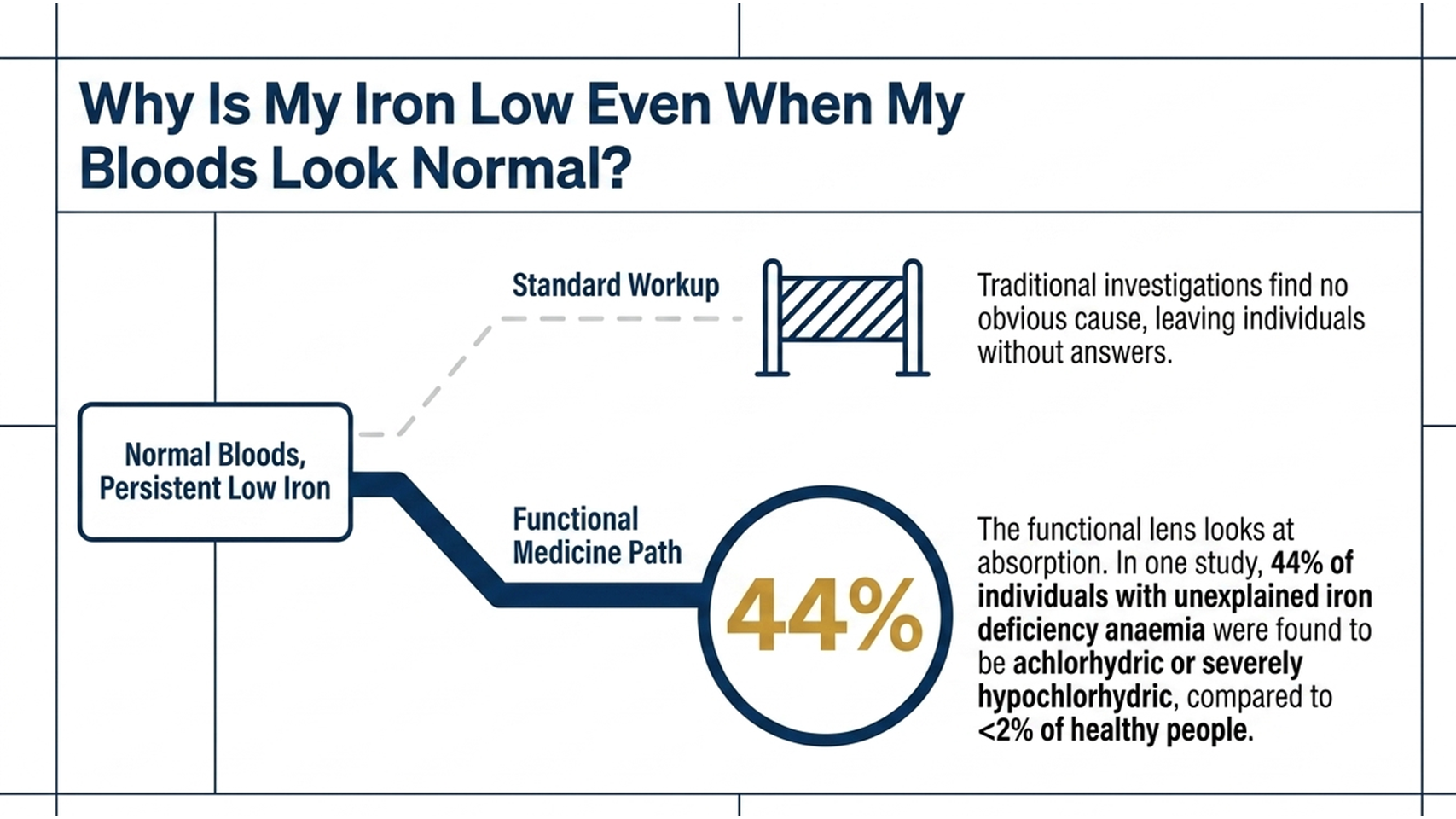
- Low stomach acid, or hypochlorhydria, makes it harder for the body to turn dietary iron into a form it can actually absorb.
- In one study of individuals with unexplained iron deficiency anaemia, 44% were found to be achlorhydric or severely hypochlorhydric, compared with under 2% of healthy people (Betesh et al, American Journal of Clinical Nutrition, 2015).
- SIBO can add to this, since bacteria in the small intestine compete for the iron available before your body has a chance to absorb it.
- Neither of these is routinely tested for in a standard iron deficiency workup, which is why they are so often missed.
The Key Points
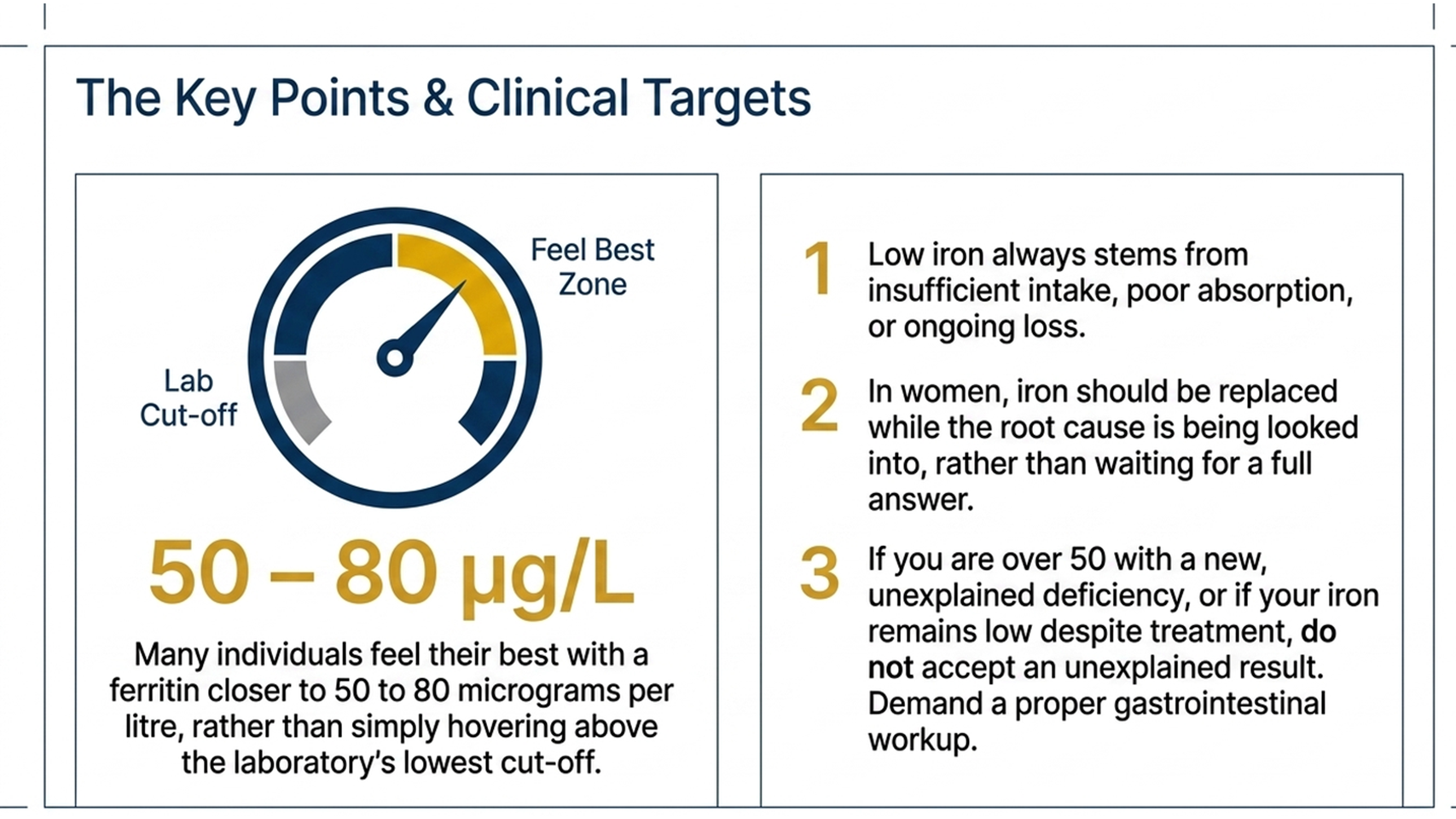
- Low iron usually comes down to one of three things: not enough iron coming in, poor absorption, or ongoing blood loss.
- Which one is affecting you often depends on your age and stage of life, from too much milk in toddlers, to heavy periods in midlife, to bowel-related causes later on.
- When standard tests do not show an obvious cause, low stomach acid and SIBO are often the missing pieces rather than there being no explanation at all.
- In women, iron should be replaced while the root cause is being looked into, rather than waiting for a full answer before treating the deficiency.
Continuity of Care With One GP
- See one GP who follows your iron levels over time, not just at a single appointment.
- Choose appointments that fit around your work and family life.
- Get a proper work up if your iron deficiency does not have an obvious explanation.
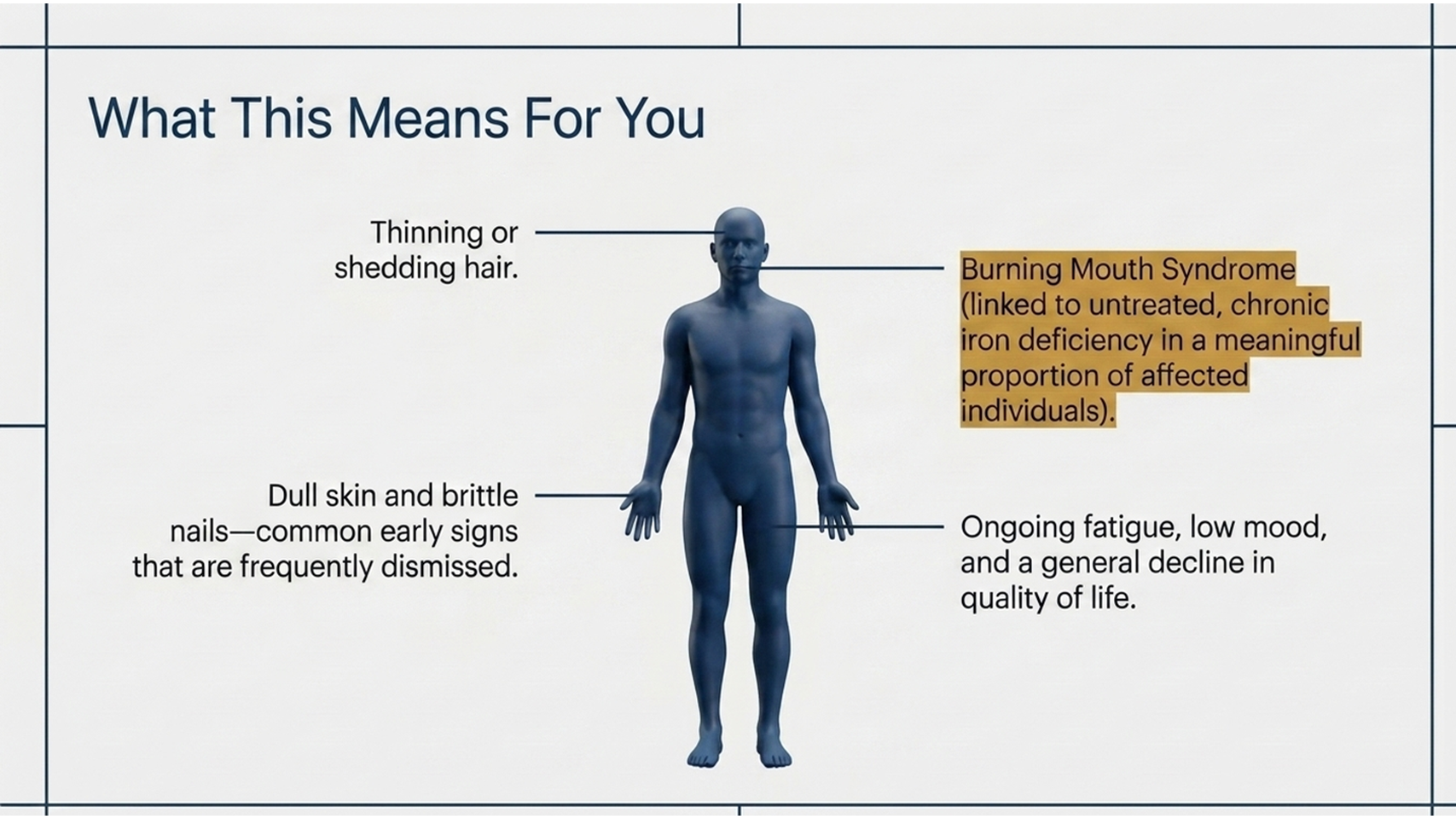
What This Means For You
- If you are a woman with low iron, treatment should not wait until a root cause is found.
- This matters because chronic low iron can affect far more than your energy levels.
- Brittle nails, thinning or shedding hair, and dull skin are common early signs that are often dismissed as unrelated.
- Left untreated for longer, low iron has also been linked to burning mouth syndrome, with iron deficiency present in a meaningful proportion of individuals affected (Lin et al, Journal of the Formosan Medical Association, 2013).
- Ongoing fatigue, low mood, and a general decline in quality of life are also commonly reported.
- As covered in our previous post, many individuals feel their best with a ferritin closer to 50 to 80 micrograms per litre, rather than simply above the laboratory’s lower cut-off.
- If you are over 50 with new, unexplained iron deficiency, or your iron has been low for a while without a clear cause, it is worth having a proper conversation about further investigation rather than accepting an unexplained result.
Author: Dr Imran Mughal, Private Specialist GP
Website: www.imclinic.co.uk
Book a consultation: https://notes.thanksdoc.co.uk/book/clinic/im-clinic
References
Bondi SA, Lieuw K. Excessive Cow’s Milk Consumption and Iron Deficiency in Toddlers: Two Unusual Presentations and Review. Clinical Pediatrics. 2009. https://doi.org/10.1177/1941406409335481
NICE Guideline NG88. Heavy Menstrual Bleeding: Assessment and Management. National Institute for Health and Care Excellence. https://www.nice.org.uk/guidance/ng88
Snook J, Bhala N, Beales ILP, et al. British Society of Gastroenterology Guidelines for the Management of Iron Deficiency Anaemia in Adults. Gut. 2021;70:2030-2051. https://doi.org/10.1136/gutjnl-2021-325210
Alexandre L, Broad J, Kanapathy S, et al. Prevalence of Gastrointestinal Malignancy in Iron Deficiency Without Anaemia: A Systematic Review and Meta-Analysis. European Journal of Internal Medicine. 2020. https://doi.org/10.1016/j.ejim.2019.10.010
Betesh AL, Santa Ana CA, Cole JA, Fordtran JS. Is Achlorhydria a Cause of Iron Deficiency Anemia? American Journal of Clinical Nutrition. 2015;102(1):9-19. https://doi.org/10.3945/ajcn.114.097394
Lin HP, Wang YP, Chen HM, Kuo YS, Lang MJ, Sun A. Significant Association of Hematinic Deficiencies and High Blood Homocysteine Levels With Burning Mouth Syndrome. Journal of the Formosan Medical Association. 2013;112(6):319-325. https://doi.org/10.1016/j.jfma.2012.02.022


We would love to hear your thoughts. A few things to keep in mind before you post: