


If you have been struggling with your weight for years, you are not alone. Understanding the real causes of obesity is the first step, and the answer is almost never as simple as eating less or trying harder.
“This is not a problem with your effort. It is a problem with your biology.”
Here is what I mean:
- When hormonal signals are telling your brain you are starving, willpower cannot silence them
- When your thyroid is underactive, your metabolism slows, regardless of how disciplined you are
- When fat cells become dysfunctional, they drive inflammation and hunger independent of your choices
Willpower does have a role to play. But only once you have had a proper structured assessment, the underlying biological drivers have been identified, and you have the right clinical support behind you.
I consult with patients on a regular basis who have tried multiple diets, pushed themselves at the gym, and followed the advice. And yet they are still struggling. What I find in almost every case is that they have never had a proper, structured clinical assessment. Not a quick chat about calories. A thorough evaluation to identify what is actually driving their weight.
Obesity deserves the same clinical rigour as diabetes or high cholesterol. It is a chronic, complex, recurrent medical condition, and it needs to be treated as one.
“If nobody has ever looked for the cause, nobody has ever treated the cause. This is where we start.”
What Is Actually Happening in the Body
Whatever the root cause, whether it started with genetics, a period of intense stress, a hormonal shift, or something that began before a person was even born, there is a common thread I see running through almost every case.
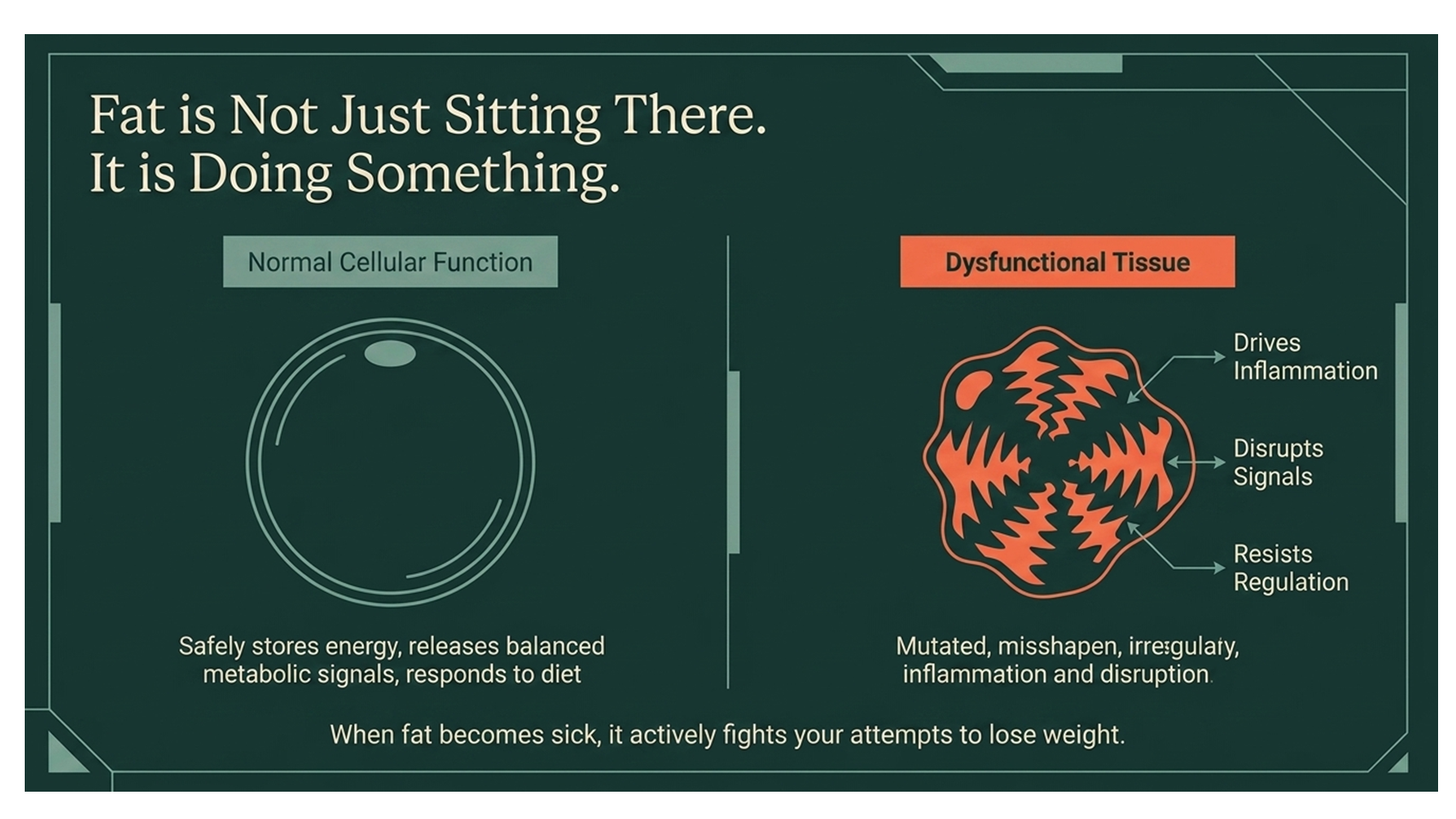
The fat cells themselves become unwell.
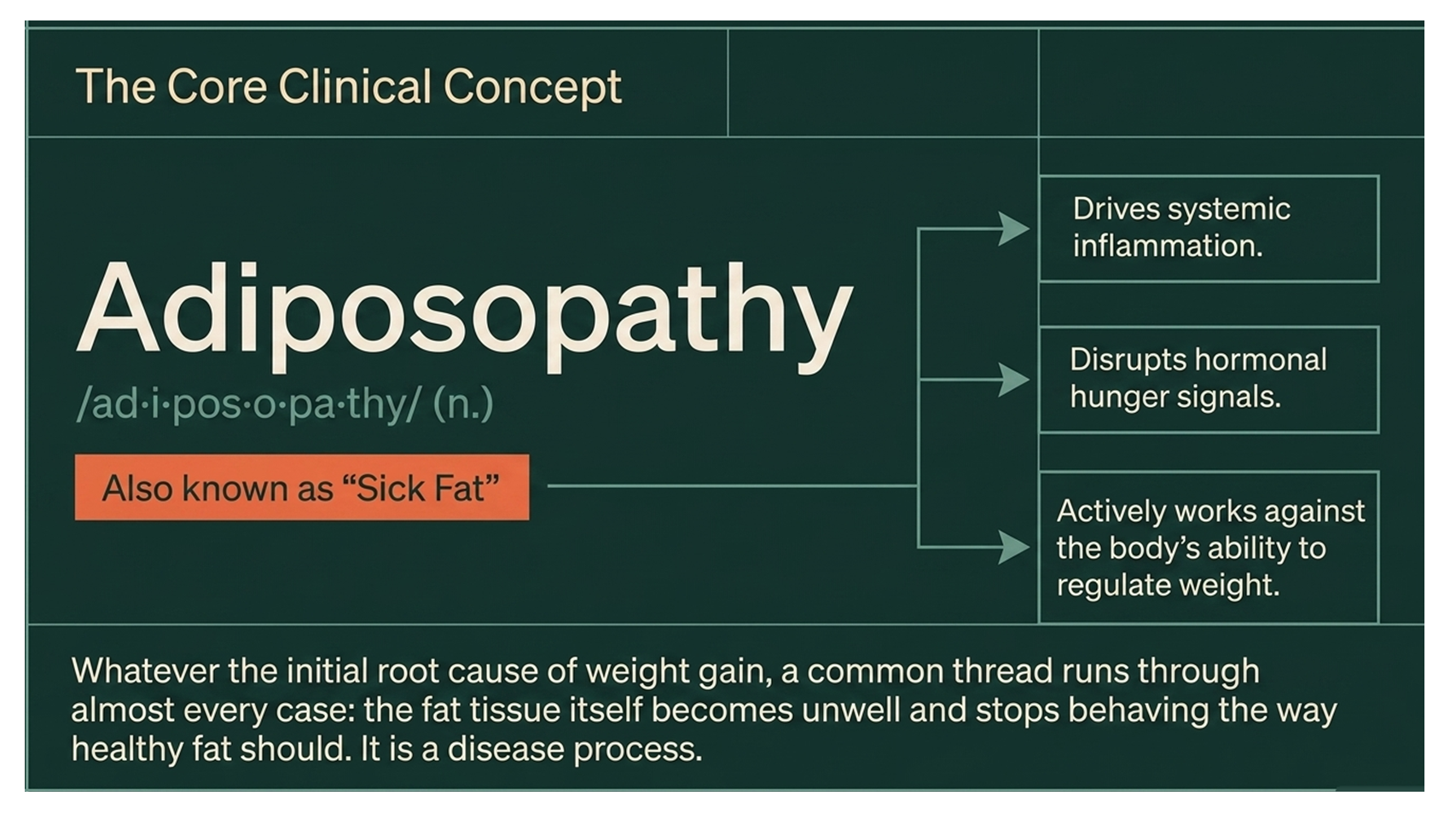
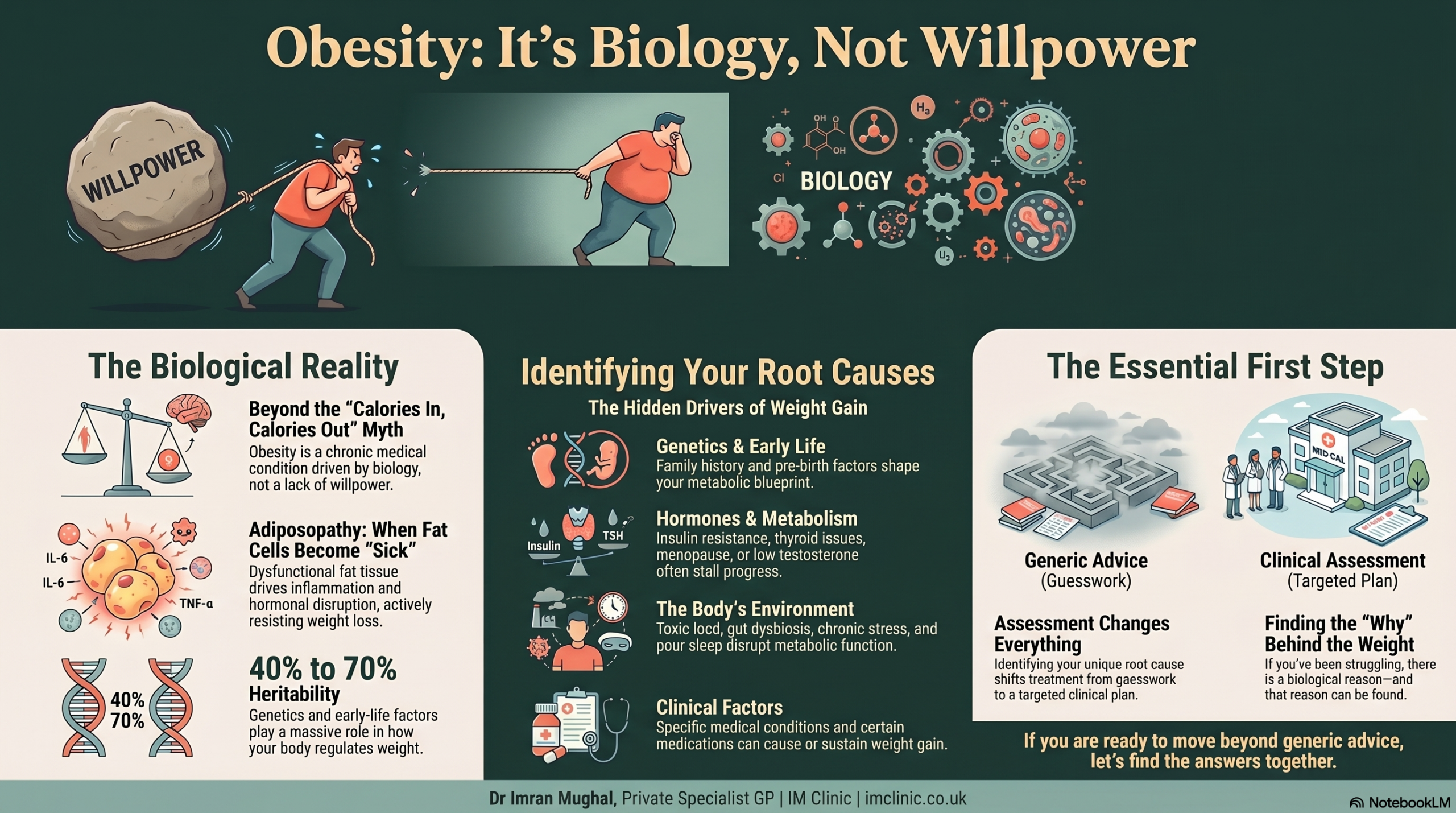
This is called adiposopathy, sometimes described as sick fat. It is one of the most underappreciated concepts in obesity medicine. When fat tissue becomes dysfunctional, it does three things:
- It drives chronic inflammation throughout the body
- It disrupts the hormonal signals that regulate appetite and weight
- It actively works against the body’s ability to lose or maintain a healthy weight
The fat is not just sitting there. It is doing something.
Treating obesity purely as a diet issue misses this entirely. Understanding what the fat tissue is doing is central to treating it properly.
The Main Causes of Obesity
Obesity is a heterogeneous condition, meaning there is no single cause. In my clinical experience, the drivers vary enormously from person to person. Some of the most important causes of obesity include:
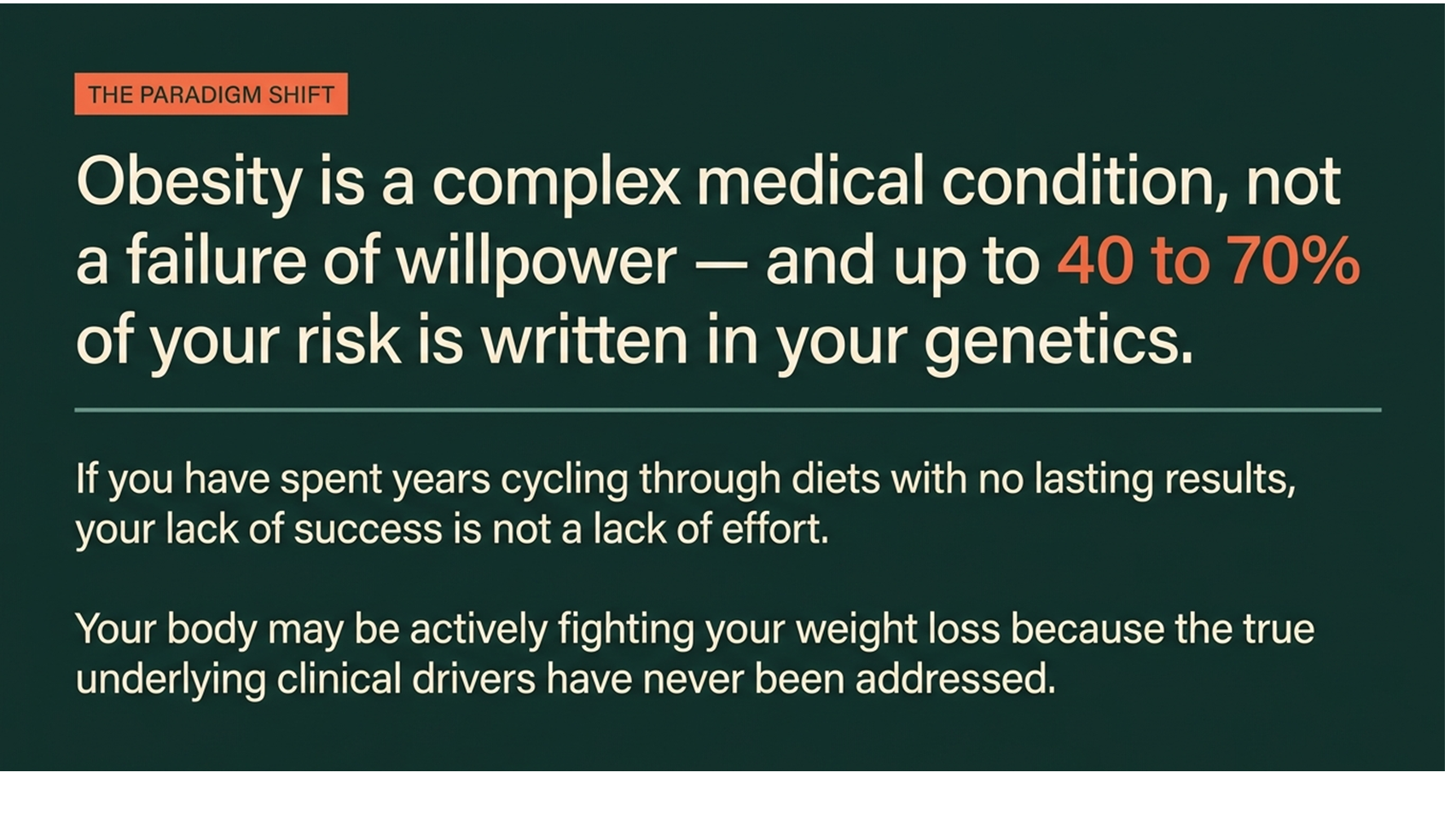
- Genetics and early life factors: family history is one of the strongest predictors of obesity, with heritability estimated at 40 to 70%. Factors before birth and early life experiences, such as how a child was fed, all shape how the body learns to regulate weight.
- Hormonal imbalances: thyroid conditions, testosterone deficiency, menopause, and insulin resistance are among the most commonly overlooked drivers of weight gain. When these are missed, no amount of dieting will produce lasting results.
- Toxic load: environmental chemicals, heavy metals, and other toxins accumulated in the body can disrupt metabolism and fat cell function in ways that are only now being more widely recognised in obesity medicine.
- Dysbiosis and gut health: the balance of bacteria in the gut has a direct influence on how the body processes food, manages inflammation, and regulates appetite.
- Sleep and stress: chronic stress raises cortisol, which drives fat storage particularly around the abdomen. Poor sleep disrupts the hormones that control hunger and fullness. Both are direct physiological contributors, not just lifestyle factors.
- Medical conditions and medications: hypothyroidism, PCOS, and Cushing’s syndrome, along with certain antidepressants, antipsychotics, and steroids, can all cause or sustain significant weight gain.
Why This Matters
Identifying the actual causes of obesity in each individual changes the treatment completely.
A patient whose weight is being driven by an underactive thyroid needs a very different approach to someone whose weight gain is rooted in chronic stress or a medication side effect. Without a proper assessment, treatment is essentially guesswork.
This is not a reflection of someone’s effort or commitment. It is a reflection of whether they have had the right assessment.
The Key Points
- Obesity is a chronic, complex medical condition, not a problem of willpower or diet
- When biology is driving weight, no amount of willpower can override it, because hormones, metabolism, and fat cell dysfunction operate independently of effort
- At the cellular level, fat tissue can become dysfunctional, a process called adiposopathy, which drives inflammation and actively resists weight loss
- The causes of obesity vary enormously between individuals and include genetics, hormonal imbalances, toxic load, gut health, sleep, stress, and certain medical conditions or medications
- Identifying the specific driver changes the treatment plan entirely, and a thorough, structured clinical assessment is the essential first step
What This Means For You
If you have been struggling with your weight and feel like you have tried everything, the most important thing I want you to take from this post is that there is almost certainly a biological reason, and that reason can be found.
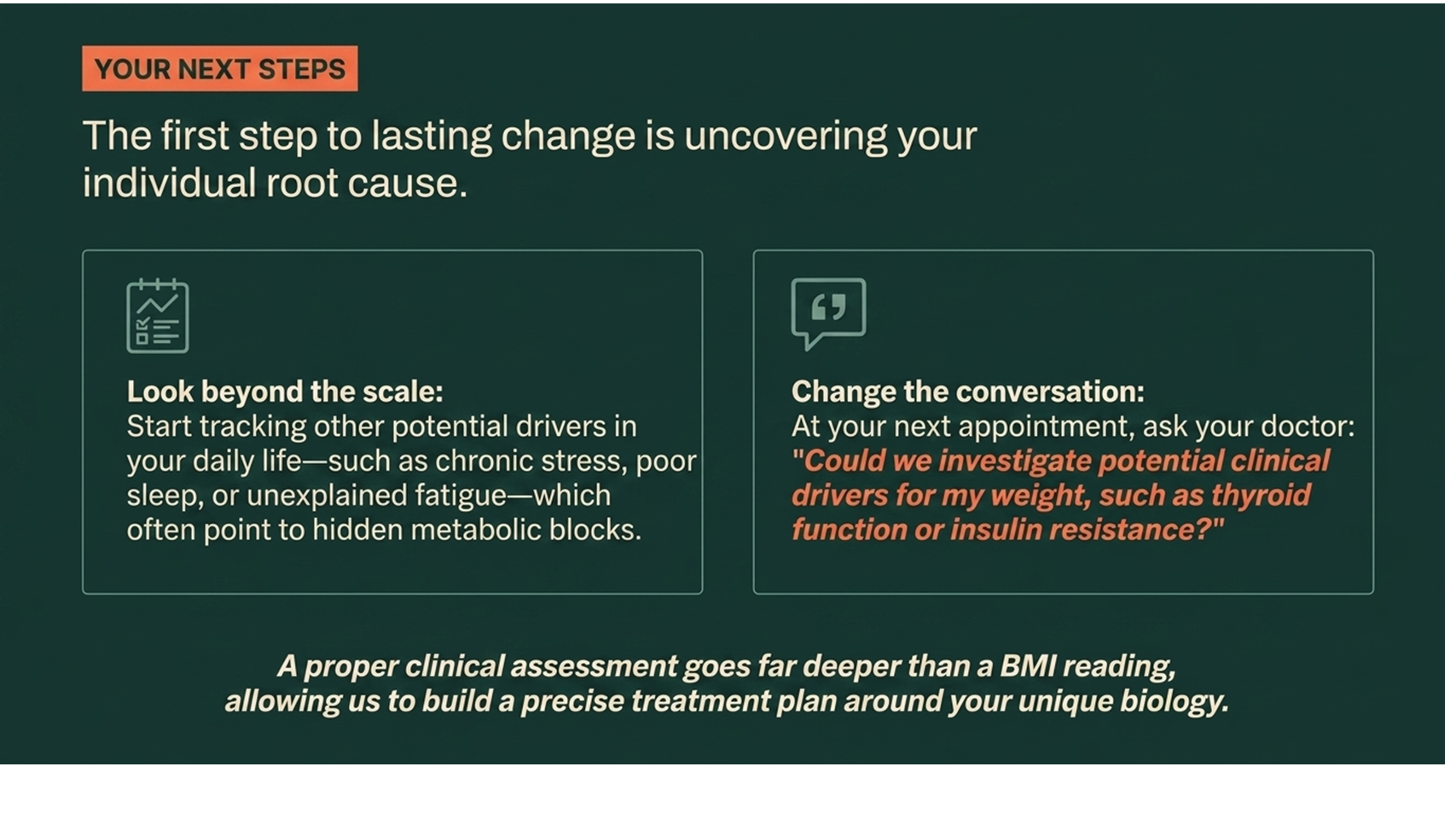
In my clinic, a proper weight assessment goes far deeper than a BMI reading. I look at everything that might be contributing:
- Genetic predisposition and early life history
- Hormonal function, including thyroid, testosterone, insulin, and reproductive hormones
- Toxic load and environmental factors
- Gut health and dysbiosis
- Sleep quality and stress levels
- Mental health and life events that may have tipped the balance
The goal is to identify your individual root cause and build a treatment plan around that, not around a generic diet.
If you would like to understand what is driving your weight, you can find out more about what I offer at IM Clinic Weight Management Services.
Author: Dr Imran Mughal, Private Specialist GP
Website: www.imclinic.co.uk
Book a consultation: https://notes.thanksdoc.co.uk/book/clinic/im-clinic
References
Bluher M. Obesity: global epidemiology and pathogenesis. Nature Reviews Endocrinology. 2019. https://doi.org/10.1038/s41574-019-0176-8
Bays HE. Adiposopathy: is “sick fat” a cardiovascular disease? Journal of the American College of Cardiology. 2011. https://doi.org/10.1016/j.jacc.2010.10.038
Locke AE et al. Genetic studies of body mass index yield new insights for obesity biology. Nature. 2015. https://doi.org/10.1038/nature14177
Thaiss CA et al. The microbiome and obesity. Nature. 2016. https://doi.org/10.1038/nature18029

We would love to hear your thoughts. A few things to keep in mind before you post: