


You wake up after a full night’s sleep and you still feel exhausted. You get through the day on caffeine and willpower, and by the evening there is nothing left in the tank. If you are tired all the time and cannot work out why, you are far from alone.
Persistent fatigue is one of the most common reasons people come to see me in clinic. It rarely gets the same attention as chest pain or a skin rash, yet it can affect every part of someone’s life, from work and relationships to simply enjoying the day.
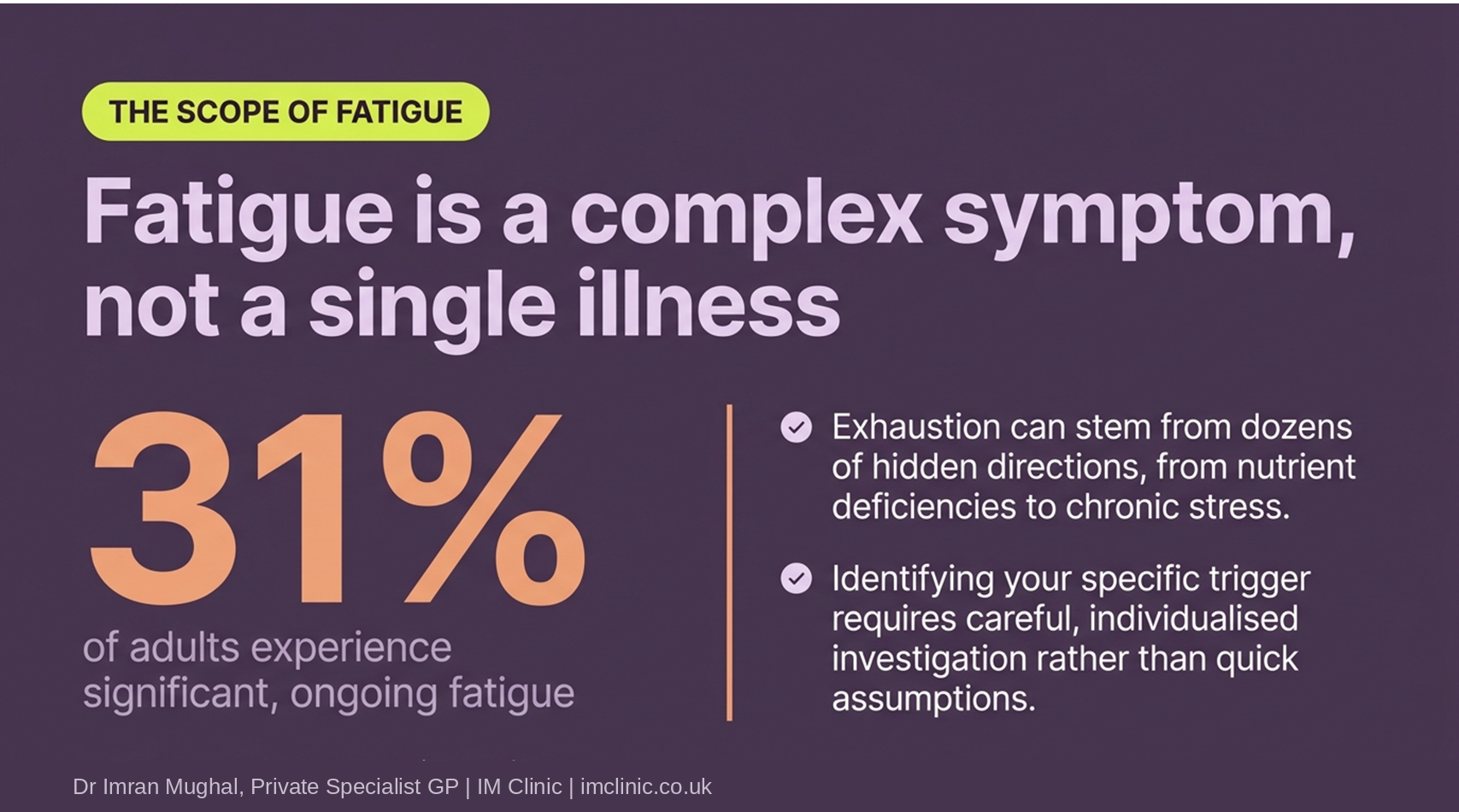
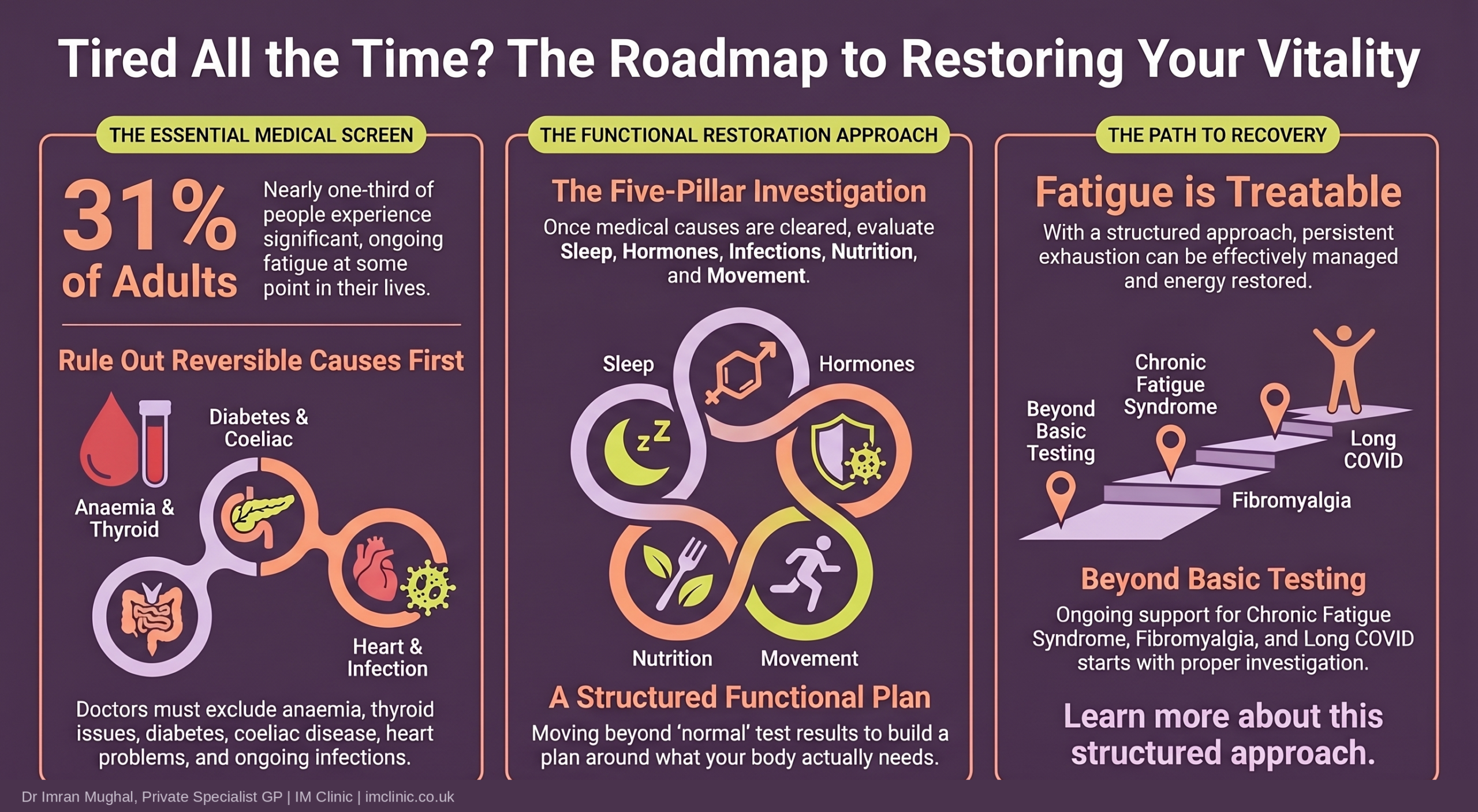
According to fatigue specific medical training, around 31% of adults experience significant, ongoing fatigue at some point [1]. For many people it builds slowly over months. For others it follows an infection, a stressful period, or years of poor sleep finally catching up.
Why So Many of Us Feel Tired All the Time
Fatigue is not one single illness with one single cause. It is a symptom that can come from dozens of different directions, which is exactly why it gets dismissed so often.
Sometimes the cause is straightforward, such as not getting enough good quality sleep. Sometimes it points to something deeper, such as a hormone imbalance, a hidden infection, or a nutrient deficiency. Sometimes it is the body’s response to chronic stress that has built up over years.
The honest answer is that nobody can say which of these applies to you without looking properly. That is the whole point of this post, and of the series that follows it.
Ruling Out the Medical Causes First
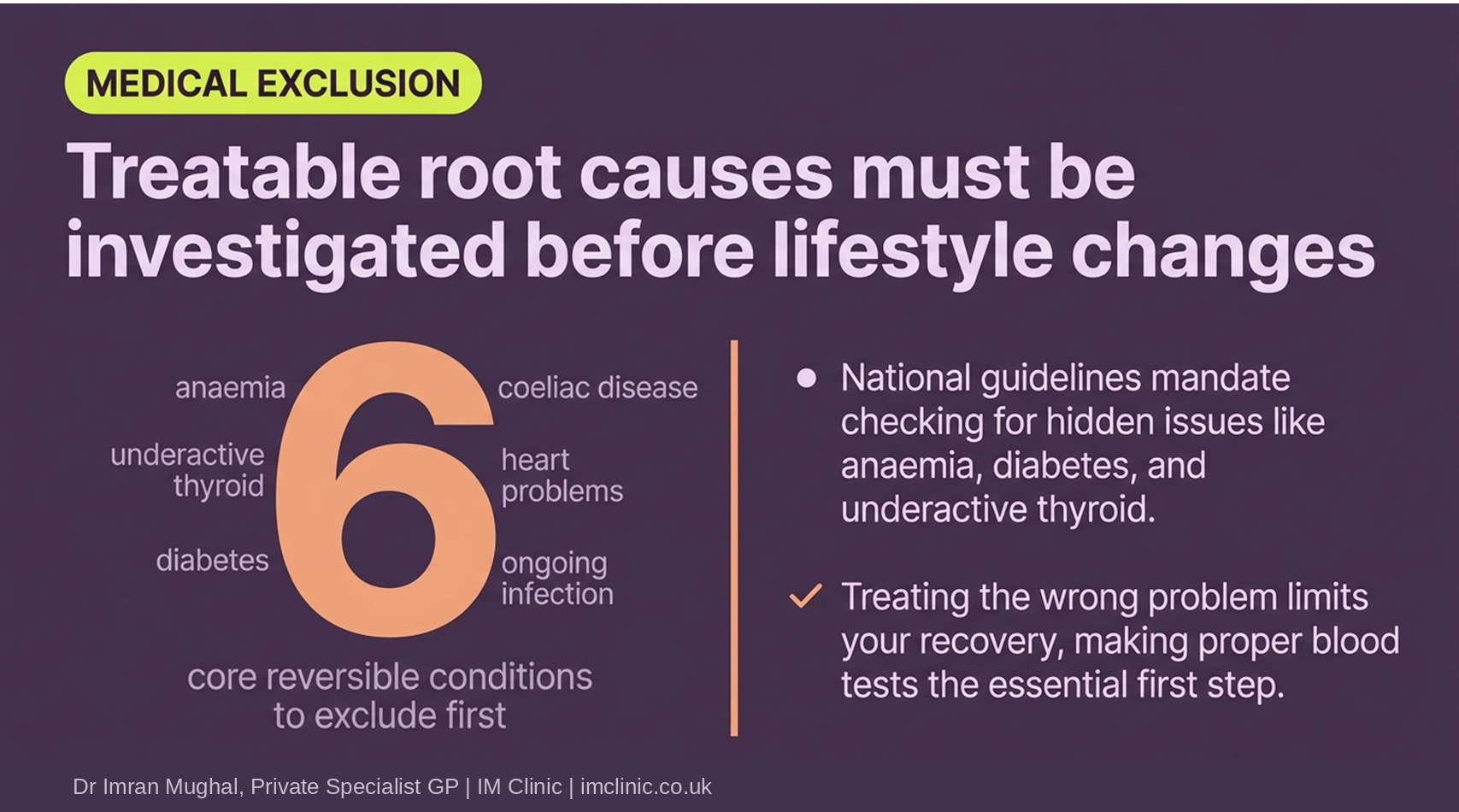
Before we talk about anything else, there is one principle that matters more than any other. Persistent fatigue should never be treated or labelled until reversible medical causes have been properly ruled out.
National guidance on chronic fatigue is clear that several conditions need to be excluded before any other approach is considered. These include anaemia, an underactive thyroid, diabetes, coeliac disease, heart problems, and ongoing infection [2].
Each of these has its own straightforward tests. Each is treatable in its own right, often very effectively. Missing one of them means treating the wrong problem, however good the rest of the plan might be.
Why You Should Never Just Accept Being Tired All the Time
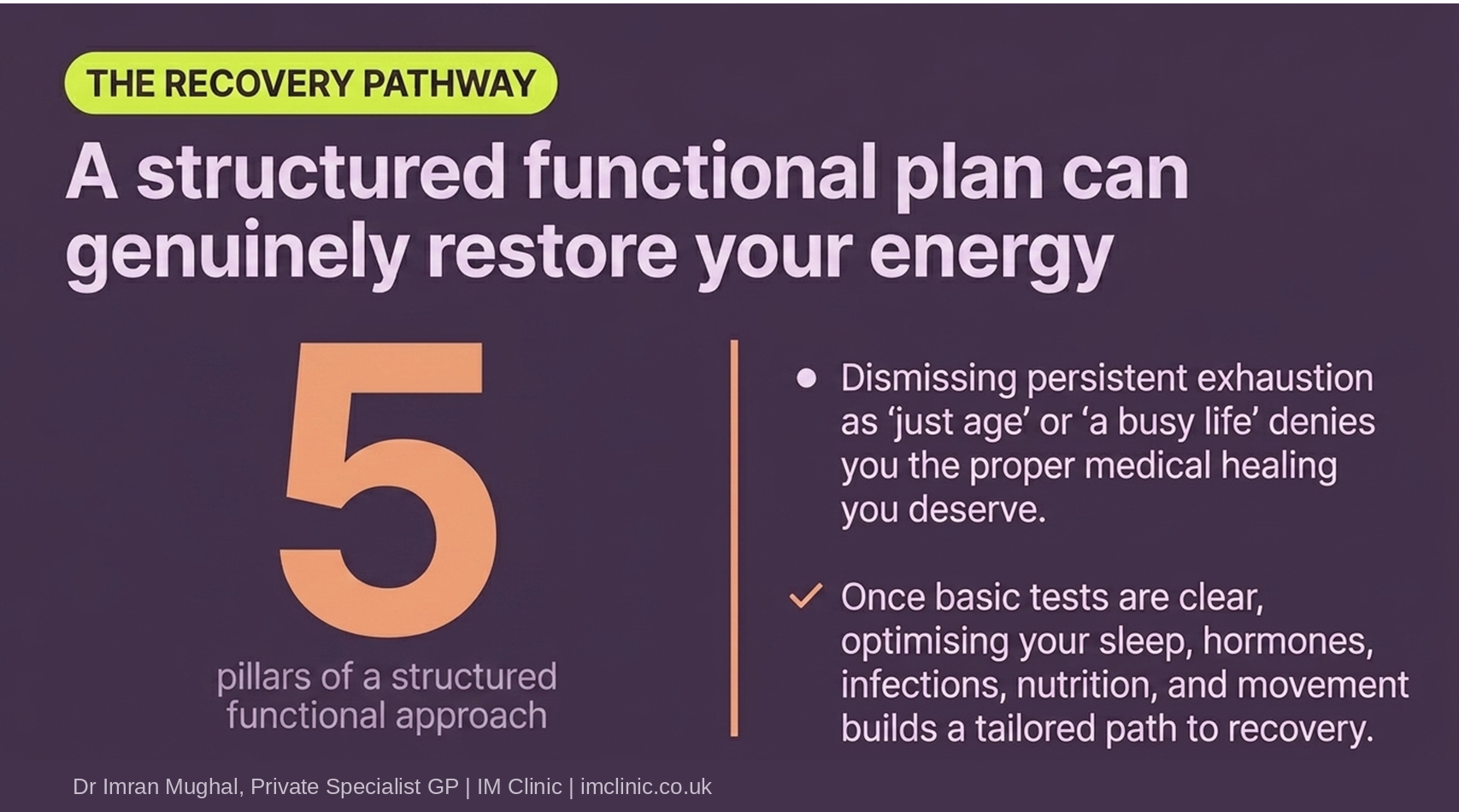
Too many people are told their tiredness is just stress, just age, or just a busy life, without ever having the right tests done. That is not good medicine, and it is not fair to the patient.
Once medical causes are properly ruled out, a different kind of work begins. This is where a structured, functional approach, looking at sleep, hormones, infections, nutrition, and movement, comes in [1].
Each of these areas plays its own part in restoring energy, and we will look at them one at a time through this series. None of them works as well if a treatable medical cause has been missed first.
What This Means For You
If you recognise yourself in any of this, the first step is not another lifestyle change. It is making sure nothing medical has been missed.
If you have already had basic tests and they came back normal, that does not mean nothing more can be done. It means we move on to the next stage, looking properly at sleep, hormones, infections, nutrition, and movement, and building a plan around what your body actually needs.
Over the next few posts in this series, we will go through each of these areas in turn, along with a closer look at chronic fatigue syndrome, fibromyalgia, Long COVID, and the relationship between pain and fatigue. If you would like to talk through your own situation, you are welcome to book a consultation with me at IM Clinic.
The Key Points
- Persistent fatigue is extremely common and deserves proper attention, not a quick dismissal.
- Reversible medical causes such as anaemia, thyroid problems, diabetes, coeliac disease, heart issues, and infection must be ruled out first.
- Once those are excluded, a structured approach covering sleep, hormones, infections, nutrition, and movement can genuinely help restore energy.
Author: Dr Imran Mughal, Private Specialist GP
Website: www.imclinic.co.uk
Book a consultation: https://notes.thanksdoc.co.uk/book/clinic/im-clinic
References
[1] Teitelbaum J. Effective Treatment of the Human Energy Crisis: SHINE Intensive Care for CFS, Fibromyalgia, and Long COVID. Health Masters Fatigue lecture series. Internal training material. 2026.
[2] National Institute for Health and Care Excellence. Myalgic encephalomyelitis (or encephalopathy)/chronic fatigue syndrome: diagnosis and management. NICE guideline NG206. 2021.

We would love to hear your thoughts. A few things to keep in mind before you post: