


Fibromyalgia Is Real: What the Evidence Actually Shows
Fibromyalgia is one of the most misunderstood conditions we see in clinic.
- “The blood tests came back normal, so what’s actually wrong with me?”
- “Is this all in my head?”
- “I’m exhausted, but I can’t sleep properly either.”
- “I’ve seen three different doctors and got three different answers.”
These are real questions individuals ask, often after months or years of searching for an explanation.
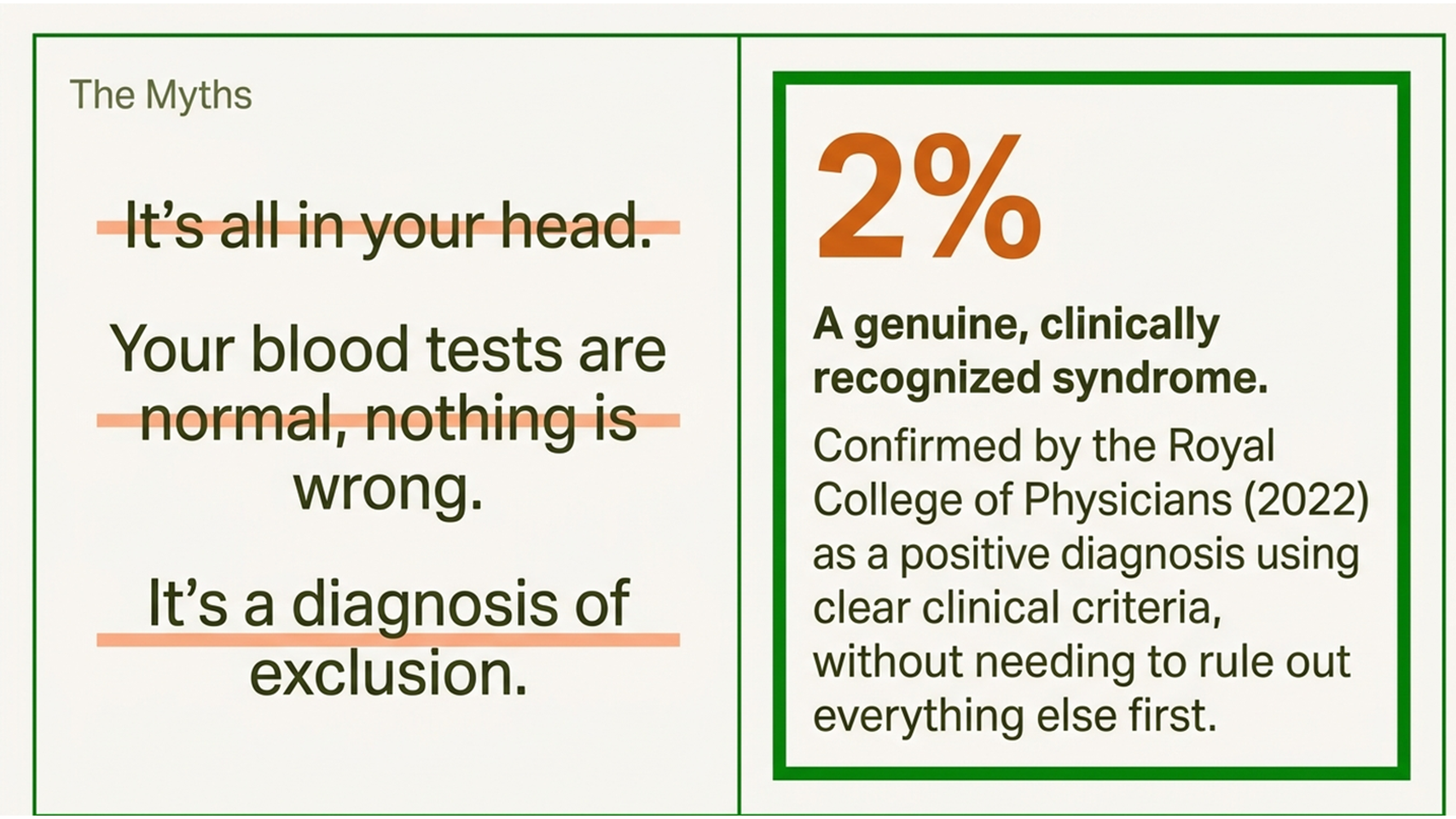
- Fibromyalgia is a genuine, clinically recognised syndrome. It affects around 2% of the population.
- It is not caused by poor fitness, deconditioning, or a psychological reaction to stress.
- It is not a diagnosis of exclusion.
- The Royal College of Physicians confirmed in 2022 that fibromyalgia can be positively diagnosed using clear clinical criteria, without needing to rule out everything else first.
This post covers what fibromyalgia actually is, why it is so often missed or dismissed, and what the evidence, both traditional and functional, says about managing it.
What Are the Signs of Fibromyalgia?
These are the patterns a clinician looks for, and the ones worth noticing early in yourself.
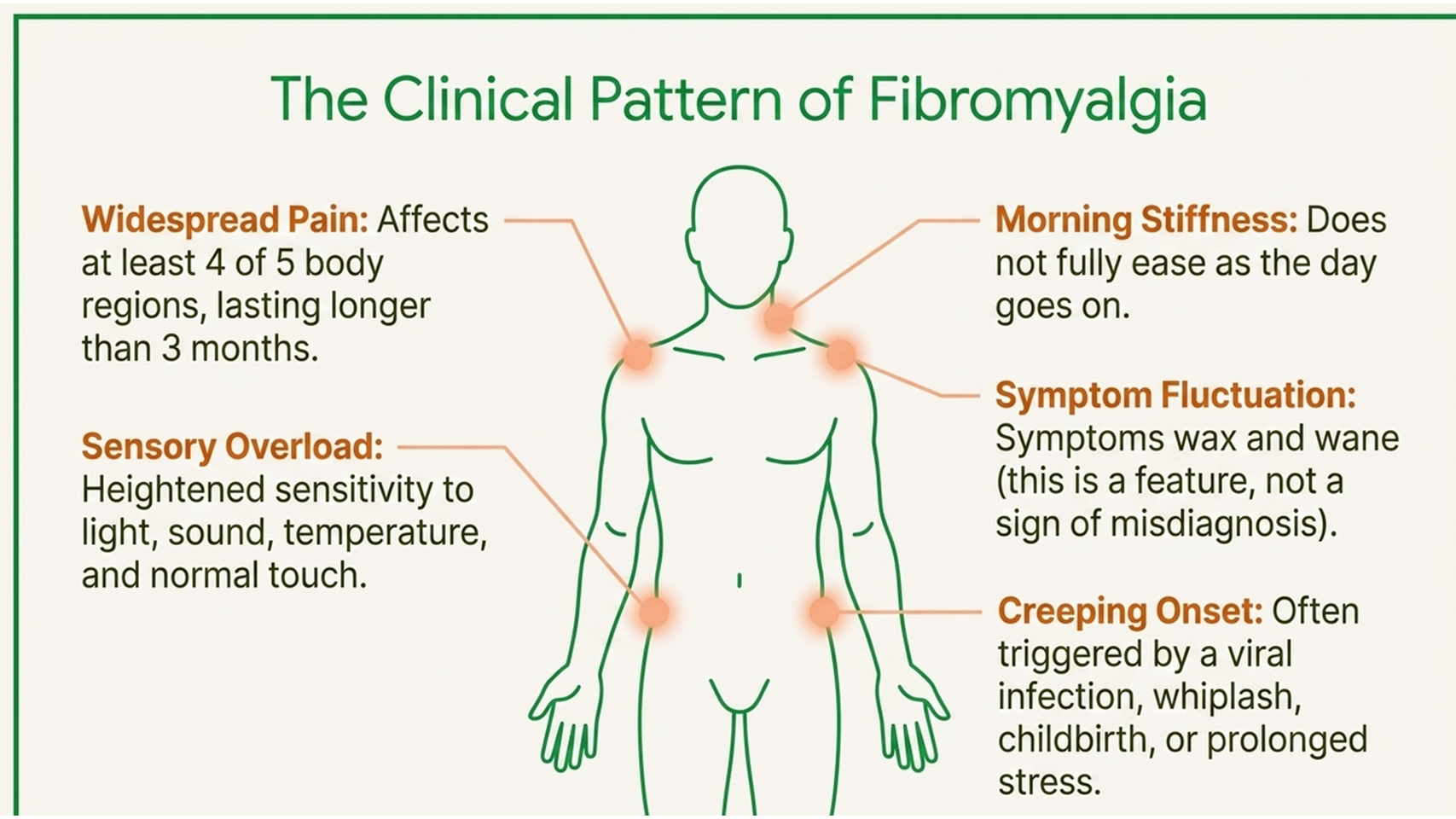
- Widespread pain in at least 4 of 5 body regions that lasts longer than 3 months.
- Morning stiffness that does not fully ease as the day goes on.
- Increased sensitivity on examination, where normal touch or pressure can feel disproportionately painful.
- Sensitivity to light, sound, and temperature.
- Symptoms that fluctuate rather than steadily worsen. This is a real feature of the condition, not necessarily a sign that something else is being missed
- A slow, creeping onset, often following a trigger such as a viral infection, whiplash injury, childbirth, or a period of prolonged stress.
What Does Fibromyalgia Feel Like?
The lived experience maps onto three connected systems, all driven by the same underlying problem: the body cannot produce enough energy to keep up with demand.
Hypothalamic dysfunction (the brain’s master control centre)
- Profound fatigue, not relieved by rest.
- Unrefreshing sleep. The hypothalamus governs the sleep wake cycle, so when it is disrupted, deep restorative sleep is lost.
Cerebral cortex (thinking and processing)
- Word finding difficulty, losing a word mid sentence.
- Short term memory lapses.
- Mental fatigue, where simple tasks feel disproportionately hard. This is commonly described as fibro fog.
Peripheral muscle
- Widespread, persistent aching.
- Tender points. Muscles need more energy to relax than to contract, so when cellular energy is low, they can remain in a shortened, tense state.
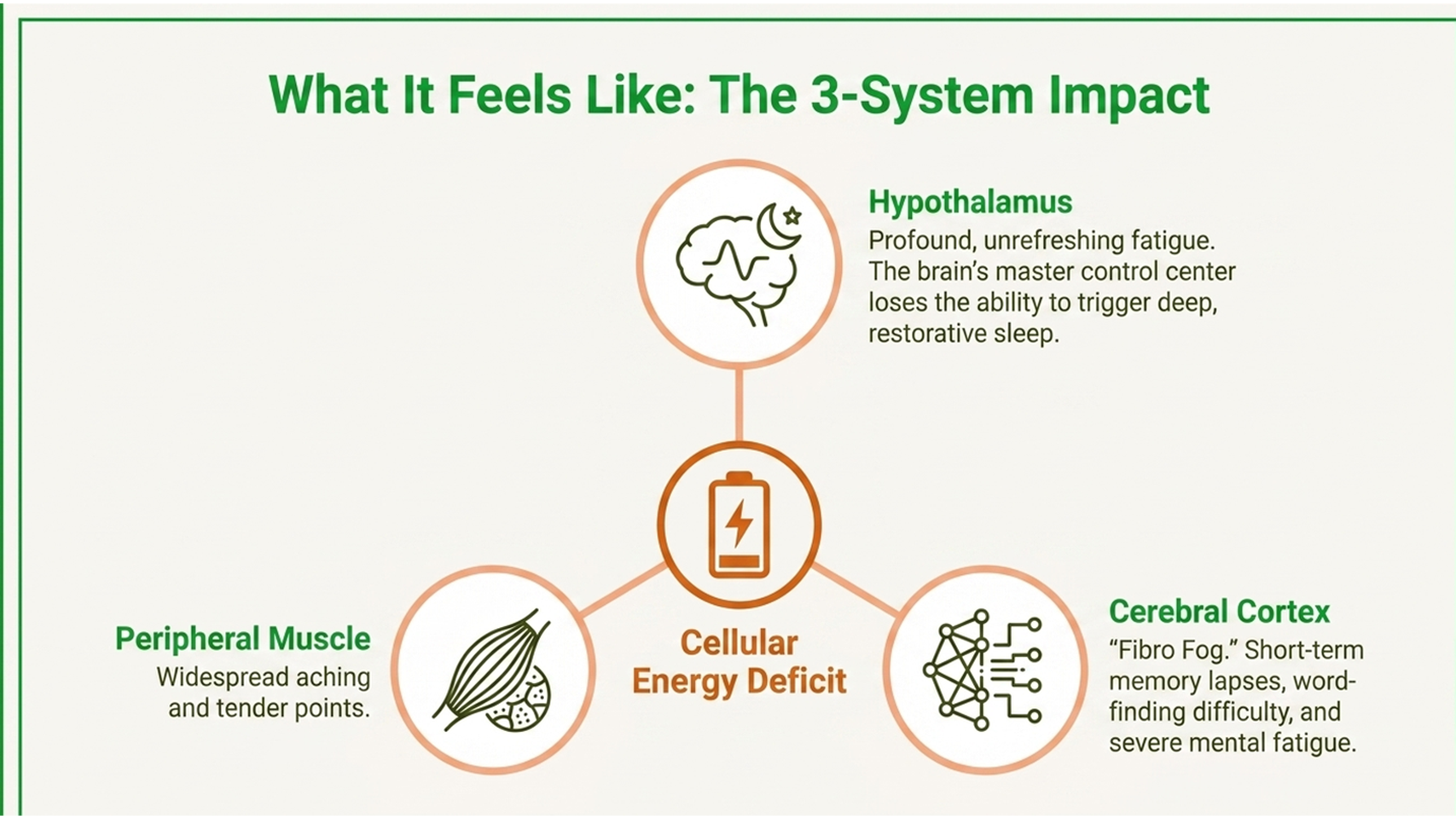
These three are interconnected, not separate problems. The same energy shortfall drives all of them, which is why fatigue, brain fog, and widespread pain so often appear together, and why treating one in isolation rarely works.
Why Is Fibromyalgia So Hard to Diagnose?
Fibromyalgia is not a diagnosis of exclusion. This is worth stating clearly, because many individuals are told the opposite.
- The Royal College of Physicians 2022 guideline confirms fibromyalgia can be positively diagnosed, using the American College of Rheumatology 2016 criteria.
- Diagnosis requires generalised pain in at least 4 of 5 body regions, a raised Widespread Pain Index alongside a high Symptom Severity Scale score, with symptoms persisting for at least 3 months.
- Fibromyalgia can also exist alongside other conditions, such as rheumatoid arthritis. Having another diagnosis does not rule it out.
- A focused set of blood tests, full blood count, kidney and liver function, thyroid function, inflammatory markers, blood glucose, and creatine kinase, is usually enough to rule out the main mimics.
- Scans such as MRI are not usually needed, unless there are specific neurological signs pointing elsewhere.
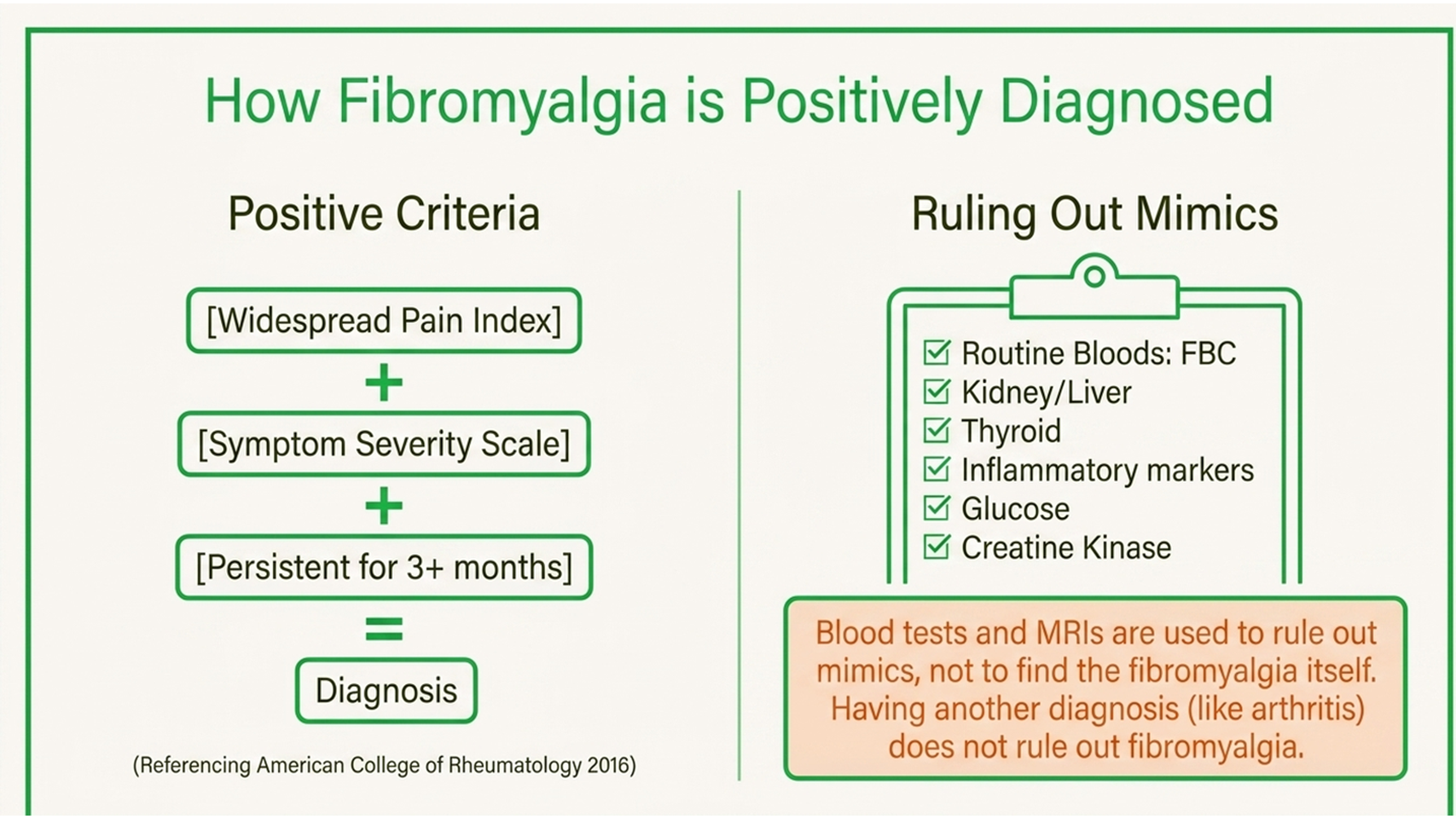
The reason diagnosis is often delayed is not that the tests are missing something. It is that many clinicians are still working from an outdated exclusion based model, rather than the positive diagnostic criteria confirmed in current guidance.
What Exactly Causes Fibromyalgia?
There is no single cause. It is better understood as several problems overlapping, rather than one fault to find and fix.
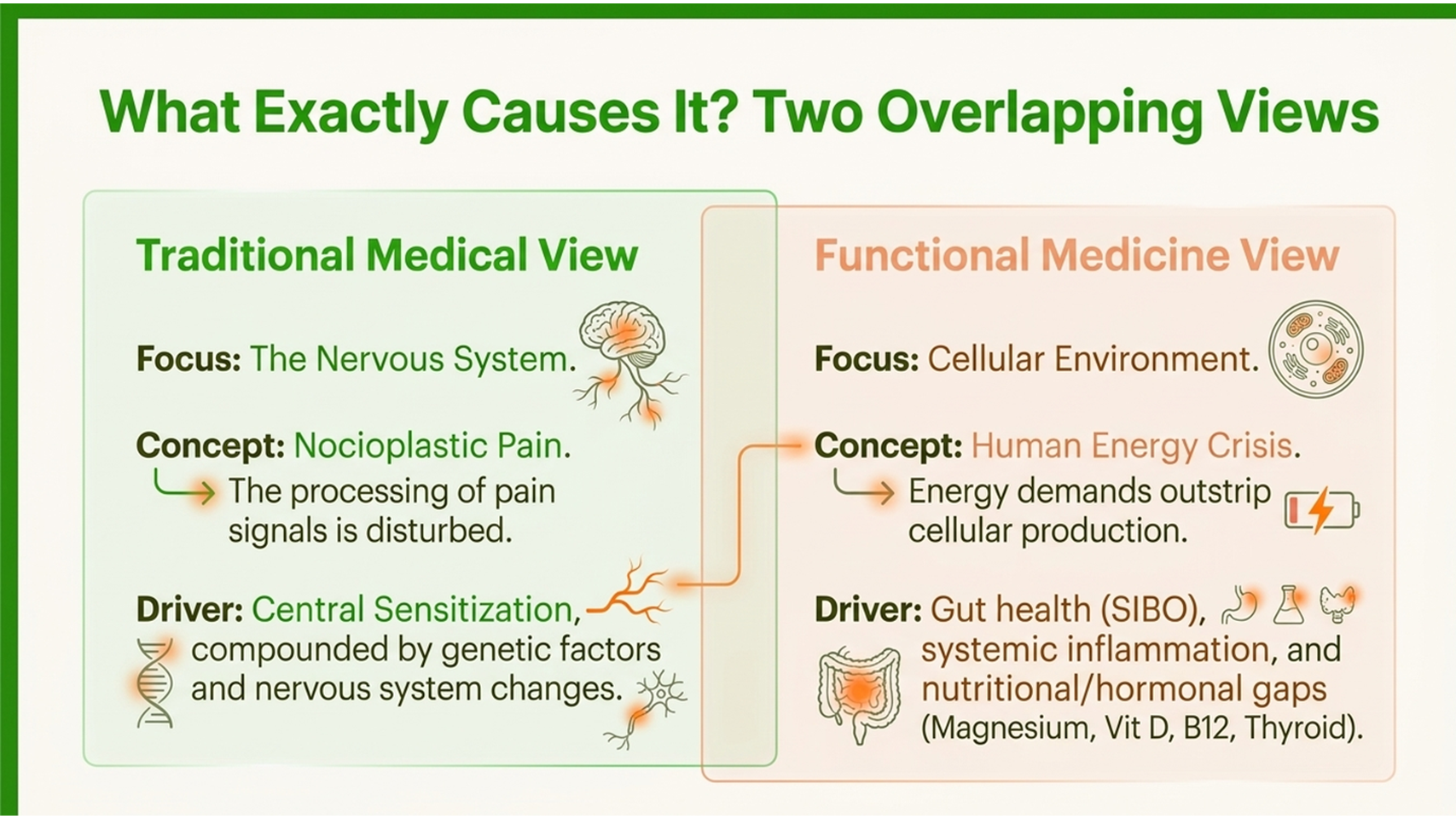
Traditional Medical View
- Fibromyalgia pain is classified as nocioplastic, meaning the nervous system itself has become disturbed in how it processes pain signals.
- This is distinct from pain caused by tissue damage or nerve damage. The tissue is not injured. The processing of pain is.
- Central sensitisation occurs as pain becomes persistent. The brain shifts from suppressing pain signals to amplifying them, so normal touch can register as painful.
- The exact cause remains unknown, though evidence points to genetic factors combined with changes across the central, peripheral, and immune nervous systems.
Functional Medicine View
- Fibromyalgia is described as a human energy crisis, where the body’s energy demands outstrip what it can produce at a cellular level.
- Muscles need more energy to relax than to contract. When cellular energy runs low, muscles stay tense, contributing to widespread pain.
- Gut health plays a significant role. Small intestinal bacterial overgrowth has been found in a large majority of individuals with fibromyalgia in some studies, allowing inflammatory compounds to enter the bloodstream and add to the overall burden.
- Nutritional gaps, particularly magnesium, Vitamin D, and B12, and hormonal factors including thyroid and adrenal function, can compound the picture.

Is Fibromyalgia Genetic, or Triggered by Stress and Trauma?
Both play a part, and they often combine.
- Genetic susceptibility appears to make some individuals more prone to developing fibromyalgia.
- Stress is one of the most significant triggers, whether from a single major event, an accident such as whiplash, childbirth, a viral infection, or prolonged psychological pressure.
- Many individuals develop fibromyalgia without any clear trigger at all. The absence of an obvious cause does not make the condition any less real.
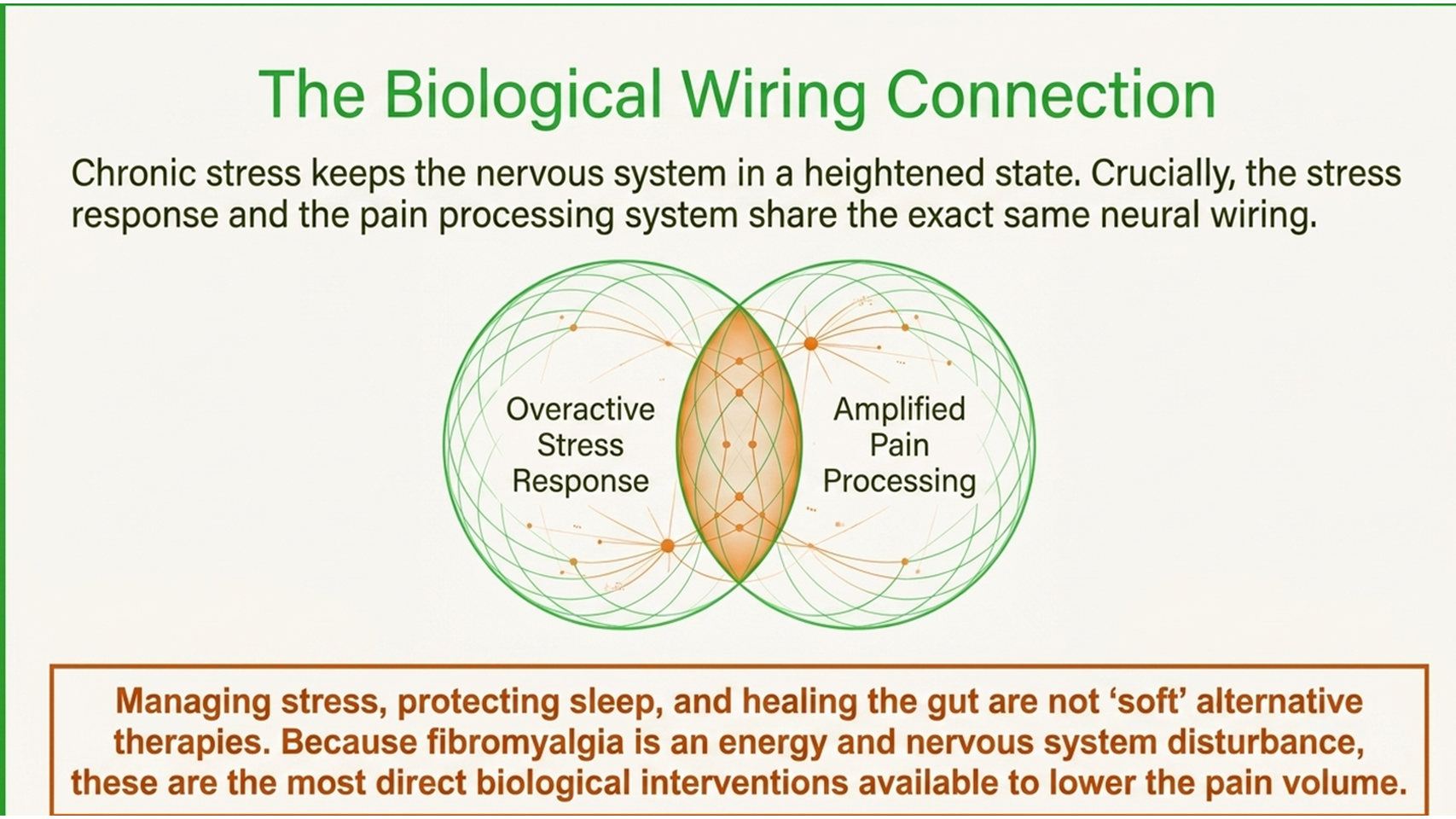
- Chronic stress keeps the nervous system in a heightened state, which feeds directly into the central sensitisation described above. This is one reason why managing stress is one of the most effective levers an individual has, not because the condition is psychological, but because the stress response and the pain processing system share the same wiring.
Is Fibromyalgia an Autoimmune Disease?
No, and this is a common and understandable mix up.
- Fibromyalgia is not an autoimmune disease. It does not involve the immune system attacking the body’s own tissue, unlike conditions such as lupus or rheumatoid arthritis.
- It can exist alongside autoimmune or rheumatological conditions, which is part of why it is sometimes mistaken for one.
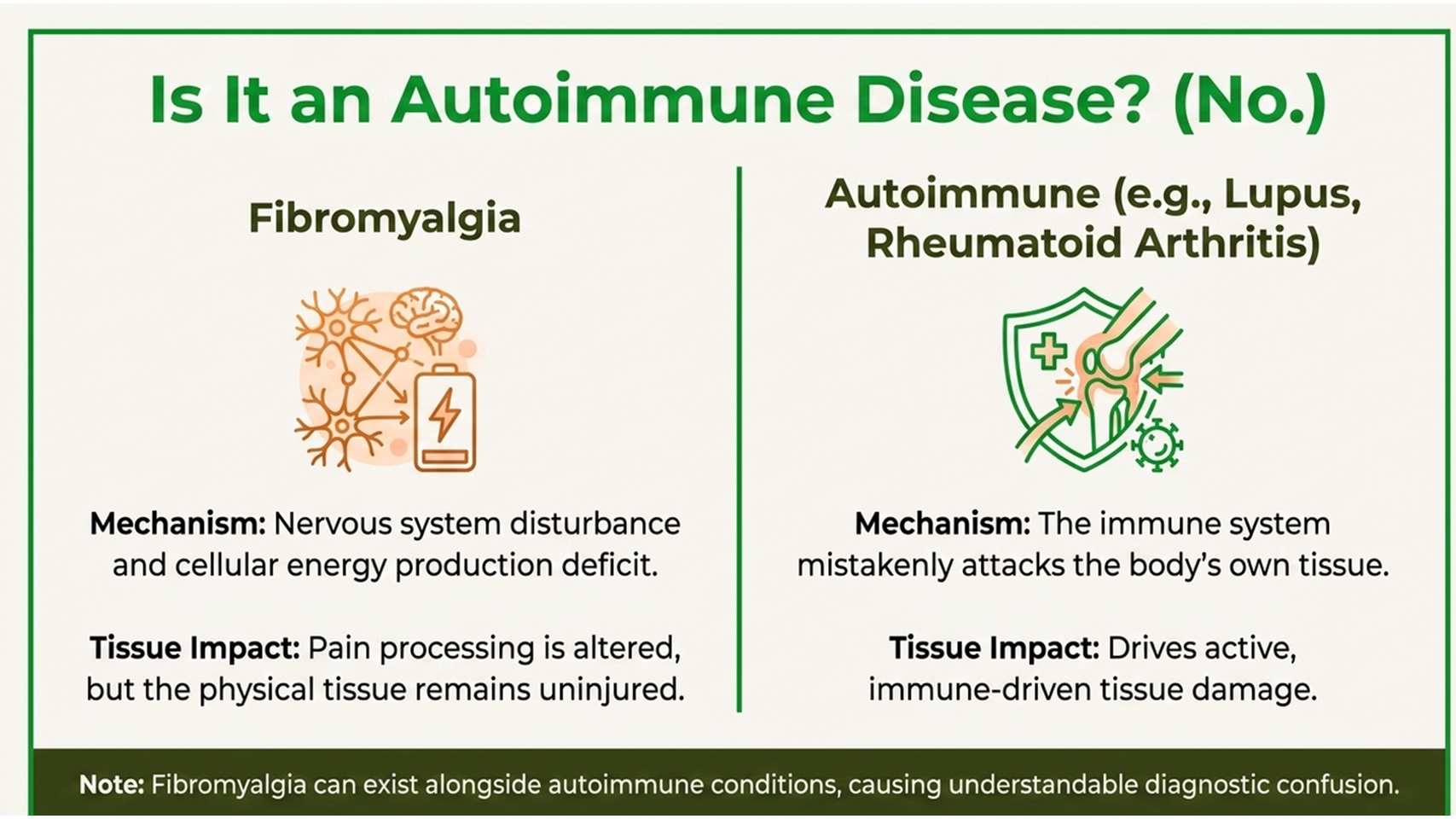
- The pain and fatigue mechanisms in fibromyalgia sit in the nervous system and energy production, not in immune driven tissue damage.
Where this points, in practice: two of the most modifiable drivers, on either side of this picture, are stress and gut health. This is not the whole story, but for many individuals it is the most practical place to start, and it is where we focus in the management section below.
Continuity of Care, From One GP
- See the same doctor at every visit, not a different one each time
- A full picture assessment, not just symptom by symptom
- Time to properly discuss both traditional and lifestyle options
Why Does My Doctor Just Tell Me to Exercise?
This advice can feel dismissive, but there is real reasoning behind it, and there is a right and a wrong way to do it.
- Regular, gradual exercise has the strongest evidence base of any fibromyalgia treatment, for reducing pain and improving day to day function.
- NICE recommends group exercise therapy specifically, alongside psychological approaches such as CBT and Acceptance and Commitment Therapy.
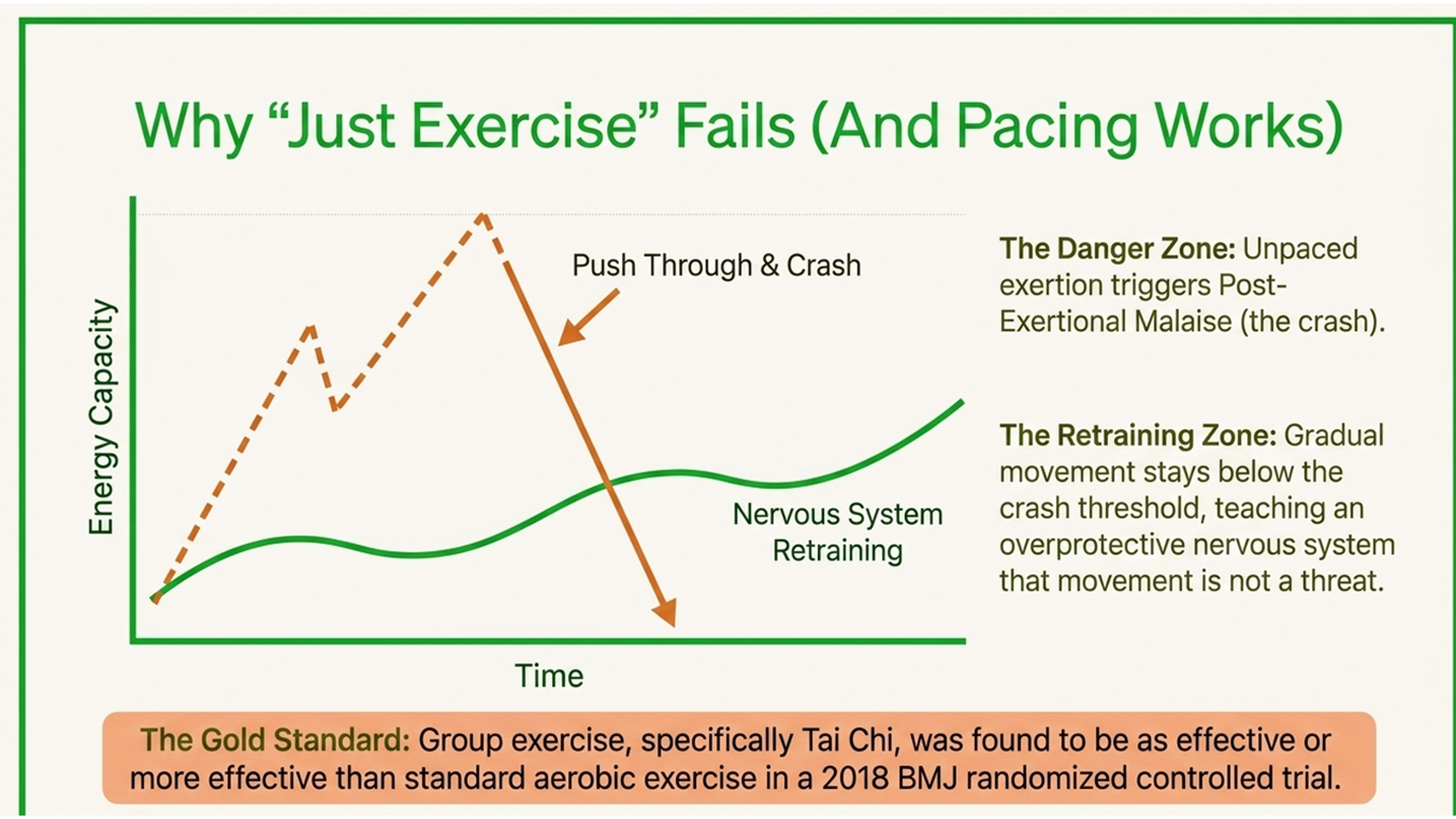
- A 2018 BMJ randomised controlled trial found Tai Chi was as effective as, or more effective than, standard aerobic exercise for fibromyalgia symptoms.
- The advice goes wrong when it is generic, unpaced push through the pain guidance. Exercise needs to be built up gradually, only as able, staying below the point that triggers a crash the next day, known as post exertional malaise.
- Done this way, exercise is not about fitness. It is about gently retraining a nervous system that has become overprotective, so it stops treating normal movement as a threat.
What Other Lifestyle and Non Drug Options Actually Help?
This is where the strongest evidence sits, ahead of any medication.
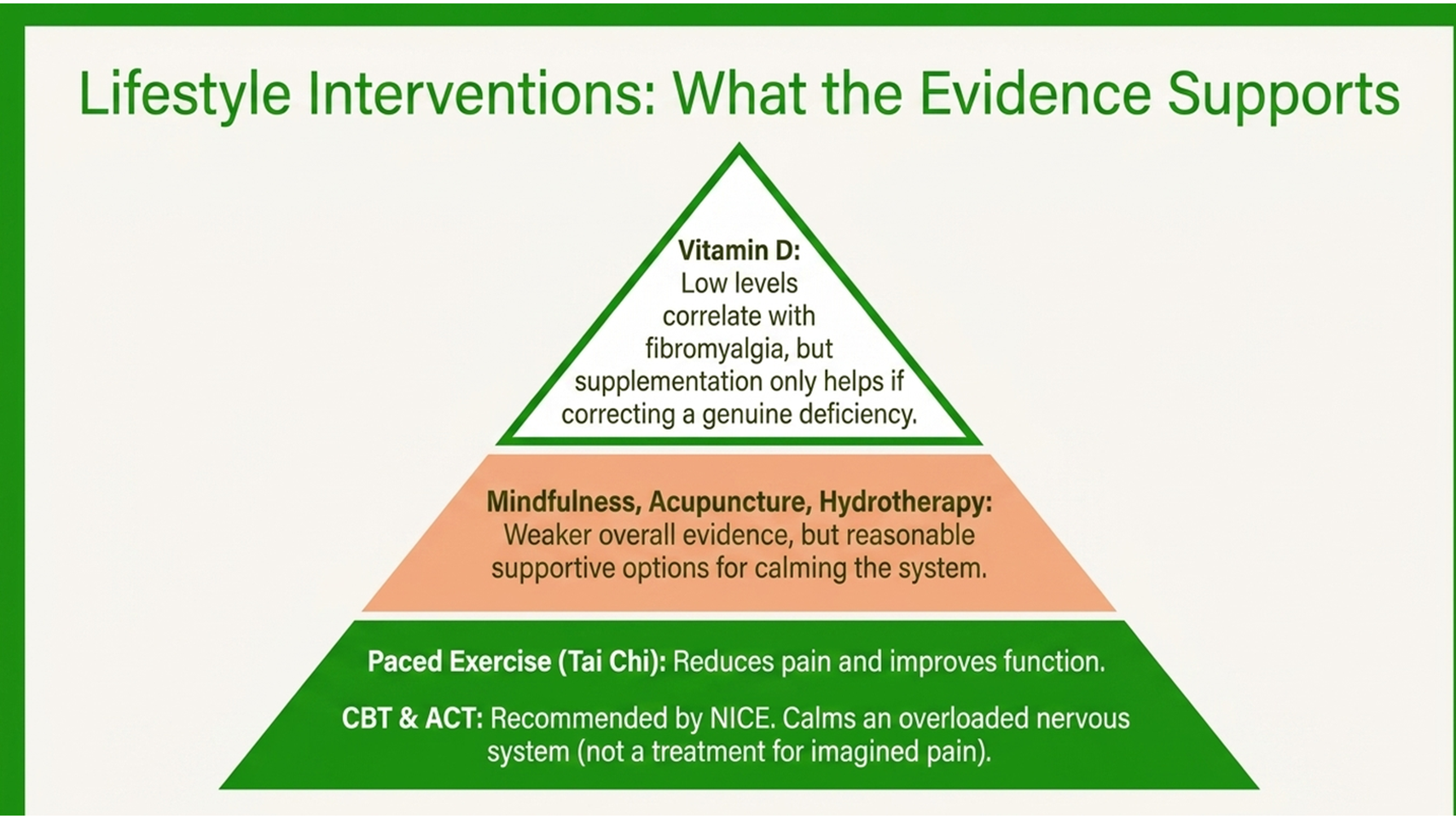
- Tai Chi. As effective as, or more effective than, aerobic exercise in a 2018 BMJ randomised controlled trial. A genuine, evidence backed option, not an alternative therapy add on.
- CBT and Acceptance and Commitment Therapy. Recommended by NICE for their sustained benefit in reducing pain related disability, not because the pain is psychological, but because these approaches help calm an overloaded nervous system.
- Mindfulness, acupuncture, and hydrotherapy. Weaker evidence than exercise or CBT, but reasonable supportive options for some individuals.
- Vitamin D. Low levels are associated with fibromyalgia, but there is no convincing evidence that taking a supplement improves symptoms. It is worth correcting a genuine deficiency for general health, not as a fibromyalgia treatment specifically.
What Does NICE Actually Say About Medication for Fibromyalgia?
In short, medication is a last resort, not a first step, and some commonly prescribed drugs are now specifically advised against.
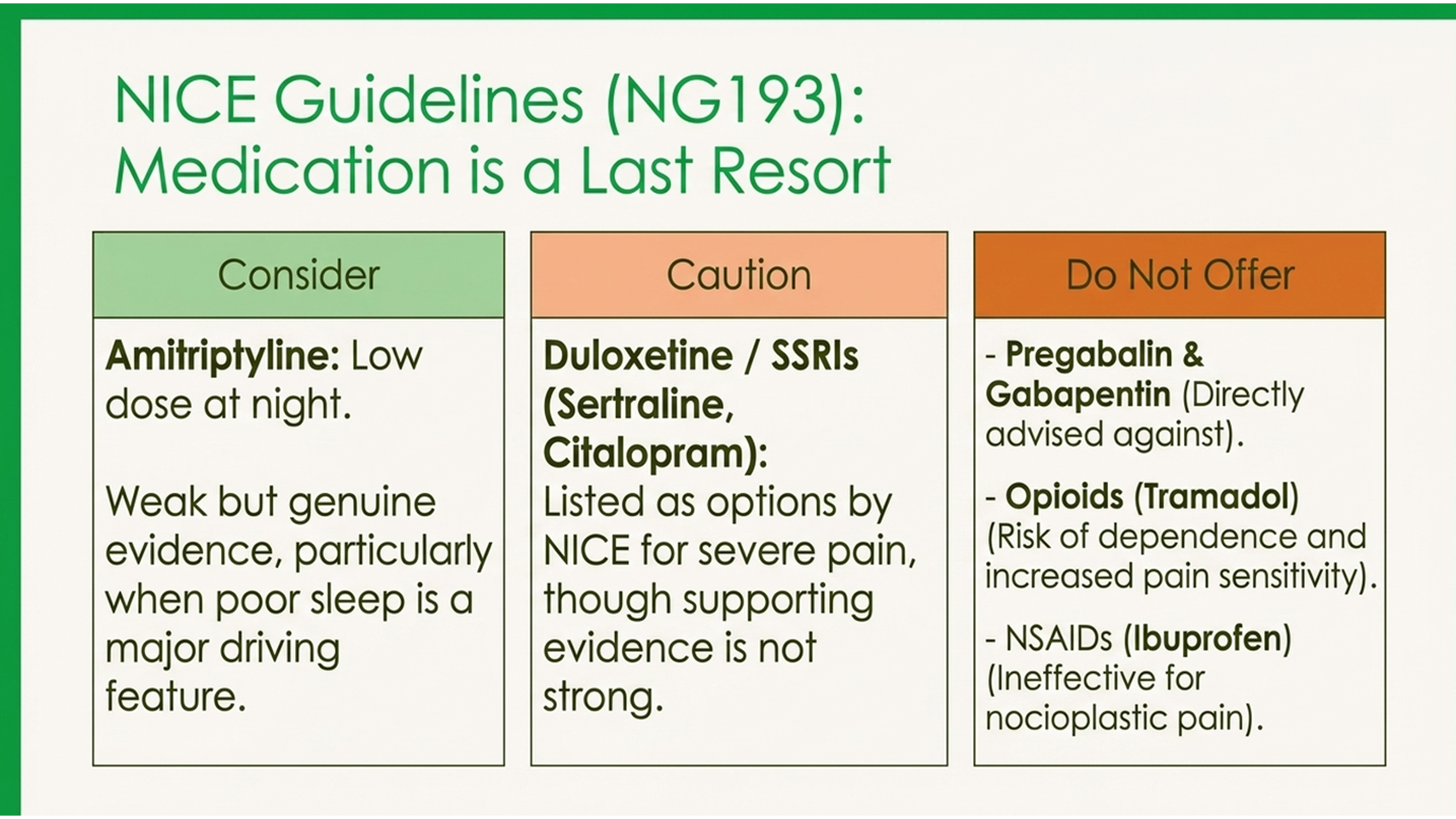
- NICE guidance (NG193) treats drug treatment as a last resort. The evidence base overall is weak, trials are short term, and side effects can make fibromyalgia symptoms worse, not better.
- Amitriptyline, a low dose taken at night, has weak but genuine evidence, particularly where poor sleep is a major feature.
- Duloxetine may be considered for severe pain.
- SSRIs such as sertraline or citalopram are listed as options by NICE, though the evidence supporting them is not strong.
- Pregabalin and gabapentin should not be offered. This is a direct NICE recommendation for chronic primary pain, despite these drugs still being prescribed for fibromyalgia in practice.
- Opioids, including tramadol, should not be used. NICE is clear on this due to a lack of long term benefit and a real risk of dependence and increased pain sensitivity with prolonged use.
- NSAIDs such as ibuprofen should not be offered. They are generally ineffective for this type of pain and carry unnecessary risk.
- Where medication is used at all, it supports the approaches above. It is not a substitute for exercise, CBT, or addressing stress and gut health.
Will Fibromyalgia Progressively Get Worse Over Time?
Not necessarily, and this is one of the most reassuring things current evidence supports.
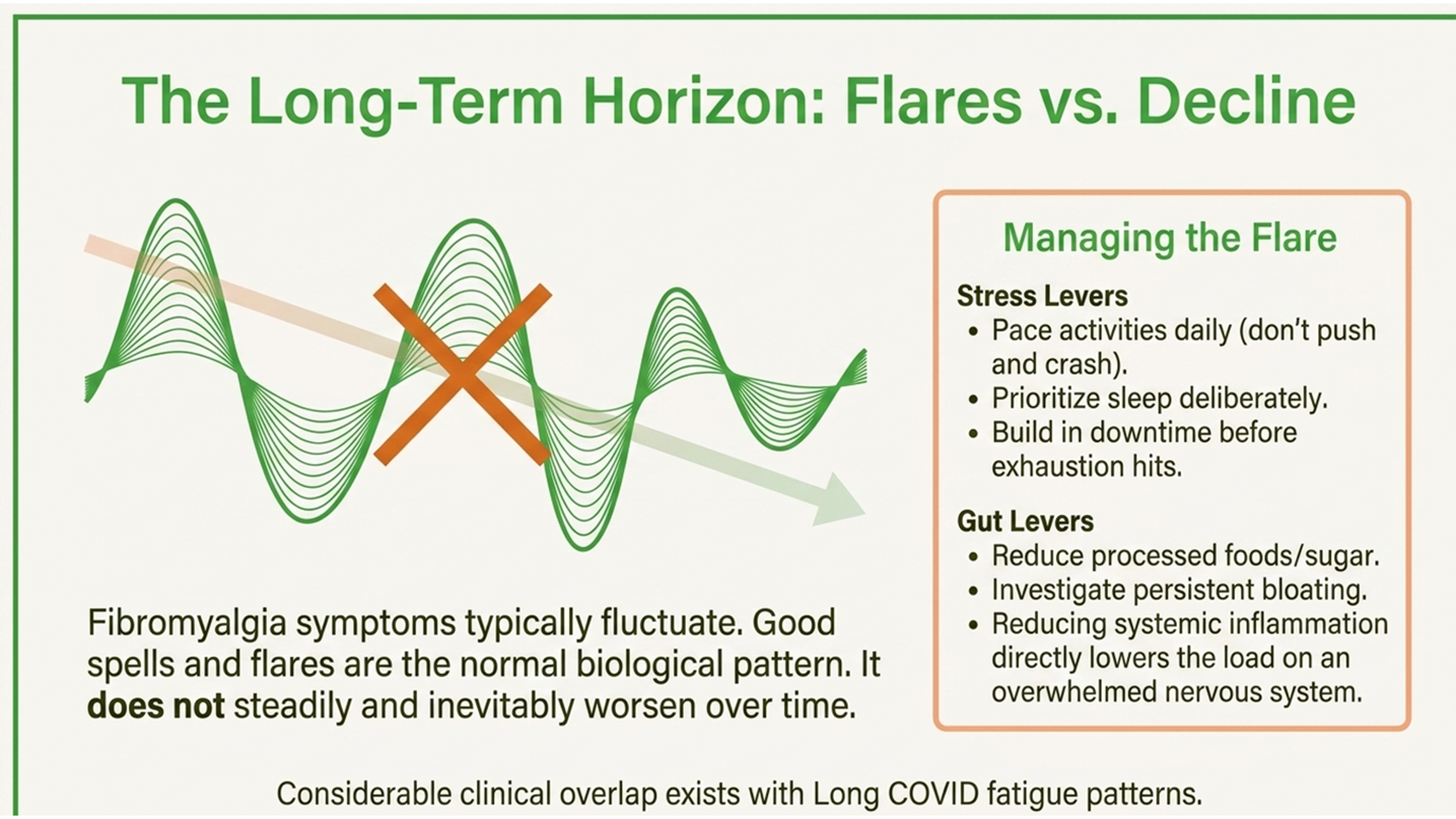
- Fibromyalgia symptoms typically fluctuate rather than steadily decline. Good spells and flares are part of the normal pattern, not evidence of an inevitable downward course.
- In clinical experience running a Long COVID clinic, there is often considerable overlap between Long COVID and fibromyalgia, with many individuals presenting with a near-identical pattern of fatigue, brain fog, and widespread pain. If fatigue has been a long-running feature for you, it is also worth reading our guide on the real causes of chronic fatigue, which covers this ground in more depth.
- Management is not about chasing pain elimination. The realistic and evidence backed goal is improving quality of life and function, which most individuals can achieve with the right combination of approaches below.
What Are the Best Lifestyle Changes for a Fibromyalgia Flare Up?
This is where stress and gut health matter most, and where individuals genuinely have the most influence.
Manage your stress
- Chronic stress keeps the nervous system in the heightened, pain amplifying state described earlier. Bringing this down is not a soft add on, it is addressing one of the core drivers directly.
- Practical steps include pacing activity through the day rather than pushing through and crashing, protecting sleep as a priority rather than an afterthought, and building in deliberate downtime before exhaustion forces it.
- Techniques such as breathing exercises, mindfulness, or CBT based approaches all work by the same mechanism, calming an overactive stress response.
Look after your gut
- Gut health has a well documented link to fibromyalgia, with bacterial overgrowth found in a large proportion of individuals studied, allowing inflammatory compounds to add to the overall symptom burden.
- Practical steps include reducing processed food and refined sugar, keeping meals regular, and discussing persistent bloating or bowel symptoms with your doctor rather than assuming they are unrelated.
- This is not a cure on its own, but for many individuals it measurably reduces the overall load on an already overwhelmed system.
The Key Points
- Fibromyalgia is a real, clinically recognised condition affecting around 2% of the population, not a psychological reaction or a sign of poor fitness.
- It is not a diagnosis of exclusion. It can be positively diagnosed using clear criteria confirmed by the Royal College of Physicians in 2022.
- Symptoms fall into three connected areas, fatigue and sleep disruption, brain fog, and widespread muscle pain, all driven by the same underlying energy shortfall.
- It is not an autoimmune disease, though it can exist alongside autoimmune or rheumatological conditions.
- Stress and gut health are two of the most significant and modifiable drivers, both in managing symptoms and in current thinking on prevention.
- Exercise helps, but only when paced gradually rather than pushed through, and it works alongside psychological approaches such as CBT rather than replacing them.
- Symptoms typically fluctuate rather than steadily worsen, and the realistic goal of treatment is improving quality of life, not eliminating pain entirely.
What This Means For You
If you already have fibromyalgia:
- Your pain is real, and current guidance confirms it does not need to be explained away by ruling everything else out first.
- Managing stress and looking after your gut are two of the most practical levers you have, alongside paced activity and protecting your sleep.
- A flare does not mean you are getting worse. It is usually a temporary, manageable episode rather than a steady decline.
If you do not have fibromyalgia:
- Stress and gut health are worth paying attention to now, not just after symptoms appear, both for yourself and for family members who may be more susceptible.
- Being mindful of persistent, unexplained fatigue, widespread aching, or unrefreshing sleep in yourself or a loved one means it can be raised and assessed earlier, rather than after years of being told nothing is wrong.
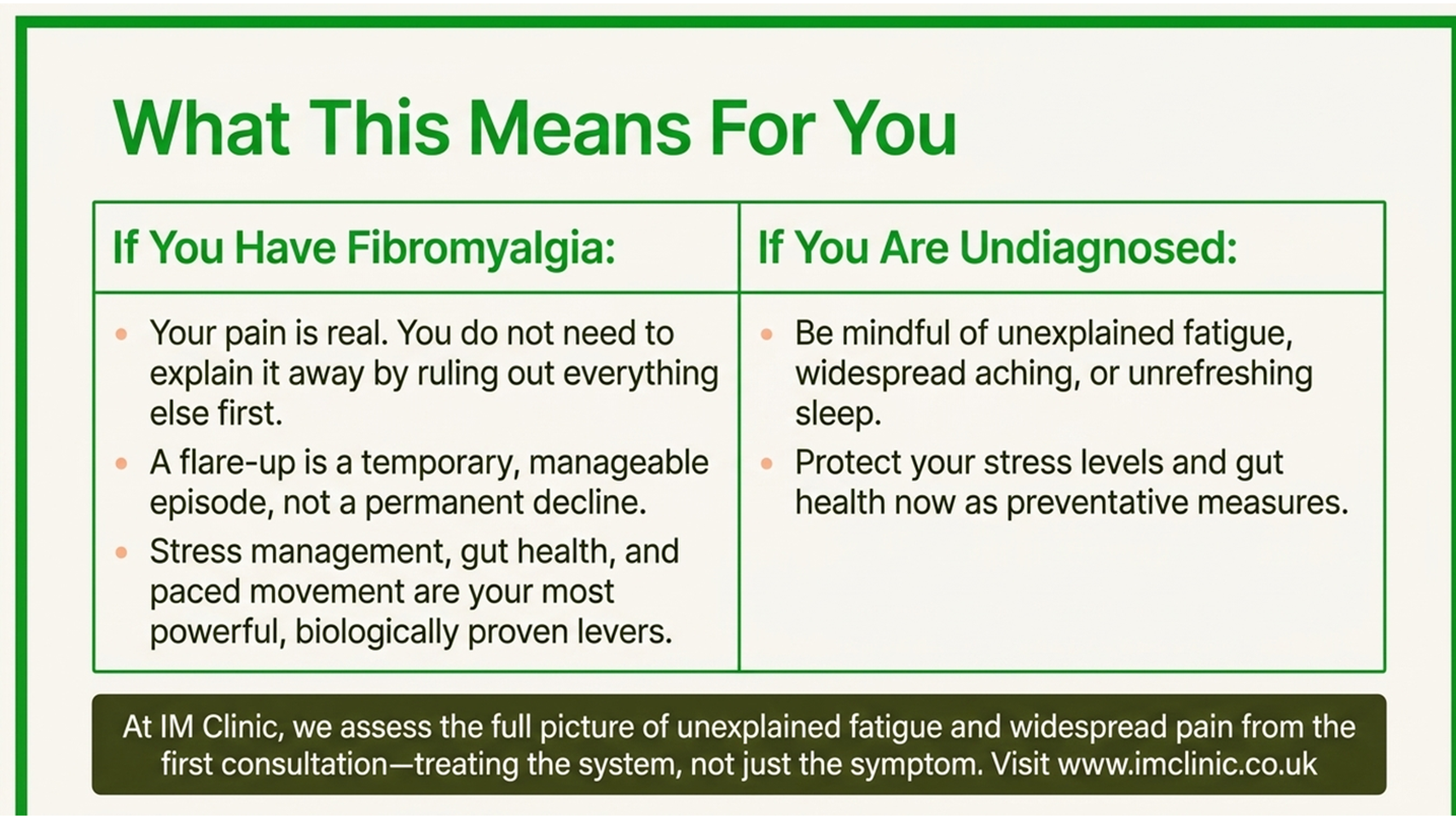
At IM Clinic, we take unexplained fatigue and widespread pain seriously from the first consultation, assessing the full picture rather than working through it in isolation.
Continuity of Care, From One GP
- See the same doctor at every visit, not a different one each time
- A full picture assessment, not just symptom by symptom
- Time to properly discuss both traditional and lifestyle options
Author: Dr Imran Mughal, Private Specialist GP
Website: www.imclinic.co.uk
References
Naviaux RK. Metabolic features of the cell danger response. Mitochondrion. 2014;16:7-17.





We would love to hear your thoughts. A few things to keep in mind before you post: