


How to Measure Blood Pressure at Home: A Practical Guide
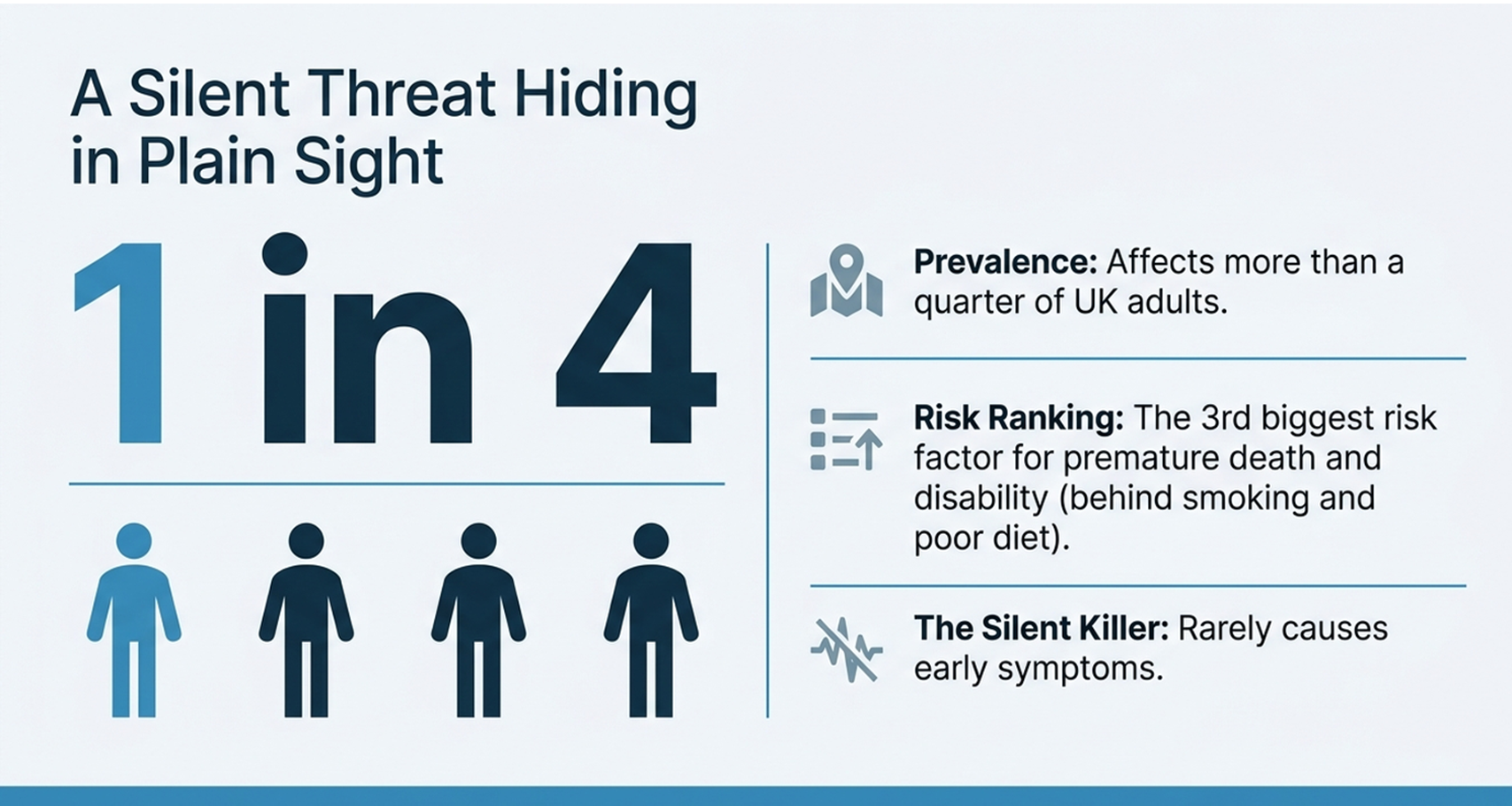
High blood pressure affects more than a quarter of adults in the UK. It is the third biggest risk factor for premature death and disability, after smoking and poor diet. It rarely causes symptoms early on, which is why it is often called the silent killer. Knowing how to measure blood pressure at home correctly is one of the simplest things you can do to protect your health.
How to Measure Blood Pressure at Home: Upper Arm or Wrist Monitor
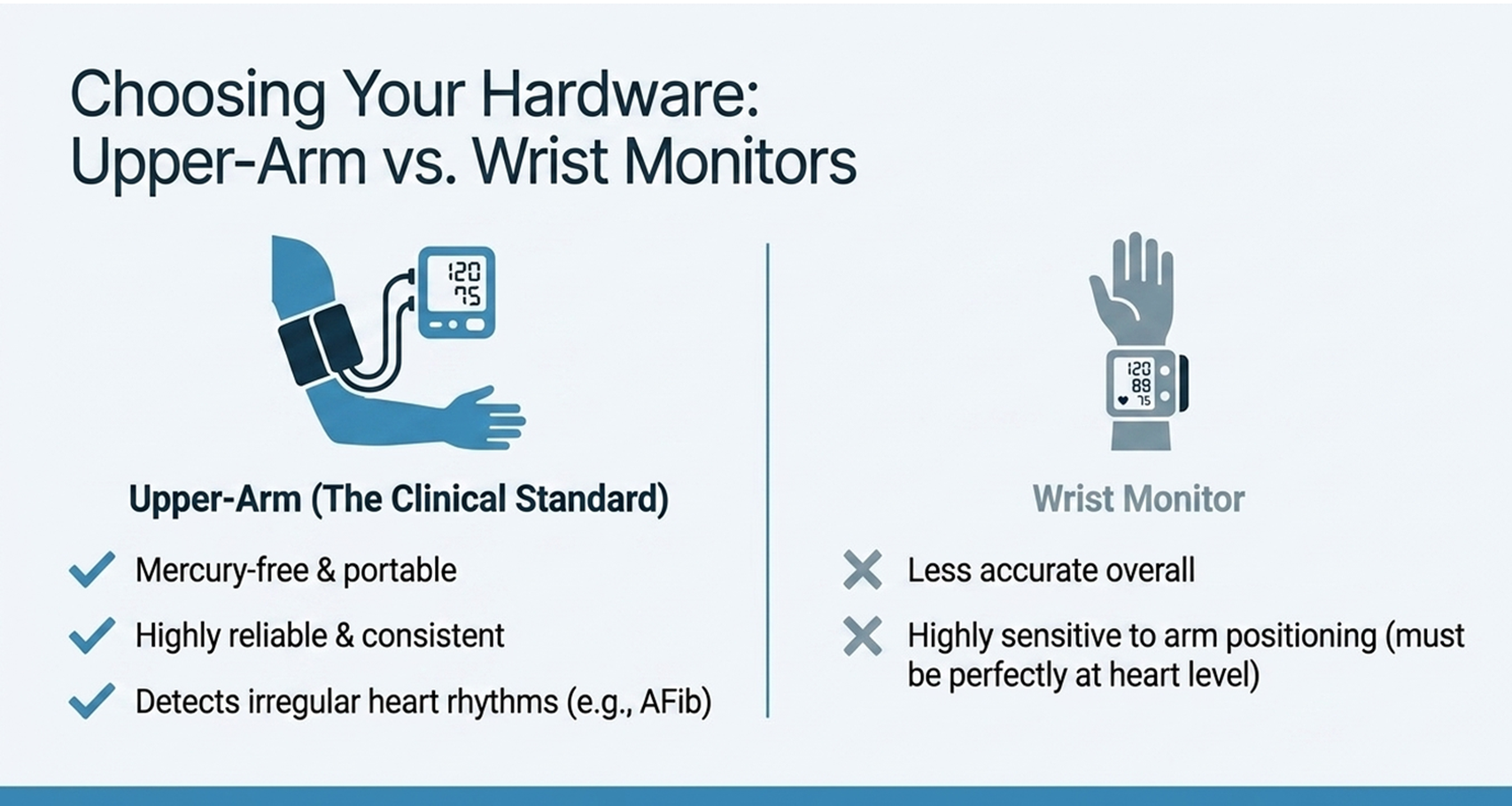
Automated monitors come in two main types, upper arm and wrist.
- Upper arm monitors are mercury free, portable, and give reliable, consistent results. Many models can also detect an irregular heart rhythm, which can help pick up undiagnosed atrial fibrillation.
- Wrist monitors are more comfortable to wear, but readings depend heavily on keeping the wrist at the exact level of your heart. They tend to be less accurate overall.
My advice is simple. Use an upper arm monitor wherever possible. It is the more reliable choice for almost everyone.
How to Measure Blood Pressure at Home: Prepare, Position, Measure
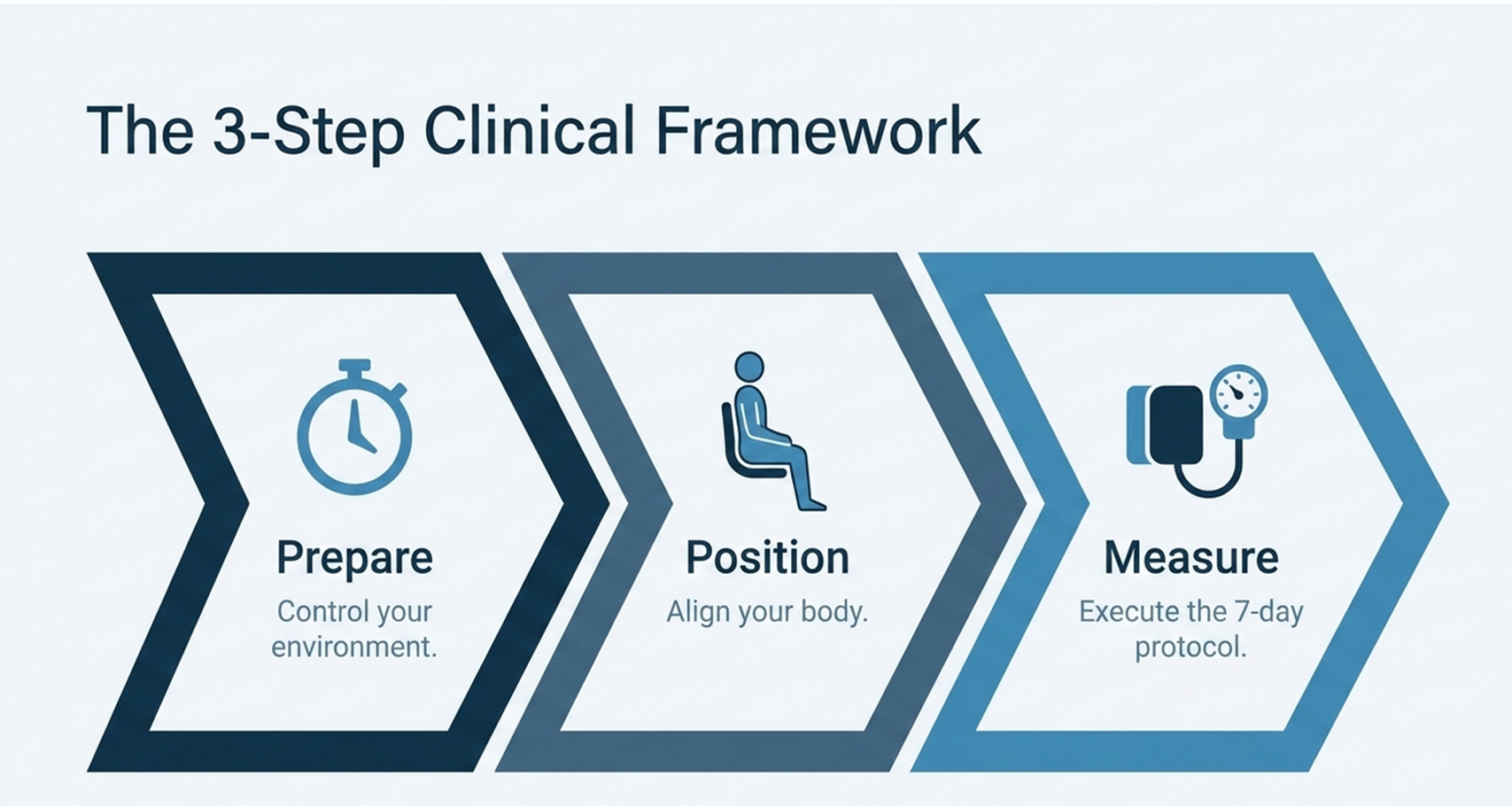
Getting an accurate reading depends on preparation as much as the device itself.
1. Prepare
- Wear loose-fitting clothes so you can roll up your sleeve easily.
- Empty your bladder before you start.
- Avoid smoking, caffeine or exercise in the 30 minutes beforehand.
- Rest quietly for at least 5 minutes in a calm space before you begin.
2. Position
- Sit with your back straight and supported, feet flat on the floor, legs uncrossed.
- Rest your arm on a flat surface with the upper arm at heart level.
- Place the cuff on bare skin, never over clothing.
- Stay still and do not talk while the reading is being taken.
3. Measure
- Take two consecutive readings, at least a minute apart, twice a day, for 7 days.
- Ignore the first day of readings if you are new to your monitor.
- Check both arms. If the difference between arms is more than 15 mmHg, repeat after a few minutes. If it stays above 15 mmHg, always measure future readings in the higher arm, since this reflects your true risk.
- If your monitor flags an irregular pulse, contact your doctor or call 111 for advice.
Calculating Your Average Reading
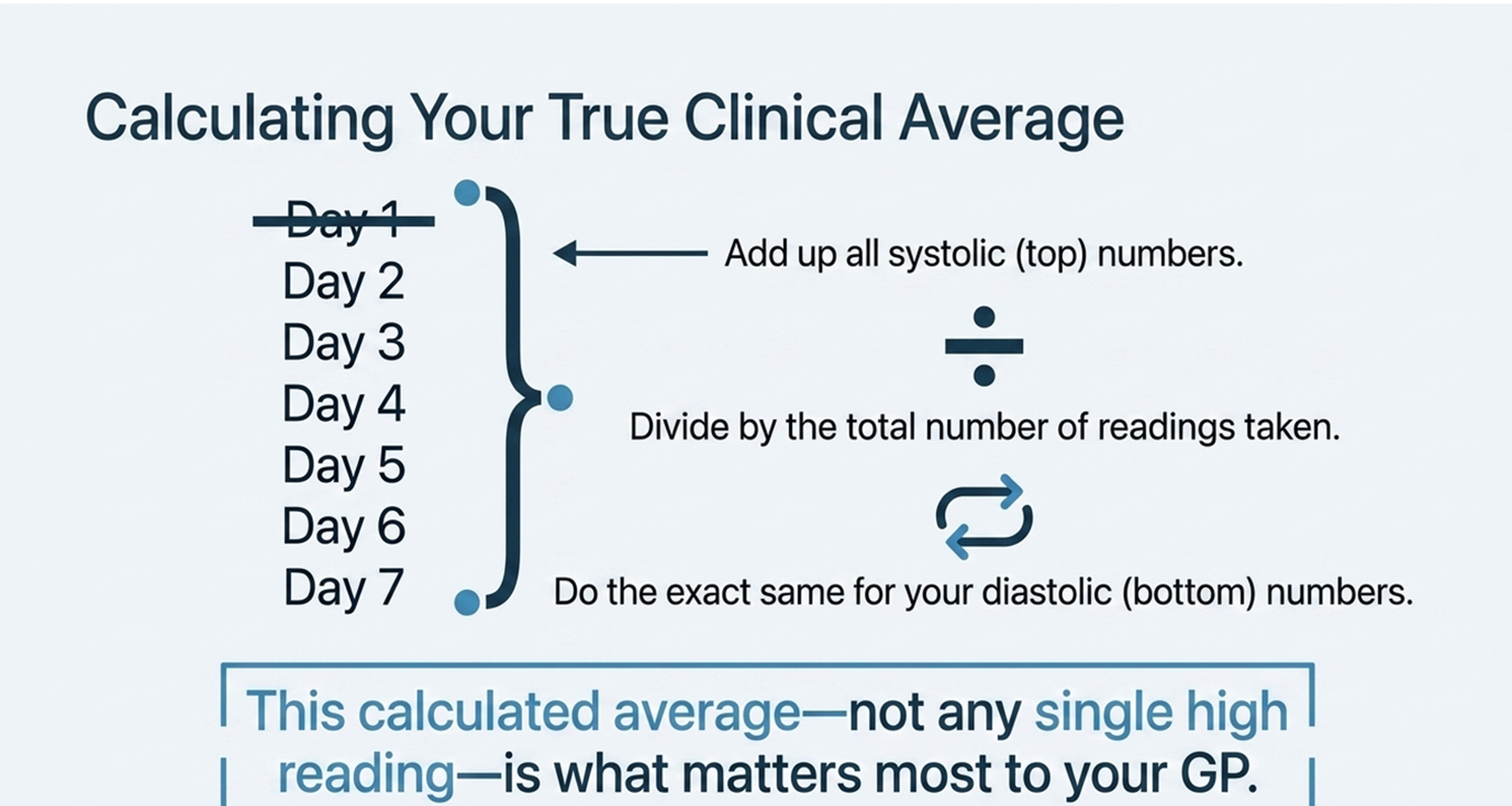
Once you have 7 days of readings, work out your average.
- Add up all your systolic (top) numbers, ignoring day one.
- Divide by the total number of readings taken.
- Do the same for your diastolic (bottom) numbers.
This average, not any single reading, is what matters most.
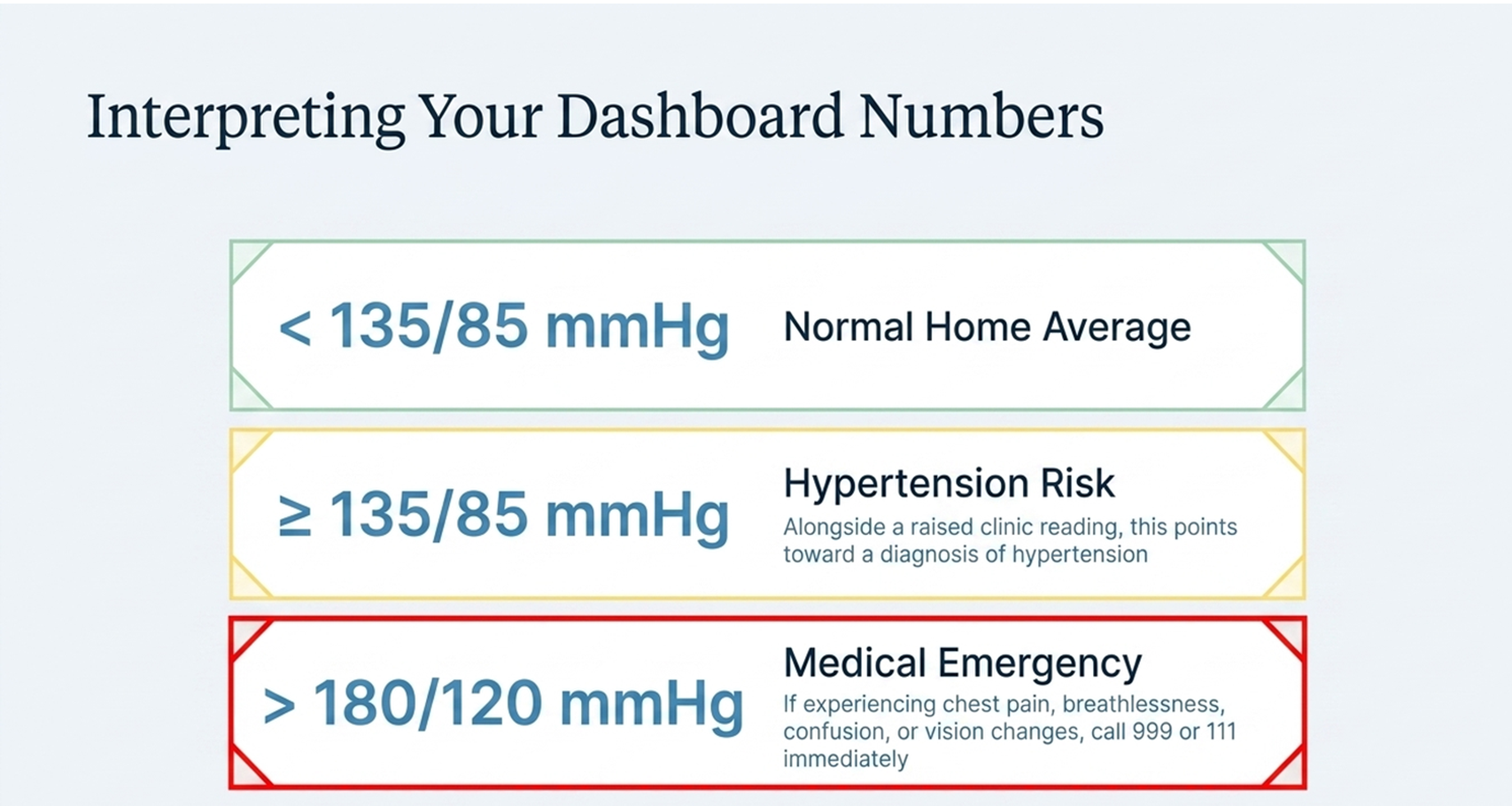
Interpreting Your Blood Pressure Numbers
- A home average under 135/85 mmHg is considered normal.
- A home average of 135/85 mmHg or higher, alongside a raised clinic reading, points towards a diagnosis of hypertension.
- Blood pressure over 180/120 mmHg is a medical emergency. If you have symptoms such as chest pain, breathlessness, new confusion or vision changes, call 999 or 111 immediately.
We will cover diagnosis stages and treatment targets in more detail in the next post.
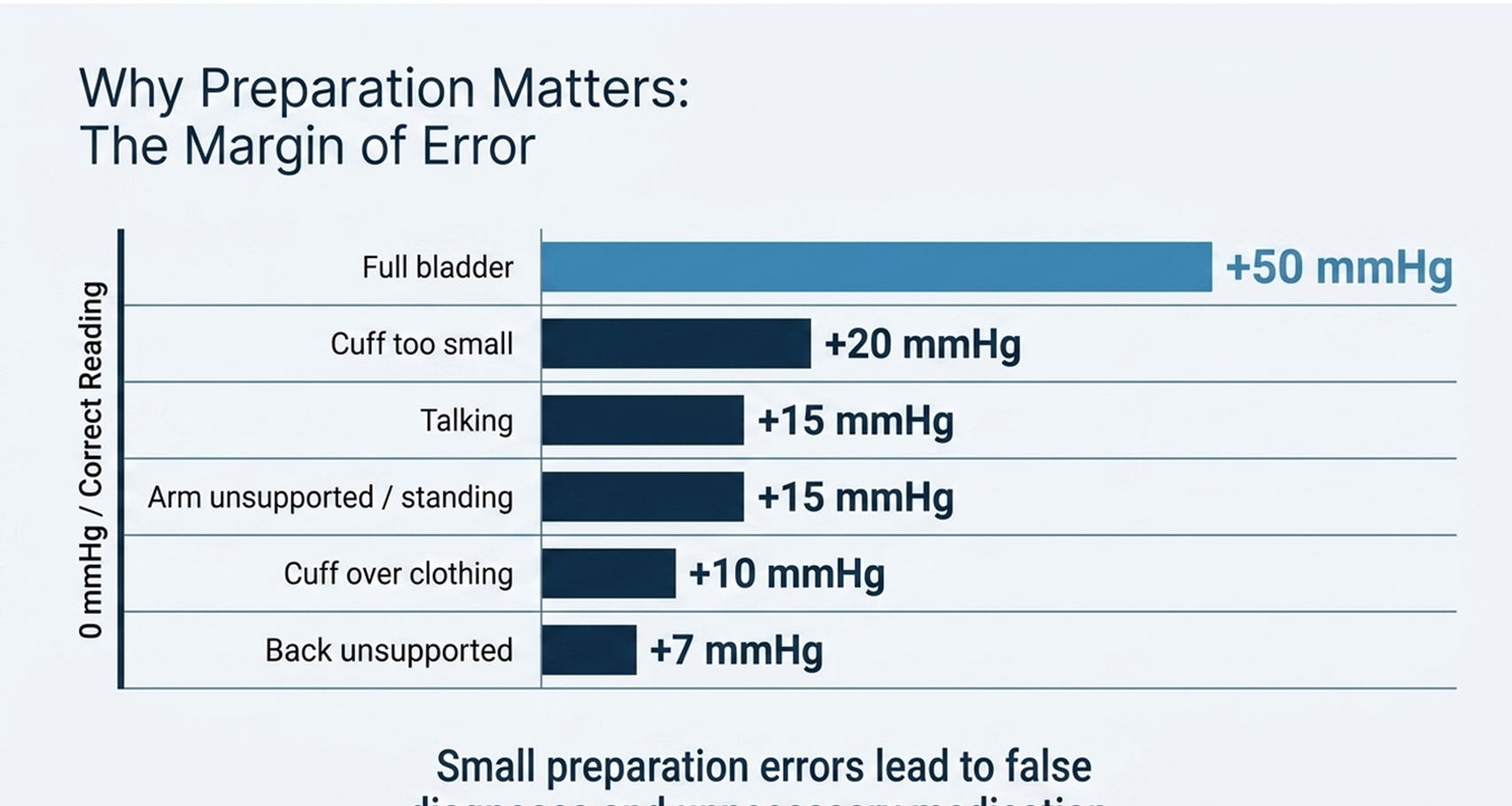
Why Preparation Really Matters
| Factor | Effect on systolic (top) reading | Effect on diastolic (bottom) reading |
|---|---|---|
| Talking during the reading | Up to 15 mmHg | Up to 10 mmHg |
| Full bladder | Up to 50 mmHg | Not significant |
| Cuff placed over clothing | Up to 10 mmHg | 2 to 8 mmHg |
| Cuff too small | Up to 20 mmHg | Not significant |
| Smoking within 30 minutes | 2 to 5 mmHg | Not significant |
| Back unsupported | Up to 7 mmHg | 5 to 11 mmHg |
| Arm unsupported, standing | Up to 15 mmHg | Up to 10 mmHg |
Getting these details right reduces the risk of a wrong diagnosis and unnecessary treatment.
The Key Points
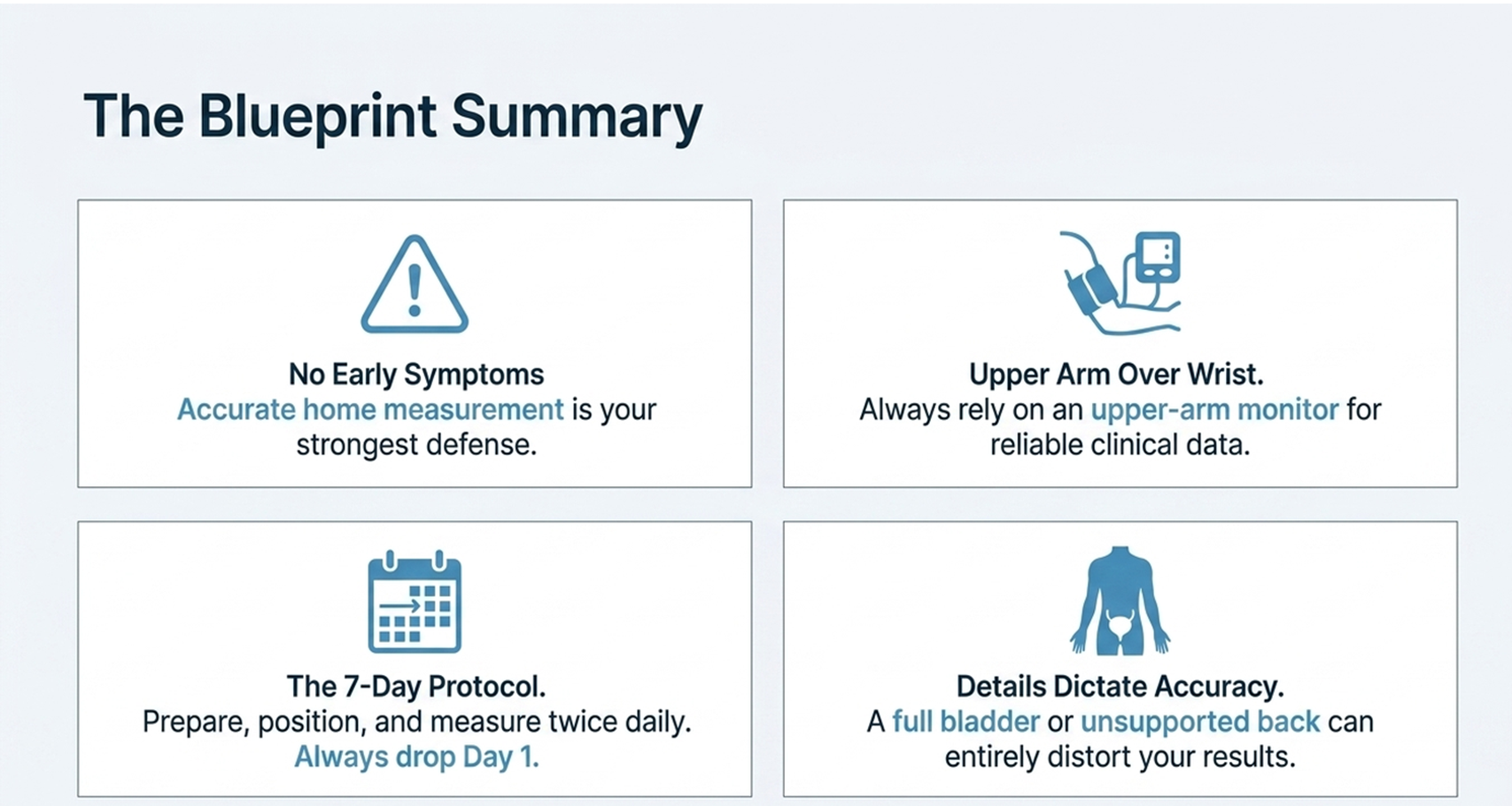
- High blood pressure has no early symptoms, so accurate home measurement matters.
- Upper arm monitors are more reliable than wrist monitors for almost everyone.
- Prepare, position and measure correctly, twice a day, for 7 days, then calculate your average.
- Small preparation errors like a full bladder or talking can significantly distort your reading.
What This Means For You
- If you already check your blood pressure at home, following these steps properly will give you and your GP a far more accurate picture.
- Small changes, like resting first or using the correct cuff position, can make a genuine difference to your results.
- If you would like your readings reviewed and explained clearly, IM Clinic offers private consultations to help you understand what your numbers mean and what to do next.
Author: Dr Imran Mughal, Private Specialist GP
Website: www.imclinic.co.uk
Book a consultation: https://notes.thanksdoc.co.uk/book/clinic/im-clinic
References
British and Irish Hypertension Society. Home blood pressure monitoring protocol.
Handler J. The importance of accurate blood pressure measurement. The Permanente Journal. 2009.



We would love to hear your thoughts. A few things to keep in mind before you post: