


Can Type 2 Diabetes Be Reversed? What the Evidence Really Shows
Can type 2 diabetes be reversed? It is one of the most common questions asked at a diabetes consultation.
- The old answer: for a long time, the standard medical answer was no.
- The new evidence: for a meaningful number of people, type 2 diabetes can go into remission.
- What that means: blood sugar returns to a normal range without needing medication.
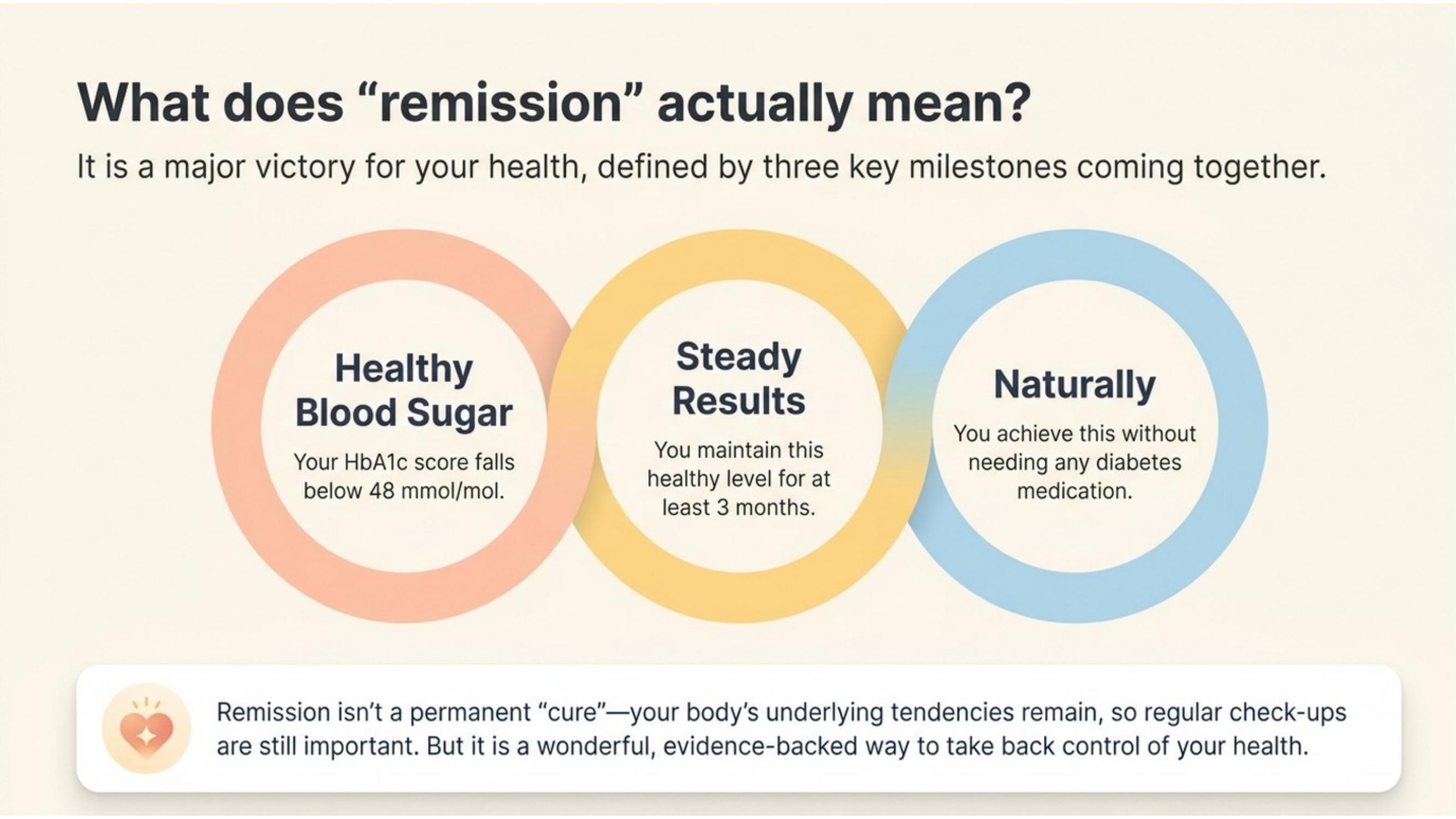
What does remission actually mean?
- What remission is not: the underlying tendency towards diabetes does not disappear entirely.
- What remission is: blood sugar levels return below the diagnostic threshold and stay there for at least 3 months, without medication.
The definition used by Diabetes UK, the ADA, and other major bodies has 3 criteria:
- An HbA1c below 48 mmol/mol
- Sustained for at least 3 months
- Achieved without glucose lowering drugs
- Important: if your HbA1c is below 48 mmol/mol but you are on diabetes medication, this does not count as remission. The drop must be driven by weight loss, not medication.
- Not a cure: regular monitoring is still needed, but this is a genuinely significant improvement in health outcomes.
Who is most likely to reverse type 2 diabetes?
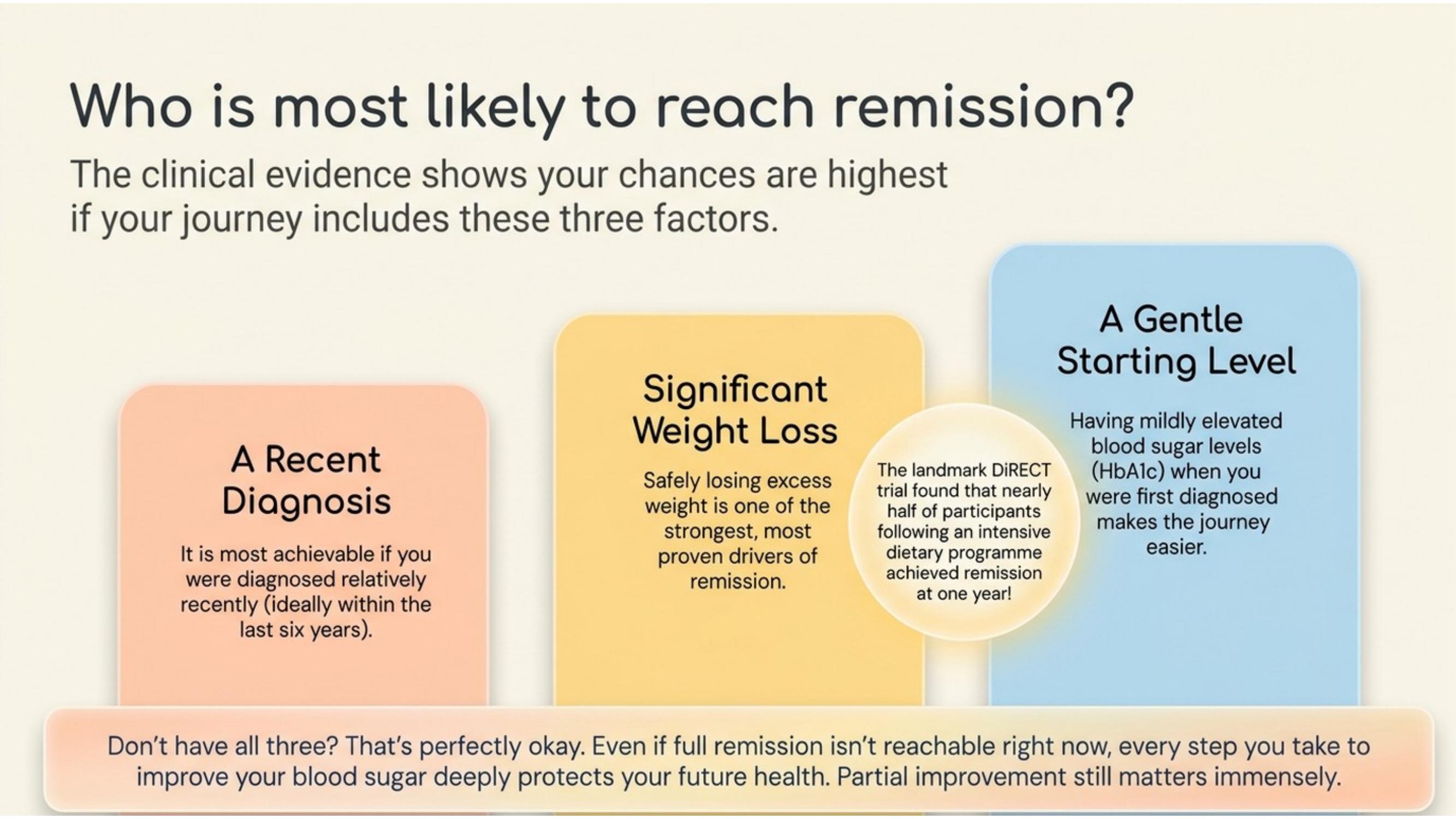
The evidence points most strongly towards people with these 3 characteristics:
- Diagnosed with type 2 diabetes relatively recently, ideally within the last 6 years
- Have lost a significant amount of weight, particularly if carrying excess weight at diagnosis
- Had a relatively modest HbA1c at the time of diagnosis
A landmark study, the DiRECT trial, was designed to test this. The 2 most important outcomes were:
- Nearly 50% of participants who followed an intensive dietary programme achieved remission at 1 year
- Around 33% maintained remission at 2 years
- Bottom line: these are not small numbers.
How was remission achieved in the DiRECT Trial?
The DiRECT trial followed a structured, stepped approach. Here is how it worked:
Step 1: Medication withdrawal
- All antidiabetic medications were withdrawn at the start
- All antihypertensive medications were also withdrawn at the start
Step 2: Total Diet Replacement (TDR)
- A formula diet of 825 to 853 kcal per day
- Duration: 12 to 20 weeks (3 to 5 months)
Step 3: Food reintroduction
- Structured, stepped reintroduction of normal food
- Duration: 2 to 8 weeks
Step 4: Weight loss maintenance
- Long term structured support programme (Counterweight-Plus)
- Aimed at sustaining weight loss beyond the diet replacement phase
- In the 5 year extension: continued low intensity dietary support offered annually
- Key principle: sustained weight loss was the dominant driver of remission. Every part of the programme was built around achieving and maintaining it.
Can type 2 diabetes be reversed through lifestyle alone?
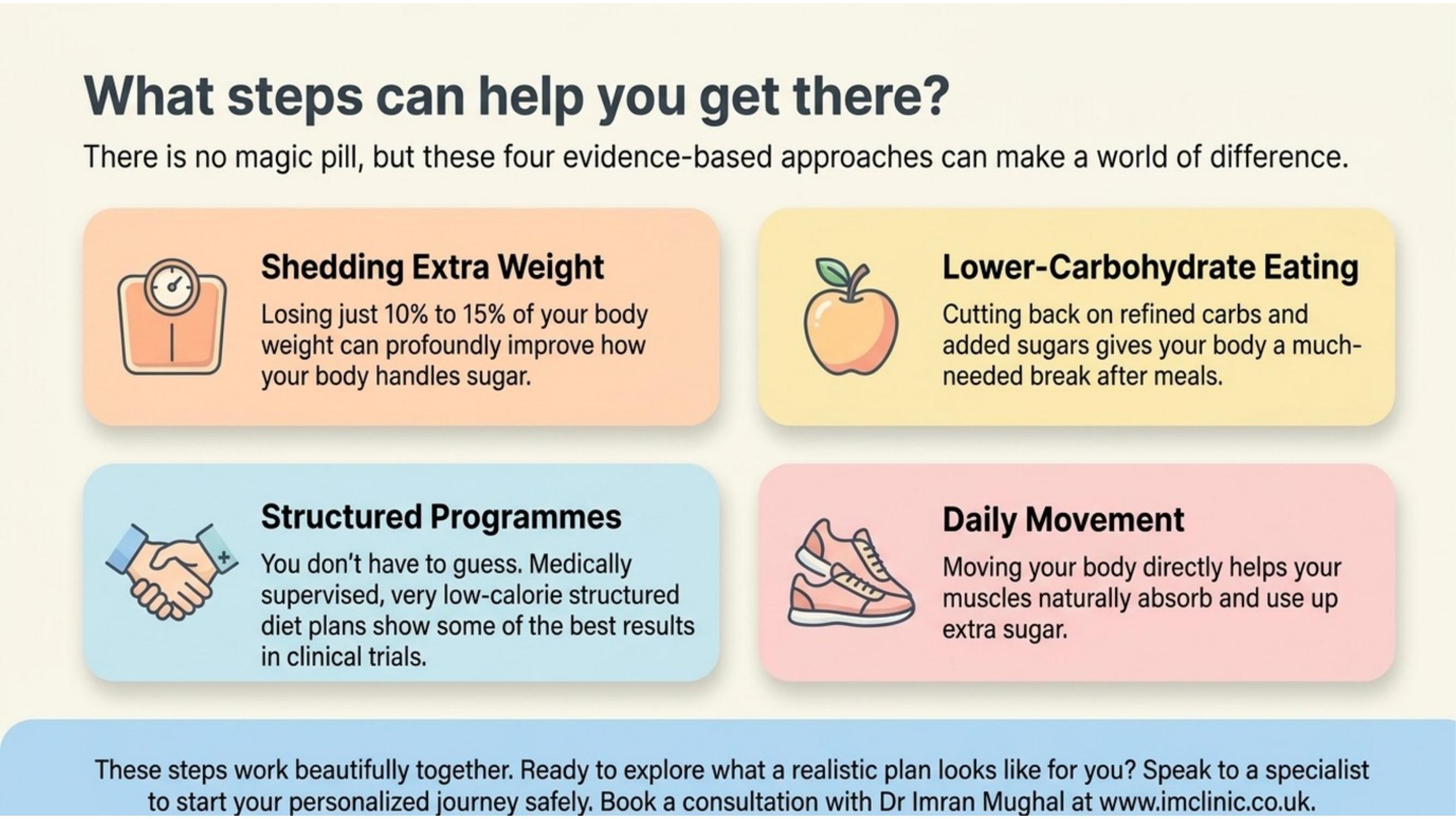
The approaches most supported by evidence are:
- Weight loss: losing just 10% to 15% of body weight can produce significant improvements in blood sugar control
- Low carbohydrate eating: reducing refined carbohydrates and added sugars lowers the glucose load the body needs to manage after each meal
- Structured dietary programmes: very low calorie approaches under medical supervision have produced some of the most impressive remission rates in clinical trials
- Regular physical activity: even moderate movement directly improves how muscles absorb and use glucose
- Best used together: these approaches work best in combination and with proper support. An unsupervised crash approach is not recommended.
What did the trial show for people who did not achieve remission?
Not achieving full remission did not mean no benefit. Many participants who did not reach remission still experienced meaningful improvements:
- Reduced medication burden: many were able to reduce or stop some of their diabetes medications.
- Improved HbA1c: blood sugar levels improved significantly, even without meeting the remission threshold.
- Some weight loss: participants lost meaningful amounts of weight, with positive effects on overall health.
- Improved metabolic markers: this includes better cholesterol levels and improved liver function.
What if type 2 diabetes cannot be reversed?
- Who this applies to: people diagnosed longer ago, with a higher initial HbA1c, or with other complicating factors may not achieve full remission.
- The evidence: full remission is not realistic for everyone, but better blood sugar control still significantly reduces the risk of complications.
- What it means: meaningful improvement remains possible for almost anyone, even without full remission.
When to seek specialist advice about reversing type 2 diabetes
- Your specific situation: whether type 2 diabetes can be reversed for you depends on individual factors, best assessed in a specialist consultation.
- What a consultation covers: a full review of where you are now, your options, and a realistic plan.
- At IM Clinic: Dr Imran Mughal offers private specialist consultations for people with type 2 diabetes and prediabetes across the UK, with appointments available online.
The Key Points
- Can type 2 diabetes be reversed? Yes, for many people, remission means HbA1c below 48 mmol/mol for at least 3 months without medication
- If your HbA1c is below 48 on medication, that is not remission, weight loss must be the driver
- The DiRECT trial found nearly 50% of participants achieved remission through an intensive dietary programme
- The DiRECT approach used total diet replacement of 825 to 853 kcal per day, followed by structured reintroduction and long term support
- Even those who did not achieve remission saw improvements in HbA1c, weight, medication burden, and metabolic markers
- Weight loss, low carbohydrate eating, and regular activity are the most evidence backed routes to remission
- Better blood sugar control significantly reduces the risk of complications, even if full remission is not achieved
- A specialist consultation can help you understand whether remission is a realistic goal for your situation
What This Means For You
- If you were recently diagnosed: remission may be a realistic goal, especially with meaningful weight loss.
- If you have had diabetes for longer: full remission may be less likely, but improving your blood sugar control still lowers your risk of complications.
- Either way: a structured, supported plan works better than doing this alone.
- IM Clinic can help: a specialist consultation can clarify whether remission is realistic for you, and map out the next steps.
Author: Dr Imran Mughal, Private Specialist GP
Website: www.imclinic.co.uk
Book a consultation: Book a consultation
References
Lean MEJ et al. Primary care led weight management for remission of type 2 diabetes (DiRECT). The Lancet. 2018. https://doi.org/10.1016/S0140-6736(17)33102-1
American Diabetes Association. Standards of Care in Diabetes 2025. Diabetes Care. 2025. https://diabetesjournals.org/care
Diabetes UK. Putting Type 2 Diabetes into Remission. 2024. https://www.diabetes.org.uk/remission
NHS. Remission in Type 2 Diabetes. 2023. https://www.nhs.uk/conditions/type-2-diabetes

We would love to hear your thoughts. A few things to keep in mind before you post: