


How Is Diabetes Diagnosed? Understanding Your Blood Results
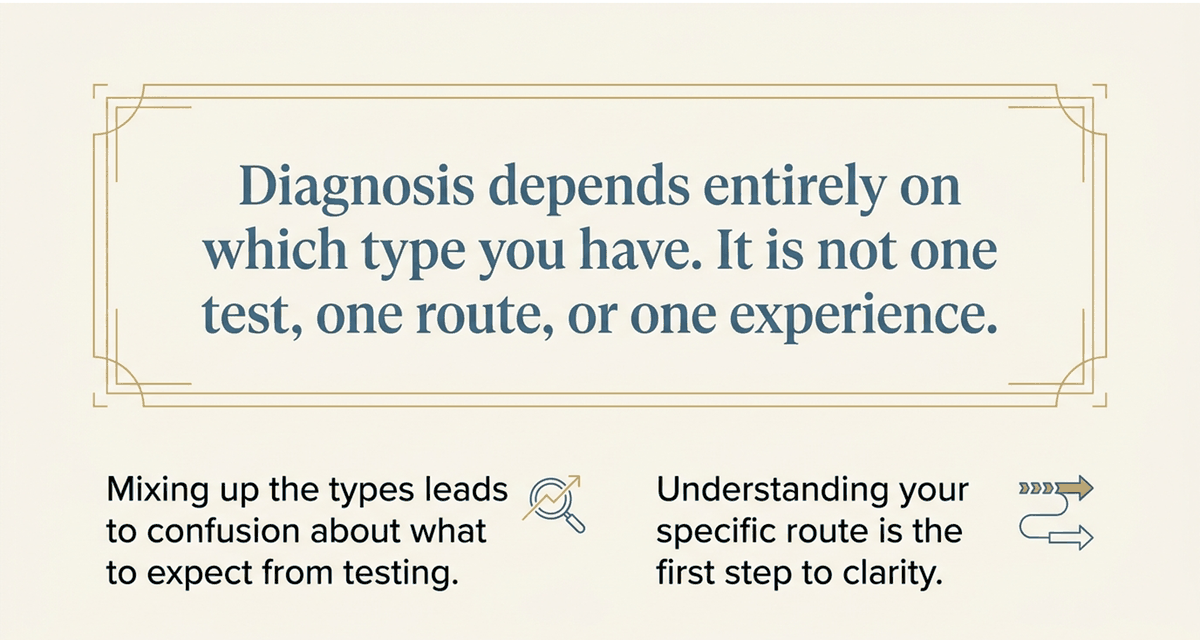
How is diabetes diagnosed depends entirely on which type you have. It is not one test, one route, or one experience.
- Type 1 diabetes is usually sudden and serious. It often shows up as an emergency.
- Type 2 diabetes is usually silent. Many people find out from a routine blood test with no symptoms at all.
- Mixing the two up leads to confusion about what to expect from testing and monitoring.
How Is Diabetes Diagnosed? Type 1 and Type 2 Are Completely Different Routes
Type 1 diabetes:
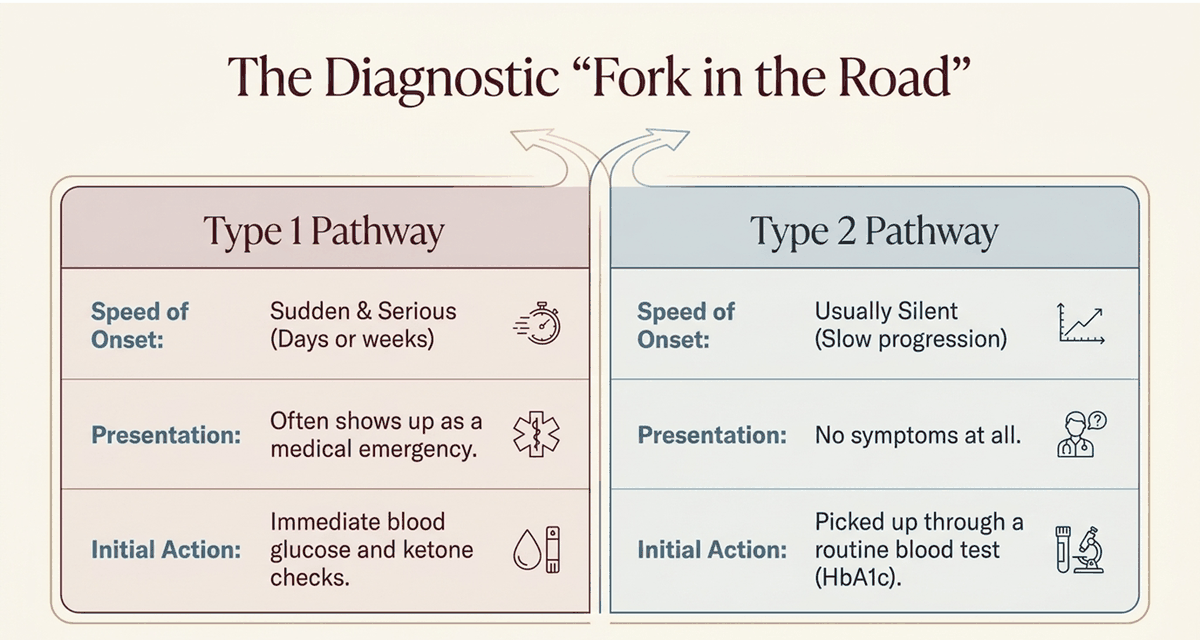
- Often diagnosed as an emergency, with rapid onset over days or weeks.
- Blood glucose is measured immediately.
- Ketone levels are checked, in blood or urine, since high ketones alongside high glucose signal a medical emergency (diabetic ketoacidosis).
- Autoantibody tests (such as GAD antibodies) help confirm the diagnosis is Type 1, not Type 2.
Type 2 diabetes:
- Usually has no symptoms at diagnosis.
- Picked up through a routine blood test, most commonly the HbA1c.
- Once diagnosed, HbA1c becomes the main monitoring tool for both types going forward.
How Is Diabetes Diagnosed in Type 2? The Tests Explained
HbA1c, the main test:
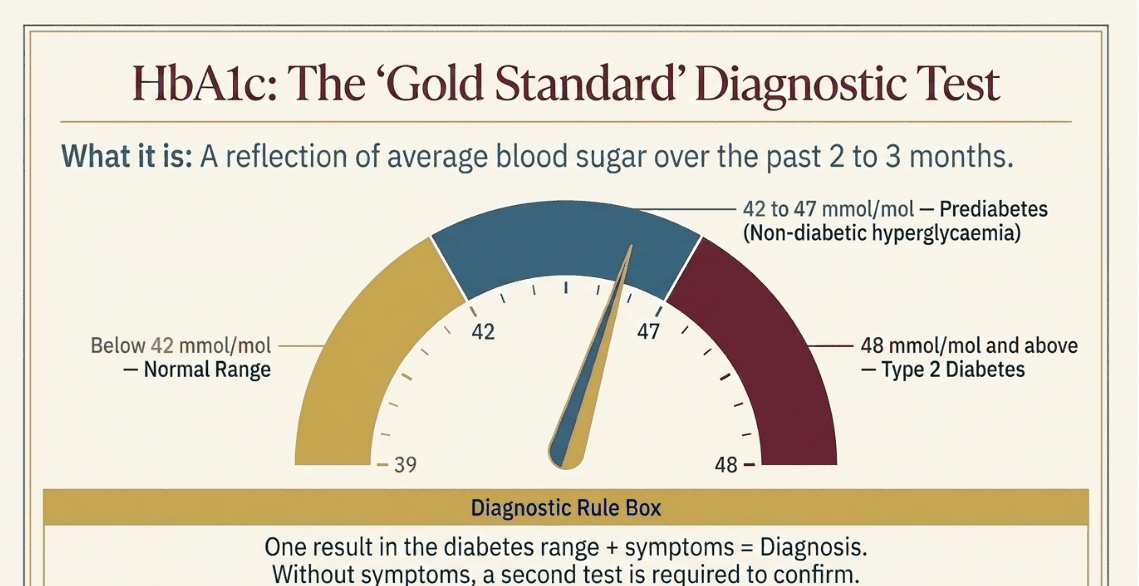
- Reflects your average blood sugar over the past 2 to 3 months.
- Results are given in mmol/mol.
- Below 42 mmol/mol: normal range.
- 42 to 47 mmol/mol: prediabetes, sometimes called non diabetic hyperglycaemia.
- 48 mmol/mol and above: Type 2 diabetes.
- One result in the diabetes range is usually enough to diagnose you if you have symptoms. Without symptoms, a second test confirms it.
Fasting plasma glucose:
- Requires an overnight fast before blood is taken.
- Below 5.5 mmol/L: normal.
- 5.5 to 6.9 mmol/L: prediabetes range.
- 7.0 mmol/L or above: diabetes.
- Used less often than HbA1c as a first test in the UK, but still used in certain situations.
Oral glucose tolerance test:
- Mainly used in pregnancy, or when other results are unclear.
- You drink a sugary solution. Blood sugar is checked before and 2 hours later.
- 11.1 mmol/L or above at 2 hours confirms diabetes.
What can affect your results:
- Iron or B12 deficiency, anaemia, and pregnancy.
- Chronic kidney disease.
- Sickle cell trait, thalassaemia, or haemolytic anaemia.
- Recent illness, significant stress, or certain medications can also temporarily shift readings. An unexpected result is always worth discussing with a doctor.
Other Blood Tests Usually Done in Conjunction With HbA1c
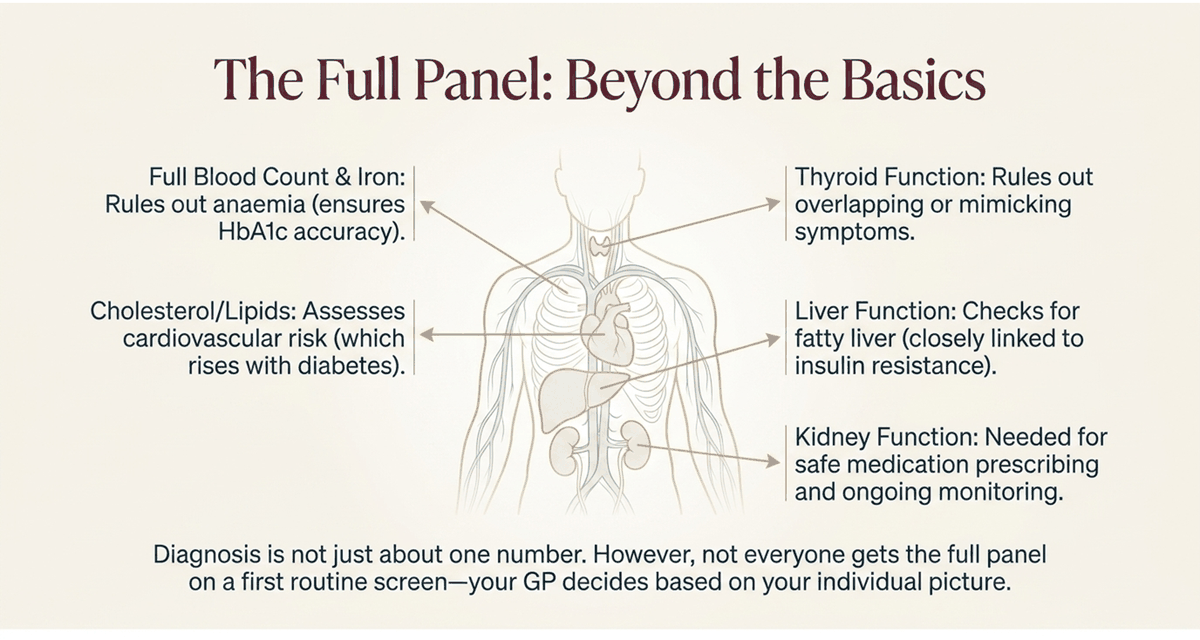
- Diagnosis is not just about one number. A full picture usually means checking several things at the same time.
- Full blood count and iron levels. Rules out anaemia, which can also affect HbA1c accuracy.
- Cholesterol and lipid levels. Cardiovascular risk tends to rise alongside diabetes risk.
- Thyroid function. Thyroid problems can overlap with or mimic some diabetes symptoms.
- Liver function tests. Checks for fatty liver disease, which is closely linked to insulin resistance.
- Kidney function. Needed for prescribing certain medications safely, for ongoing monitoring, and for assessing complications if you already have diabetes.
- Not everyone gets the full panel. Sometimes only the HbA1c is checked, particularly on a first routine screen. Your GP decides what is needed based on your individual picture.
Continuity of Care With One GP
- See the same GP every time. No repeating your history to someone new at every appointment.
- Book when it suits you. Flexible appointments that fit around work, not the other way round.
- One doctor who knows your full picture. Blood sugar, medication, and follow-up tracked together, not treated as separate problems.
What Happens After Diagnosis: Monitoring Your HbA1c
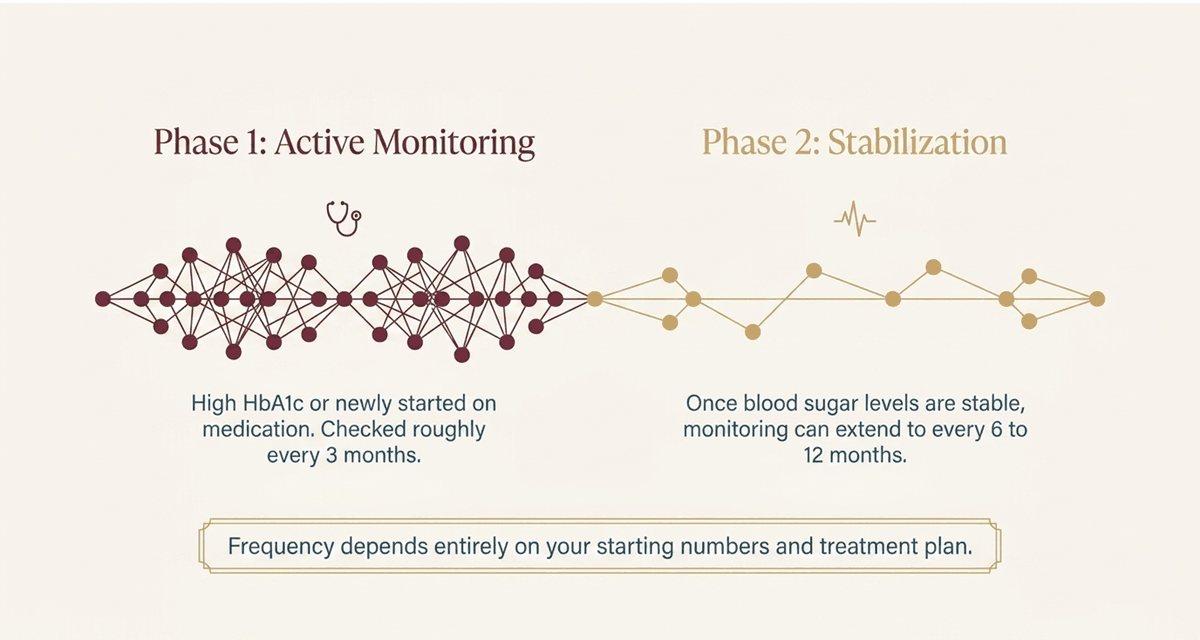
- Monitoring frequency depends on your starting HbA1c and whether medication is started.
- High HbA1c, newly started on medication: checked roughly every 3 months until stable.
- Once stable: monitoring can extend to every 6 to 12 months.
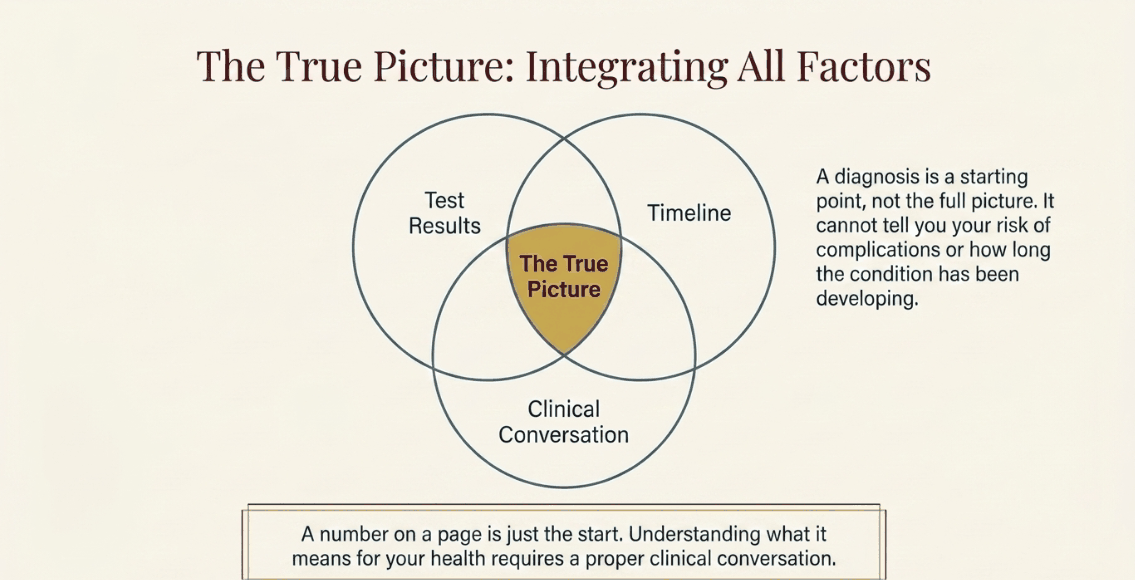
- A diagnosis is a starting point, not a full picture. It does not on its own tell you your risk of complications or how long the condition has been developing.
- That is why a proper clinical conversation, not just the number, matters.
The Key Points
- Type 1 and Type 2 diabetes are diagnosed on completely different routes, one urgent, one usually silent.
- HbA1c is the main test for Type 2 and becomes the main monitoring tool for both types afterwards.
- Fasting glucose and the oral glucose tolerance test are used in specific situations.
- Other blood tests, full blood count, cholesterol, thyroid, liver, and kidney function, are usually checked alongside HbA1c for a fuller picture, though not everyone gets the full panel.
- Monitoring frequency after diagnosis depends on your starting HbA1c and whether you are on medication.
Continuity of Care With One GP
- See the same GP every time. No repeating your history to someone new at every appointment.
- Book when it suits you. Flexible appointments that fit around work, not the other way round.
- One doctor who knows your full picture. Blood sugar, medication, and follow-up tracked together, not treated as separate problems.
What This Means For You
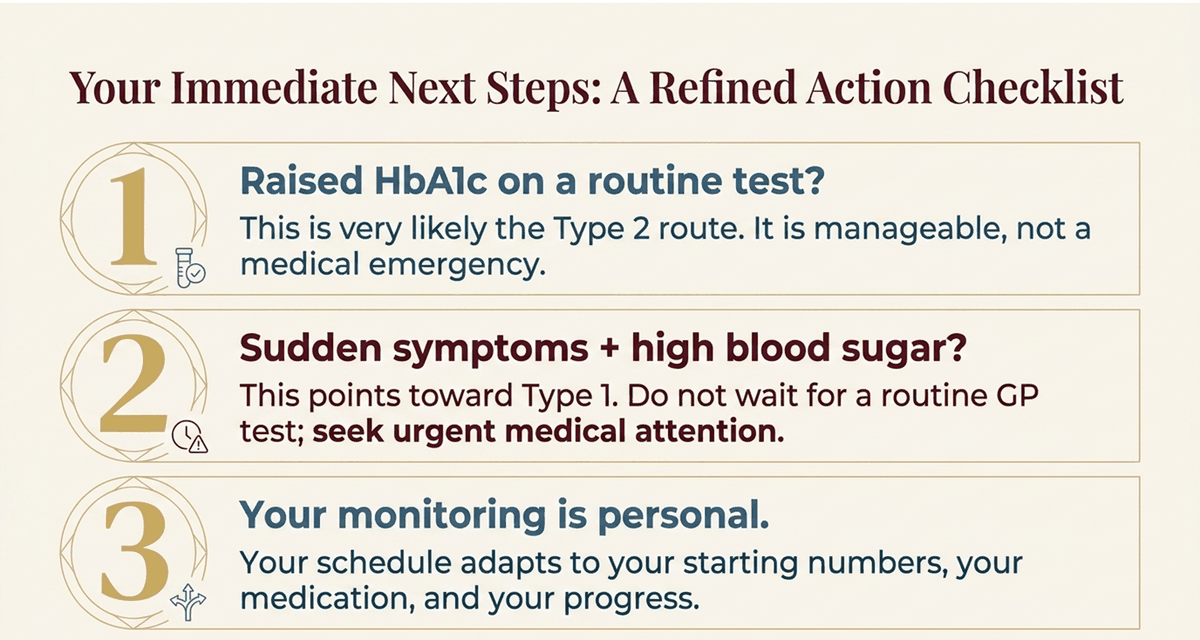
- If you have had a routine blood test showing a raised HbA1c, this is very likely the Type 2 route, not an emergency.
- If you or someone you know has sudden symptoms with high blood sugar, this points towards Type 1 and needs urgent medical attention, not a routine GP blood test.
- Your monitoring schedule after diagnosis is personal to you. It depends on your starting numbers and your treatment.
- A number on a page is only the start. Understanding what it means for your health needs a full clinical conversation.
- IM Clinic can talk you through your results and build a monitoring plan around you.
Author: Dr Imran Mughal, Private Specialist GP
Website: www.imclinic.co.uk
Book a consultation: https://notes.thanksdoc.co.uk/book/clinic/im-clinic
References
American Diabetes Association. Standards of Care in Diabetes 2025. Diabetes Care. 2025.
NHS. Diagnosis: Type 2 Diabetes. 2023.
Diabetes UK. Diagnosing Diabetes. 2024.
NICE. Type 2 Diabetes in Adults: Management. NG28. 2022.
NICE. Type 1 Diabetes in Adults: Diagnosis and Management. NG17. 2022.

We would love to hear your thoughts. A few things to keep in mind before you post: