


You may have been told your blood sugar is “a little high.”
Perhaps your GP used the word prediabetes. Perhaps they did not.
Either way, it probably did not feel urgent. But prediabetes left untreated doesn’t stay quiet for long.
Here is what most patients are never told:
- If your HbA1c is 39 to 47 mmol/mol, the clock has already started.
- This is not a waiting room before diabetes.
- Damage can begin quietly, and it can begin now.
For the basics on what prediabetes is and how it is diagnosed, see our guide to what prediabetes is and why it matters.
The risk of developing type 2 diabetes is real and measurable
The problem:
- Prediabetes left untreated does not stay still.
- Without intervention, a significant proportion of people with prediabetes go on to develop type 2 diabetes.
The evidence (large population studies) [4]:
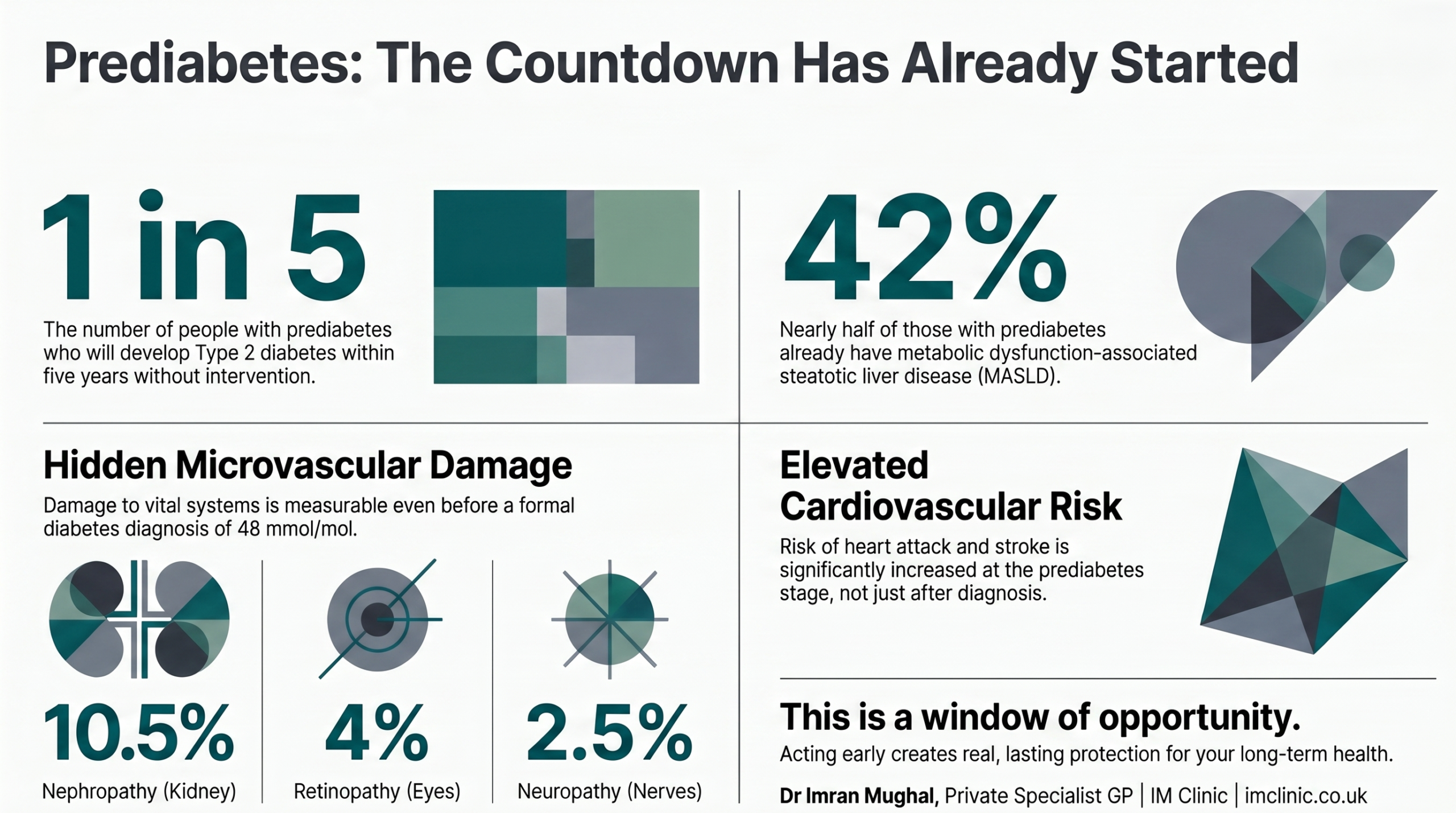
- Around 1 in 5 people with prediabetes develop type 2 diabetes within 5 years.
- Faster and greater risk in higher risk groups: HbA1c of 42 mmol/mol or above, excess weight, or family history of diabetes.
What this means for you:
- The higher your HbA1c within the prediabetes range, the greater the likelihood of crossing into type 2 diabetes.
- This is the starting point. Progression to diabetes is not the only concern.
1. Your liver may already be affected
The problem:
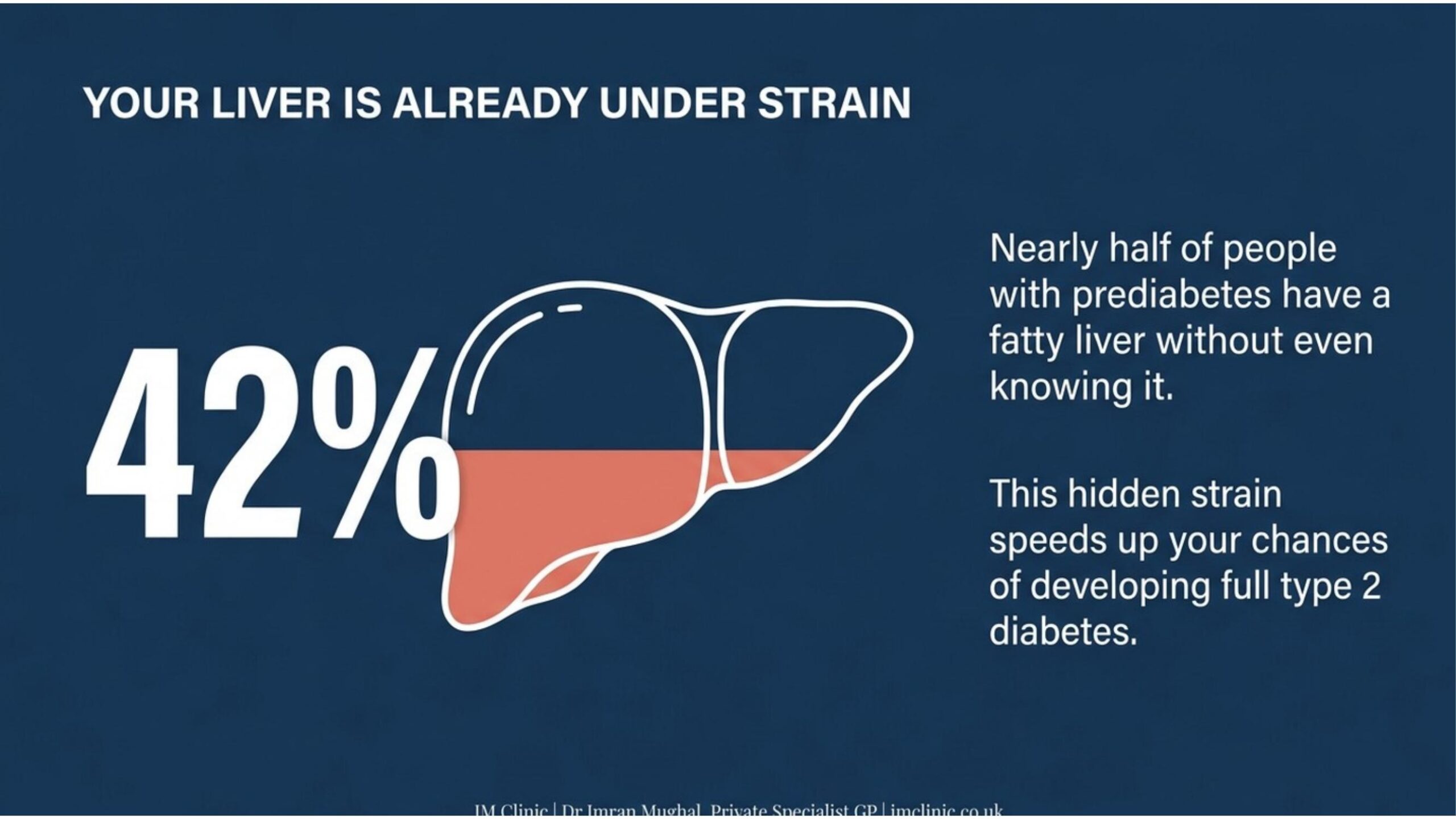
- Around 42% of people with prediabetes already have fatty liver disease (MASLD) [3].
- That is nearly 1 in 2 people, most of whom do not know it.
Why it matters:
- MASLD causes no obvious symptoms early on.
- It is linked to faster progression from prediabetes to type 2 diabetes.
- It raises cardiovascular risk.
- It worsens outcomes over the long term.
What this means for you:
- If your blood sugar is raised, your liver is likely already under pressure.
- Not a possibility. A probability.
2. Your eyes, nerves, and kidneys are at risk
The problem:
- Most people assume this damage only comes after years of diabetes.
- The evidence says otherwise.
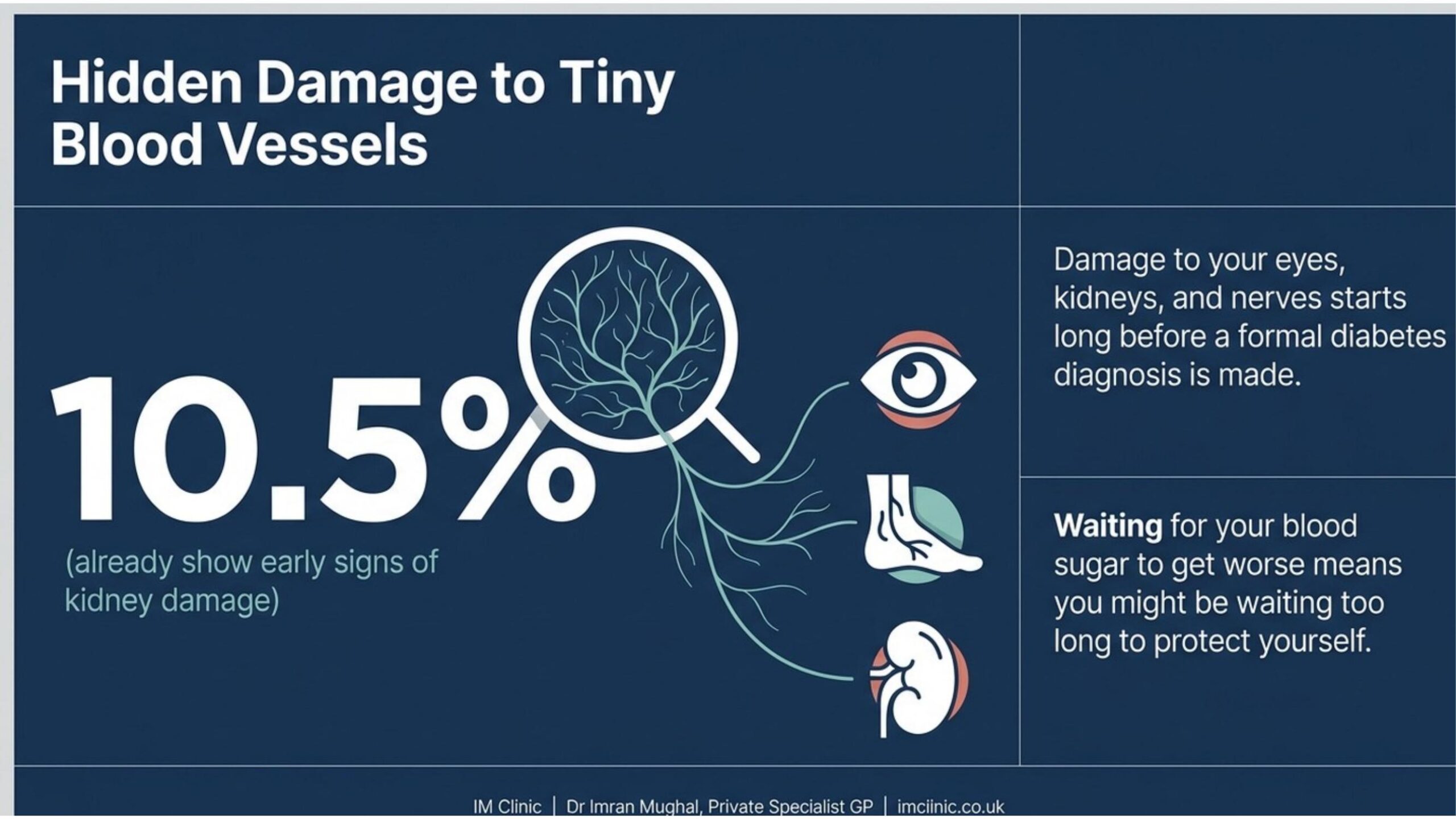
These are called microvascular complications, affecting tiny blood vessels in three places:
- Retinopathy — damage to blood vessels in the eyes
- Nephropathy — early kidney disease
- Neuropathy — nerve damage, often felt first in the feet or hands
The evidence (Acta Diabetologica meta-analysis, prediabetes range, below the 48 mmol/mol diabetes threshold) [2]:
- Nephropathy: 10.5%
- Retinopathy: 4%
- Neuropathy: 2.5%
What this means for you:
- These are people never told they have diabetes.
- Damage is already measurable.
- Waiting for a formal diagnosis may mean waiting too long.
3. Your heart is already working against the odds
The problem:
- Cardiovascular risk in prediabetes is well established, and often underestimated.
The evidence (BMJ meta-analysis, millions of participants) [1]:
- Significantly increased risk of heart attack.
- Significantly increased risk of stroke.
- Significantly increased risk of heart failure.
- Significantly increased risk of death from any cause.
- This holds even after accounting for blood pressure and cholesterol.
What this means for you:
- This risk does not start on diagnosis day.
- It starts here, in the prediabetes range, while you are still being told not to worry yet.
Why prediabetes left untreated is still a window of opportunity
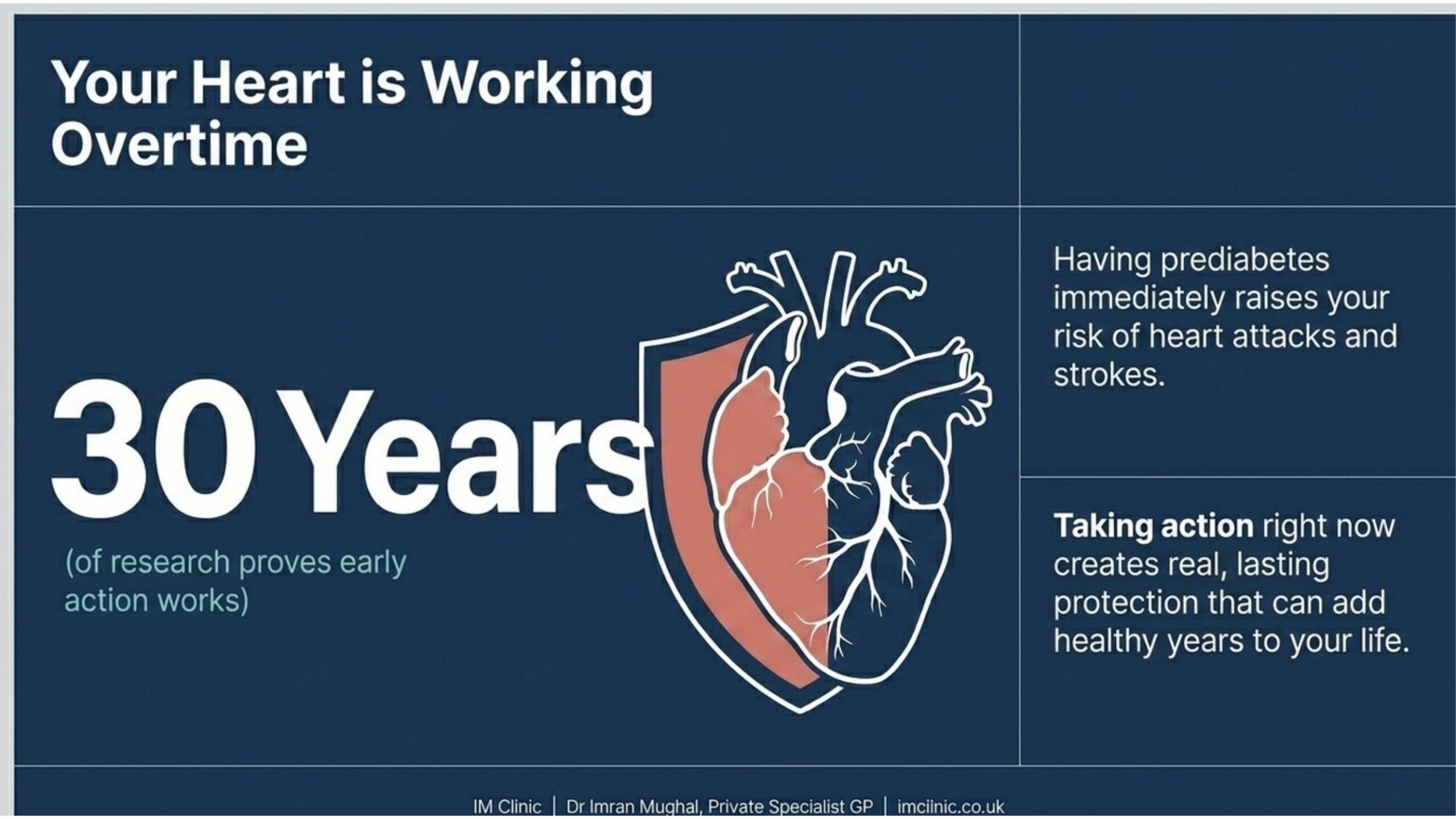
The evidence (Da Qing Diabetes Prevention Outcome Study, 570+ people, 30 years) [5]:
- Structured lifestyle changes delayed onset of type 2 diabetes.
- Fewer heart attacks and strokes.
- Fewer complications.
- Longer life.
The message:
- Thirty years of data. Consistent.
- The earlier you act, the more you protect.
What prediabetes left untreated means for you
If your HbA1c sits in this range, especially 42 to 47 mmol/mol:
- Know your number. Note where you sit in the range.
- Get tested if you have not recently. Especially if you are over 40 or carrying extra weight around the middle.
- Take the next step. Read our post on whether type 2 diabetes can be reversed, or book a full assessment at IM Clinic.
The Key Points
- 1 in 5 people with prediabetes will develop type 2 diabetes within 5 years without intervention. At the higher end of the range, that risk is greater.
- Nearly 1 in 2 people with prediabetes already have fatty liver disease (MASLD), most without knowing it.
- Damage to the kidneys, eyes, and nerves can begin before a formal diabetes diagnosis is ever made.
- The risk of heart attack, stroke, and early death is already raised at the prediabetes stage.
- Acting early creates real, lasting protection. Thirty years of follow up data confirm this.
- An HbA1c of 42 to 47 mmol/mol is not a reassuring result. It deserves proper attention now.
Author: Dr Imran Mughal, Private Specialist GP
Website: www.imclinic.co.uk
Book a consultation: https://notes.thanksdoc.co.uk/book/clinic/im-clinic
References
[1] Cai X, Zhang Y, Li M, et al. Association between prediabetes and risk of all cause mortality and cardiovascular disease: updated meta-analysis. BMJ. 2020;370:m2297. https://doi.org/10.1136/bmj.m2297
[2] Butler AE, et al. Diagnosing type 2 diabetes using Hemoglobin A1c: a systematic review and meta-analysis of the diagnostic cutpoint based on microvascular complications. Acta Diabetologica. 2021. https://pubmed.ncbi.nlm.nih.gov/33141338/
[3] American Diabetes Association. Metabolic dysfunction-associated steatotic liver disease (MASLD) in people with diabetes: the need for screening and early intervention. Diabetes Care. 2025. https://diabetesjournals.org/care/article/48/7/1057/160536/
[4] American Diabetes Association. Standards of Care in Diabetes 2026: Section 3. Prevention or Delay of Diabetes and Associated Comorbidities. Diabetes Care. 2026;49(Supplement 1):S50. https://diabetesjournals.org/care/article/49/Supplement_1/S50/163924/
[5] Gong Q, Zhang P, Wang J, et al. Morbidity and mortality after lifestyle intervention for people with impaired glucose tolerance: 30-year results of the Da Qing Diabetes Prevention Outcome Study. Lancet Diabetes and Endocrinology. 2019;7(6):452-461. https://doi.org/10.1016/S2213-8587(19)30093-2

We would love to hear your thoughts. A few things to keep in mind before you post: