


Your Metabolic Journey: Understanding the Continuum from Normal Blood Sugar to Diabetes
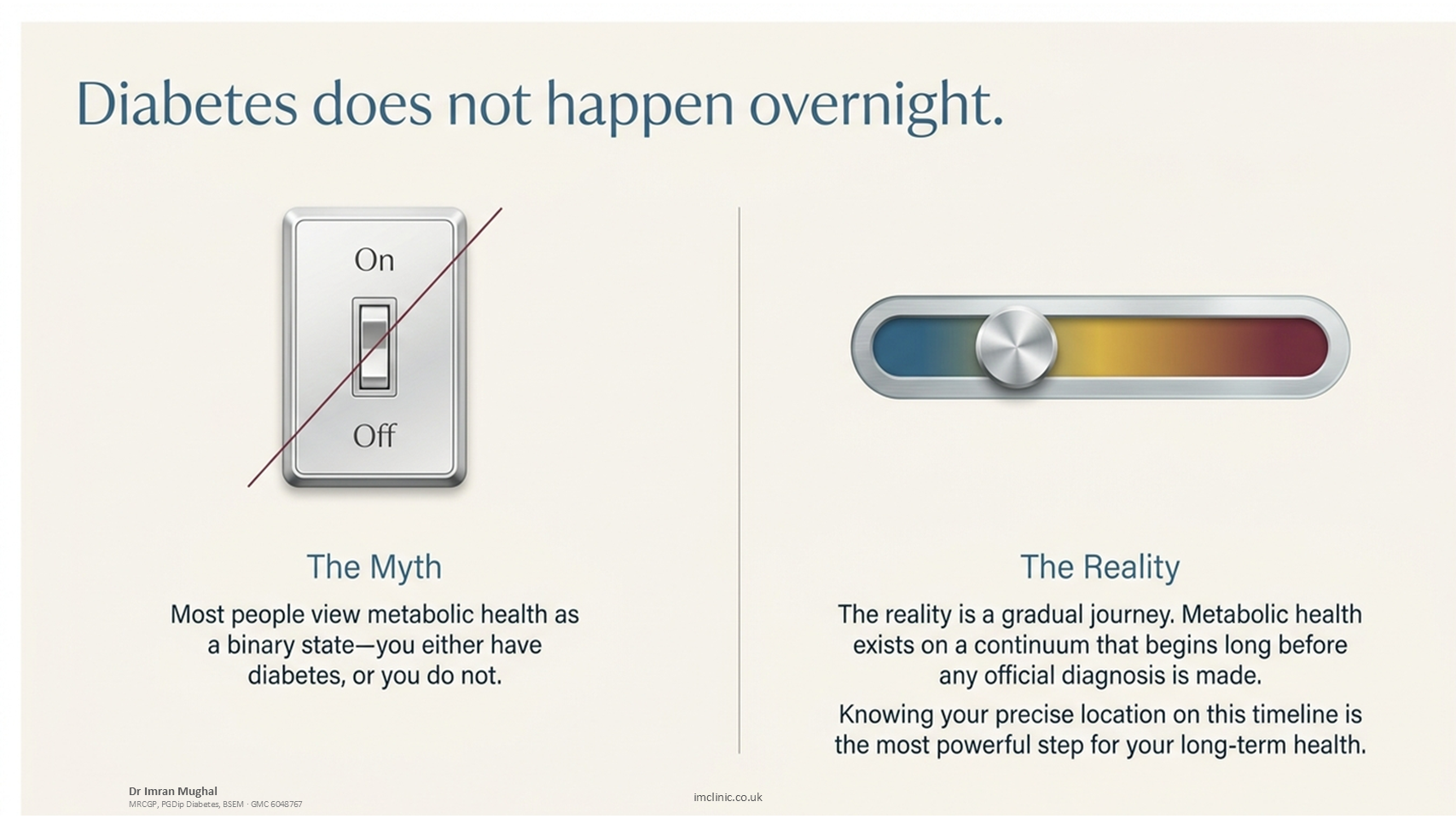
- Most people think of diabetes as something you either have or you do not.
- The reality is different. Metabolic health is a continuum.
- It is a gradual journey that begins long before any diagnosis is made.
- Knowing where you sit on that continuum could be one of the most important things you do for your long term health.
The Metabolic Health Continuum: Four Stages, One Journey
- In most cases, there are no sudden symptoms when someone moves from one stage to the next, or develops diabetes.
- The process unfolds slowly, often silently, across years or even decades.
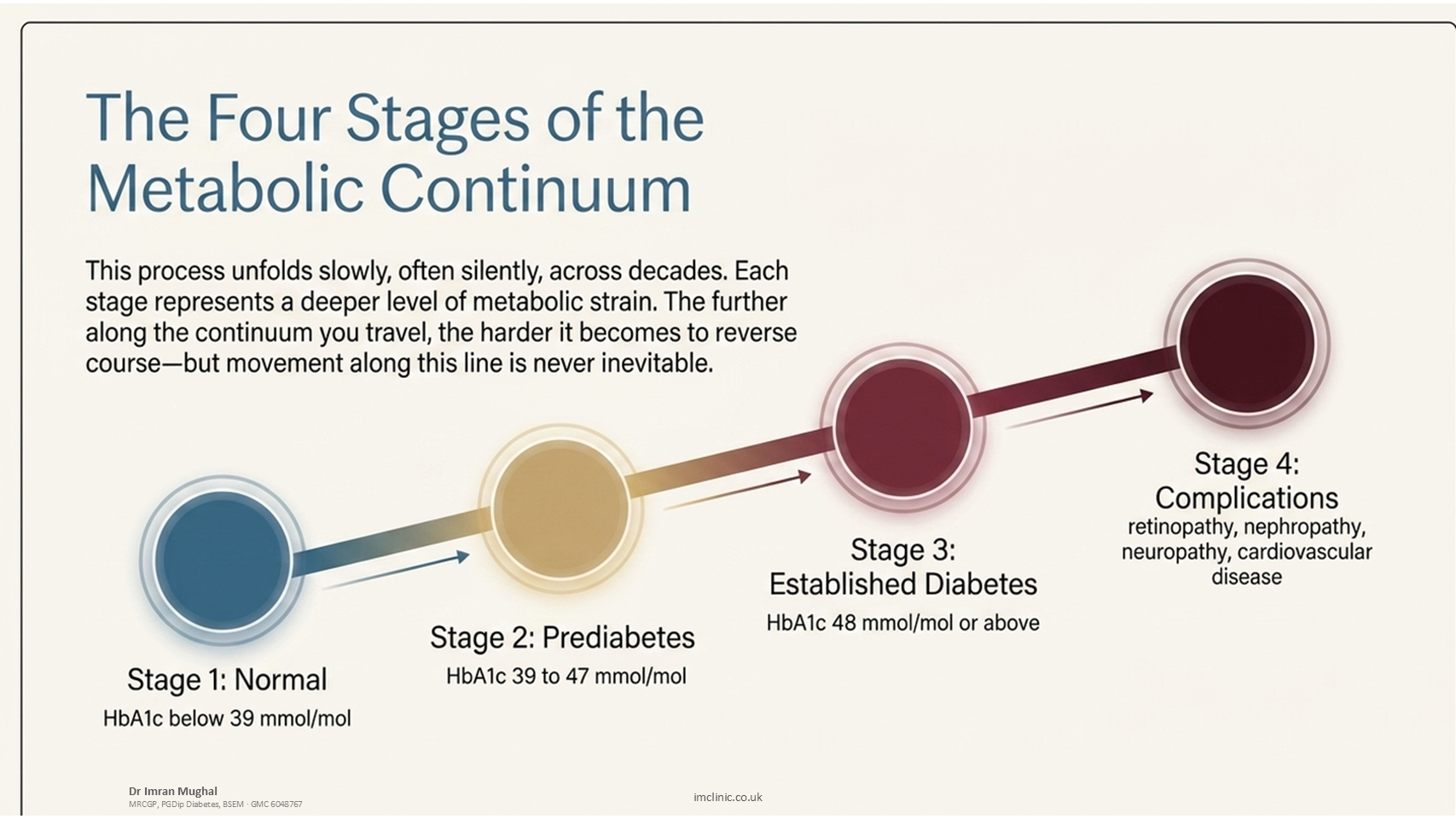
- We think of it in four stages:
- Stage 1: Normal — HbA1c below 39 mmol/mol
- Stage 2: Prediabetes — HbA1c 39 to 47 mmol/mol
- Stage 3: Established Diabetes — HbA1c 48 mmol/mol or above
- Stage 4: Diabetes with Complications — retinopathy, nephropathy, neuropathy, cardiovascular disease
- Each stage represents a deeper level of metabolic strain.
- The further along the continuum you travel, the harder it becomes to reverse course.
- The critical point: movement along this continuum is not inevitable.
- It is driven by identifiable factors, some we can change and some we cannot, many rooted in the way we live today.
Why a Normal HbA1c Does Not Always Mean You Are Safe
- The problem: a normal HbA1c means your blood sugar is within the accepted reference range, below 39 mmol/mol in the UK. But normal is not a ceiling, it is a wide band.
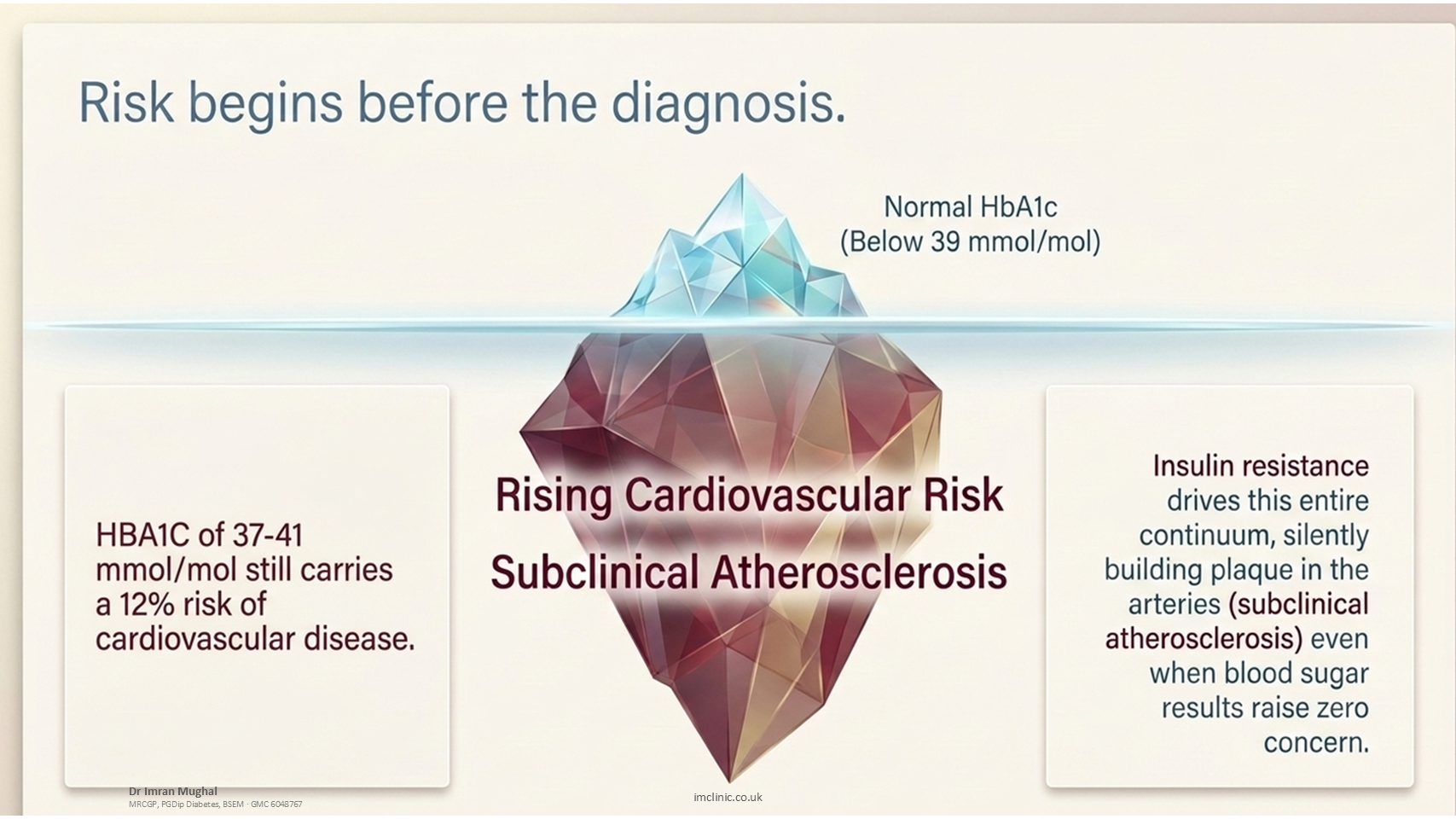
- The evidence: a large population study of over 608,000 adults in Canada found that people with an HbA1c of 37 to 41 mmol/mol, still firmly in the normal range, had a 12% higher risk of cardiovascular hospitalisation compared with those at the lower end of normal, below 36 mmol/mol. [1]
- More evidence: a second study found that people with higher insulin resistance showed significantly more subclinical atherosclerosis, that is, plaque build up in the arteries, even when their HbA1c was completely normal, below 42 mmol/mol. Insulin resistance, the underlying driver of this entire continuum, can silently damage cardiovascular health long before blood sugar results raise any concern. [2]
- What it means: a normal HbA1c tells you your blood sugar is currently controlled. It does not tell you what is happening underneath.
What Drives Progression Along the Metabolic Health Continuum?
- The factors that push people along this continuum are increasingly common in modern life.
- This is not about personal failure. It is about biology meeting environment.
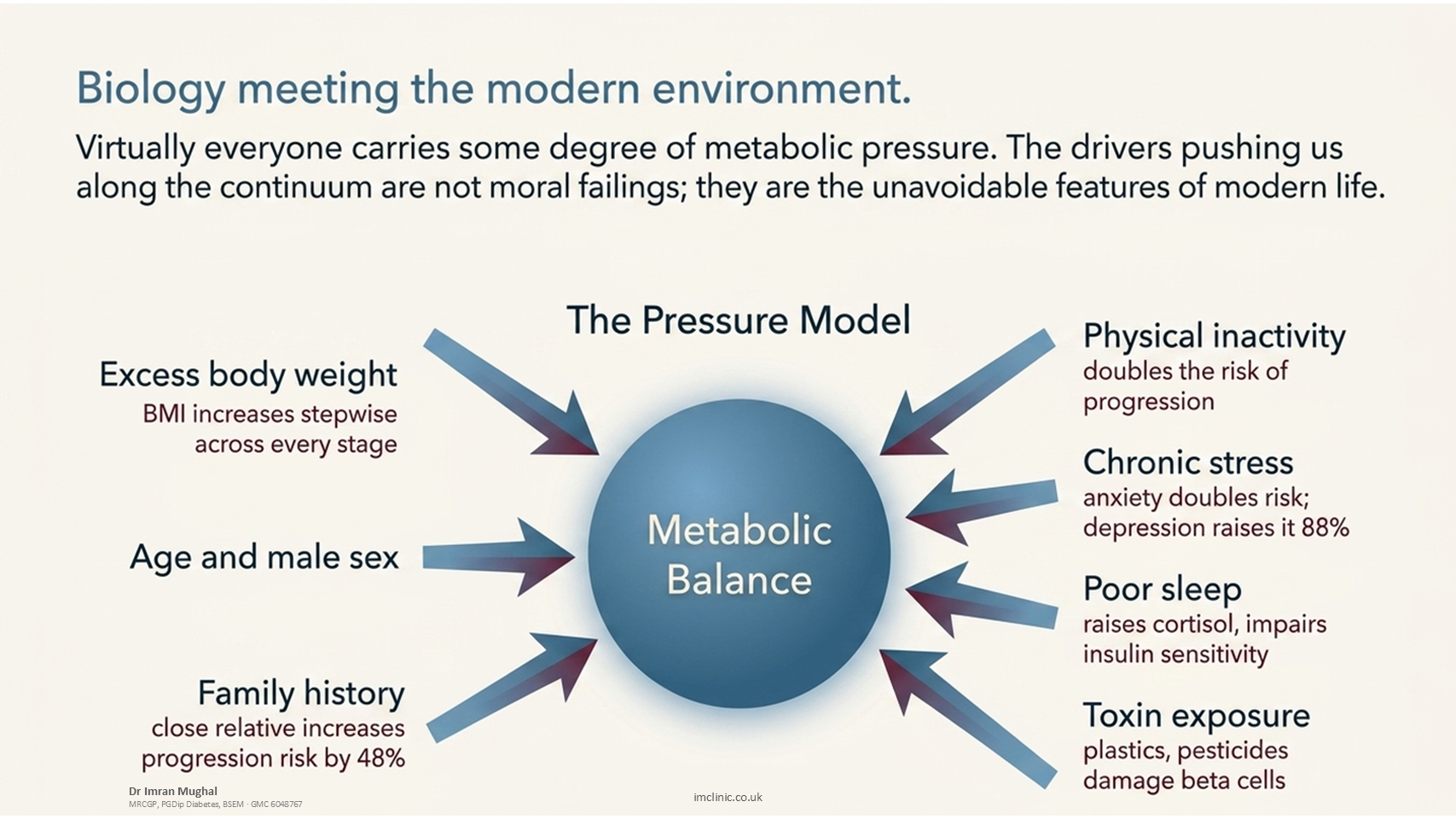
- Excess body weight, particularly fat stored around the abdomen. A 2025 UK Biobank study of nearly 288,000 people found that BMI increased in a stepwise fashion across every stage of the metabolic continuum, from normal through prediabetes to undiagnosed diabetes. [3]
- Physical inactivity. A meta analysis of 59 studies found that lack of regular exercise nearly doubled the risk of progressing from prediabetes to type 2 diabetes (odds ratio 1.86). [4]
- Poor sleep. Disrupted sleep raises cortisol, impairs insulin sensitivity, and increases appetite for foods high in calories, all of which accelerate metabolic decline.
- Chronic stress. Psychological stress is not just a mood issue. The same meta analysis found that anxiety doubled the risk of progression to diabetes (odds ratio 2.61) and depression raised it by 88%. [4]
- Toxin and chemical exposure. Emerging evidence links environmental exposures including certain plastics, pesticides, and air pollutants to insulin resistance and damage to the insulin producing beta cells. This is an area of active research.
- Family history. Having a close relative, a parent, sibling, or child, with type 2 diabetes increases your risk of progression by 48%. [4]
- Age and male sex. Risk increases with age, and men are statistically more likely to progress at any given HbA1c level.
Why the Metabolic Health Continuum Affects Almost Everyone
- The metabolic continuum is not something that only affects people with diabetes or prediabetes.
- Modern life brings high stress environments, highly processed food, sedentary work, poor sleep, and widespread toxin exposure.
- Because of this, virtually everyone carries some degree of metabolic pressure. Most of us are somewhere on this journey.
- The difference is knowing where you are, understanding what is driving the process, and taking action early enough to matter.
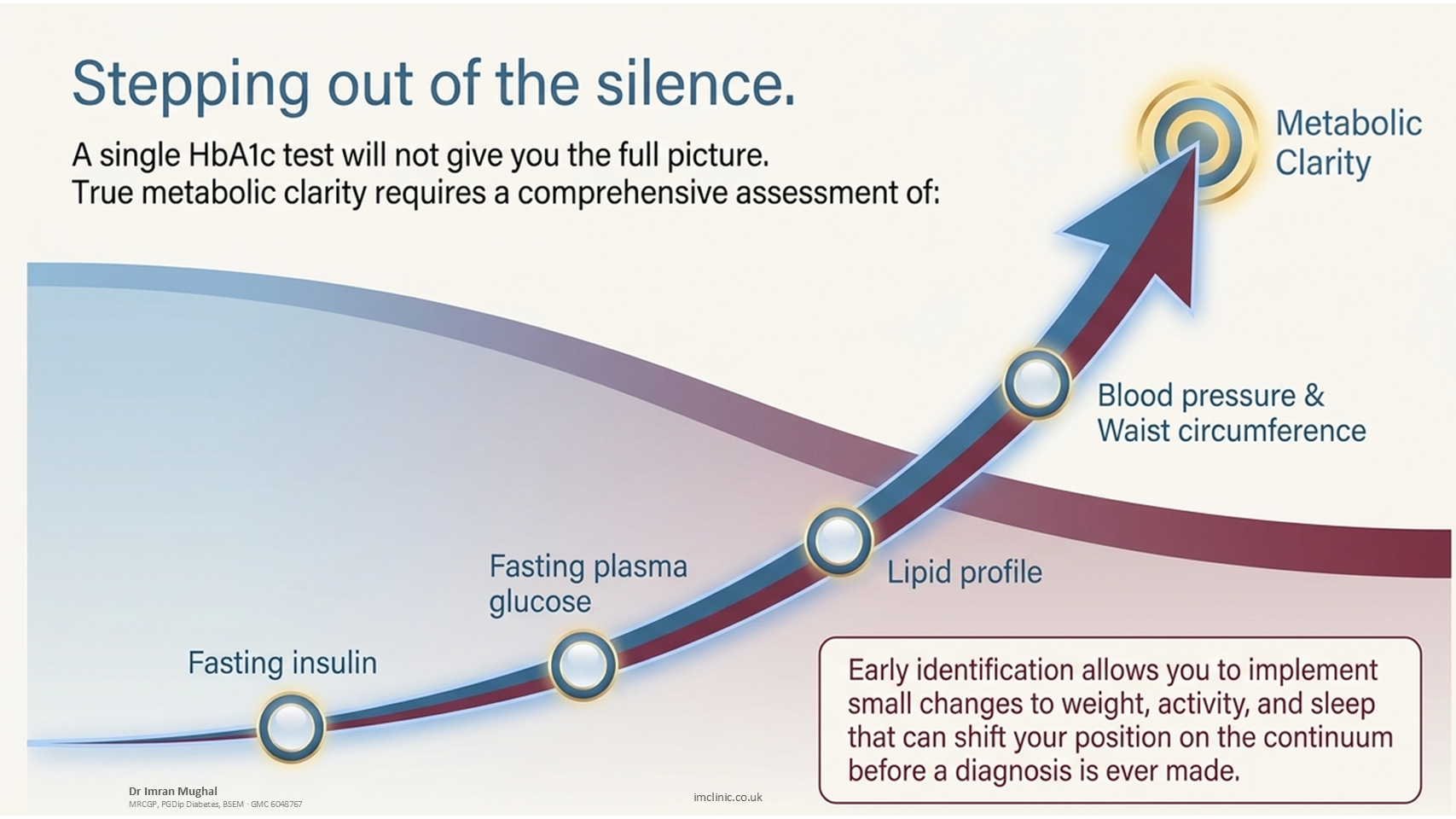
- A single HbA1c test will not give you the full picture. It is one data point.
- Fasting insulin, fasting plasma glucose, lipid profile, blood pressure, waist circumference, and lifestyle factors all contribute to a complete metabolic assessment.
- If you are unsure where you sit, or you have risk factors that concern you, a specialist review is the clearest way to find out.
For more detail on each stage of this journey, see the related posts below:
- What Is Prediabetes and Why It Matters
- What Happens If Prediabetes Is Left Untreated
- Can Type 2 Diabetes Be Reversed? What the Evidence Says
The Key Points
- Metabolic health is a continuum, not a binary state. Most people are somewhere on a spectrum from normal through prediabetes to established diabetes and its complications.
- A normal HbA1c, below 39 mmol/mol, does not guarantee metabolic safety. Research shows cardiovascular risk and insulin resistance can be measurable even within the normal range.
- The main drivers of progression, excess weight, inactivity, poor sleep, chronic stress, and toxin exposure, are all features of modern life, making this relevant to almost everyone.
- Prediabetes, HbA1c 39 to 47 mmol/mol, carries meaningful cardiovascular risk even in people who never go on to develop type 2 diabetes.
- Early identification and action at any stage of the metabolic health continuum can slow, stop, or reverse metabolic decline.
What This Means For You
- If your last HbA1c was normal, that is reassuring, but it is not the full story.
- Ask your GP where your result sits within the normal range, not just whether it is normal.
- If you have risk factors such as excess weight, poor sleep, high stress, or a close relative with type 2 diabetes, a broader metabolic check may be worthwhile.
- Small, early changes to weight, activity, and sleep can shift your position on the continuum, often before any diagnosis is ever made.
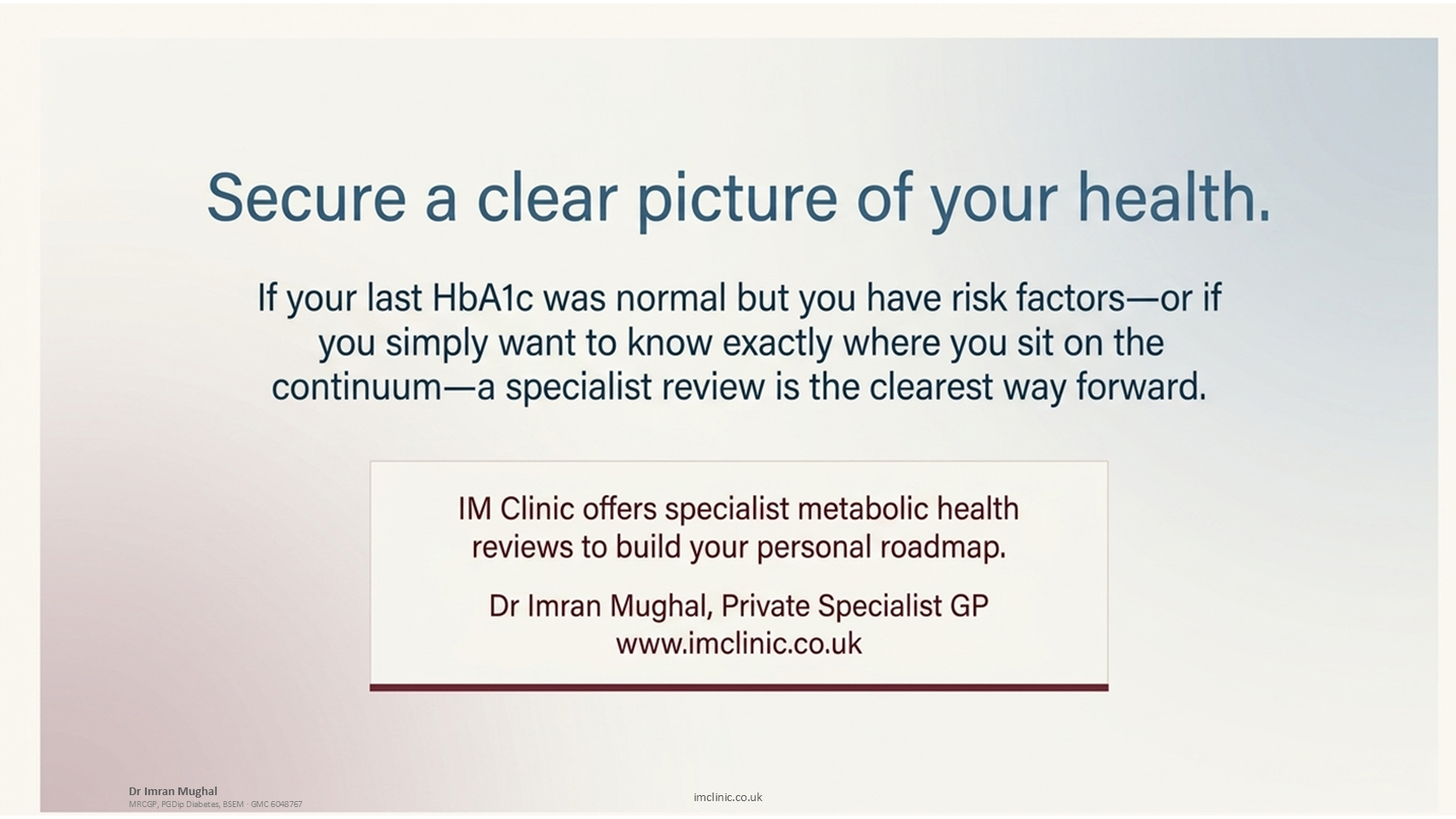
- If you would like a clear picture of where you sit and a personal plan to move in the right direction, IM Clinic offers specialist metabolic health reviews.
Author: Dr Imran Mughal, Private Specialist GP
Website: www.imclinic.co.uk
Book a consultation: Book a consultation
References
1. Butalia S et al. Association Between Hemoglobin A1c and Development of Cardiovascular Disease in Canadian Men and Women Without Diabetes at Baseline. Journal of the American Heart Association. 2024. View source
2. Iglesies Grau J et al. Early insulin resistance in normoglycemic low risk individuals is associated with subclinical atherosclerosis. Cardiovascular Diabetology. 2023. View source
3. Scilletta S et al. Progressive increases in adiposity and ectopic fat surrogates across glycaemic states. Diabetes, Obesity and Metabolism. 2025. View source
4. Hu S et al. Risk factors for progression to type 2 diabetes in prediabetes: a systematic review and meta analysis. BMC Public Health. 2025. View source
5. Echouffo Tcheugui JB et al. Diagnosis and Management of Prediabetes: A Review. JAMA. 2023. View source
6. Rooney MR et al. Prediabetes is associated with elevated risk of clinical outcomes even without progression to diabetes. Diabetologia. 2024. View source





We would love to hear your thoughts. A few things to keep in mind before you post: