

Ask yourself one question. Do you still wake up with a morning erection most days?
If the answer is no, that is not just a sexual symptom. It is one of the strongest predictors doctors have for future heart problems, and most men never mention it because they assume it is unrelated or just part of getting older. If any of these feel familiar, our free AMS symptom checker can give you a scored picture in under two minutes.
This is exactly why the signs of low testosterone get missed. Low testosterone rarely announces itself clearly. It shows up as a collection of smaller changes that men explain away one by one.
Signs of low Testosterone That Get Overlooked
Testosterone deficiency symptoms fall into four groups, and most men only notice one or two without connecting the rest.
- Sexual signs. Reduced desire, erectile dysfunction, and fewer or absent morning erections. These are the three most common symptoms reported.
- Physical signs. Loss of muscle mass and strength, increased body fat especially around the middle, fatigue, and poor sleep.
- Psychological signs. Low mood, irritability, reduced motivation, and difficulty concentrating.
- Metabolic signs. Rising BMI, insulin resistance, and in some men, early signs of type 2 diabetes.
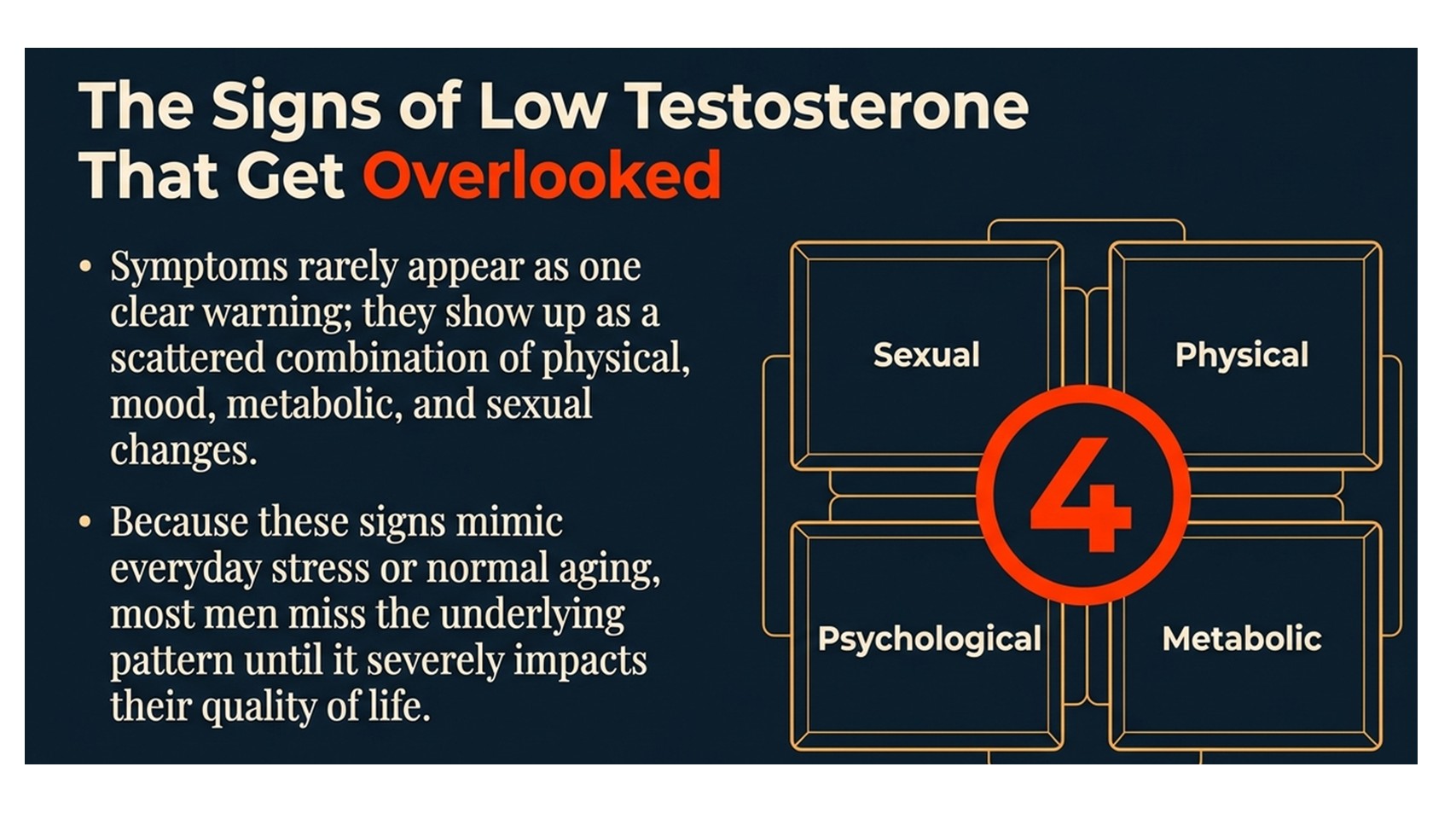
Each symptom on its own sounds like normal life. Tired from work. Stressed with the kids. Putting on a bit of weight. It is the combination that matters, not any single symptom in isolation.
If you want to understand why this happens in the first place, our earlier post on what low testosterone actually is covers the underlying causes in more depth.
Why Morning Erections Are a Warning Sign of Low Testosterone
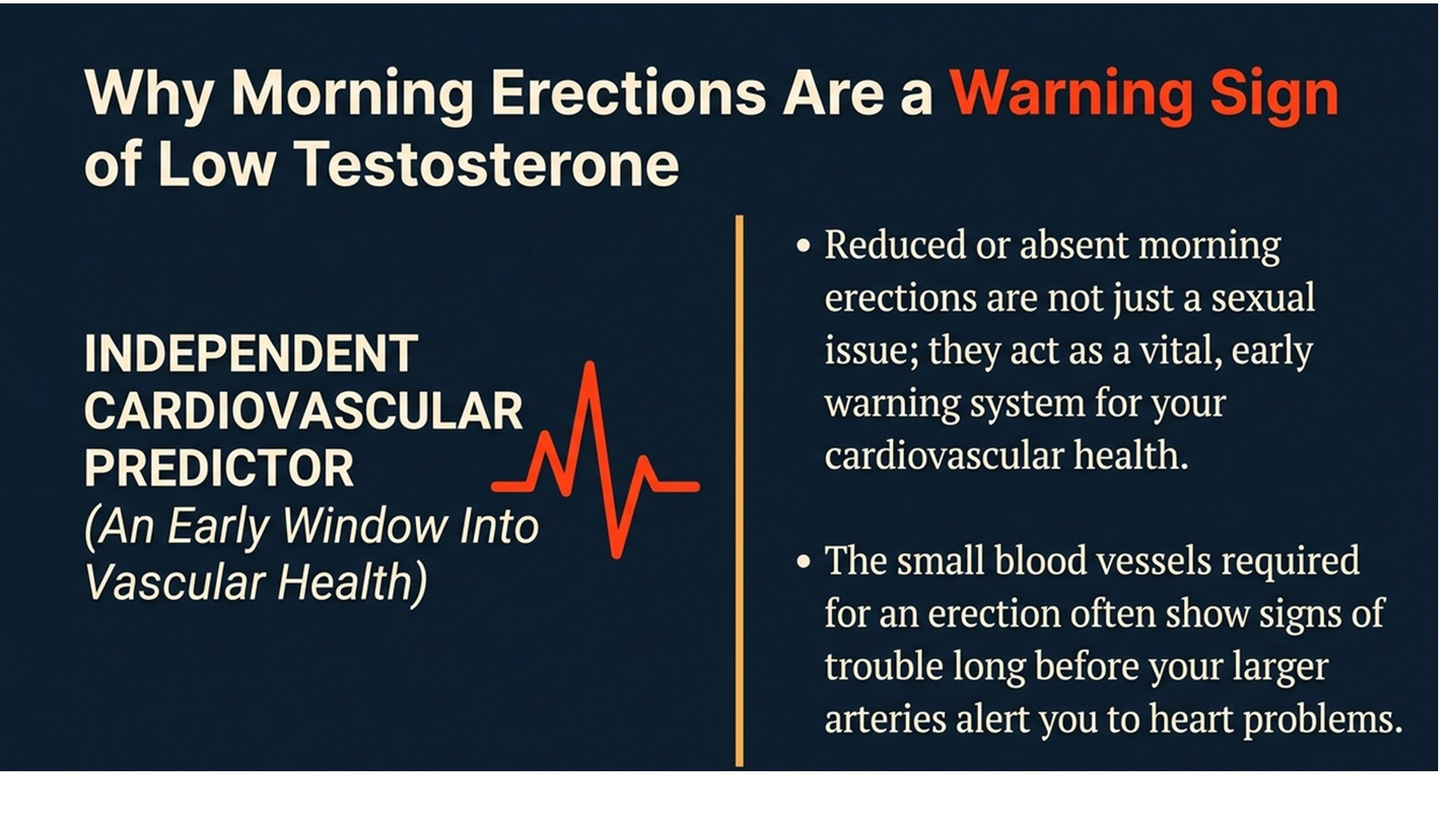
This is the part most men do not know. Morning erections are not just a sexual marker, they are a window into your cardiovascular health.
- Independent cardiovascular predictor. Absent or reduced morning erections are an important predictor of future cardiovascular events, independent of other risk factors.
- Applies even without a partner. This holds true even in men who are not currently in a sexual relationship, which is why doctors are advised to ask about it regardless.
- The blood vessel link. An erection depends on healthy blood flow through small vessels, and those small vessels often show signs of trouble before larger arteries do.
- An early warning system. In effect, the penis can act as an early indicator for the heart, well before other symptoms appear.
This is why a symptom many men dismiss as embarrassing or unimportant is actually one of the more clinically useful things to mention to your doctor.
Who Should Be Screened for Low Testosterone
Screening for testosterone deficiency is recommended for any man who fits one or more of the following. Each is backed by clinical evidence, graded from 1A, the strongest level of evidence, through to 3D and 3C, which are still solid recommendations based on expert consensus.
- Erectile dysfunction with loss of spontaneous erections (evidence grade 1A). The strongest and most consistent indication for testing.
- Type 2 diabetes, with a BMI over 30 and a waist circumference over 102cm (evidence grade 2A).
- Long term use of opioids, antiepileptics, or antipsychotics (evidence grade 3D). These medications can suppress testosterone production.
- Consistent and multiple symptoms of testosterone deficiency (evidence grade 3C). Even without one standout symptom, a recurring pattern is enough to justify testing.
If you fall into any of these groups, testing is not an overreaction. It is the recommended standard of care.
There is also a specific reason this matters if you already have, or are at risk of, type 2 diabetes:
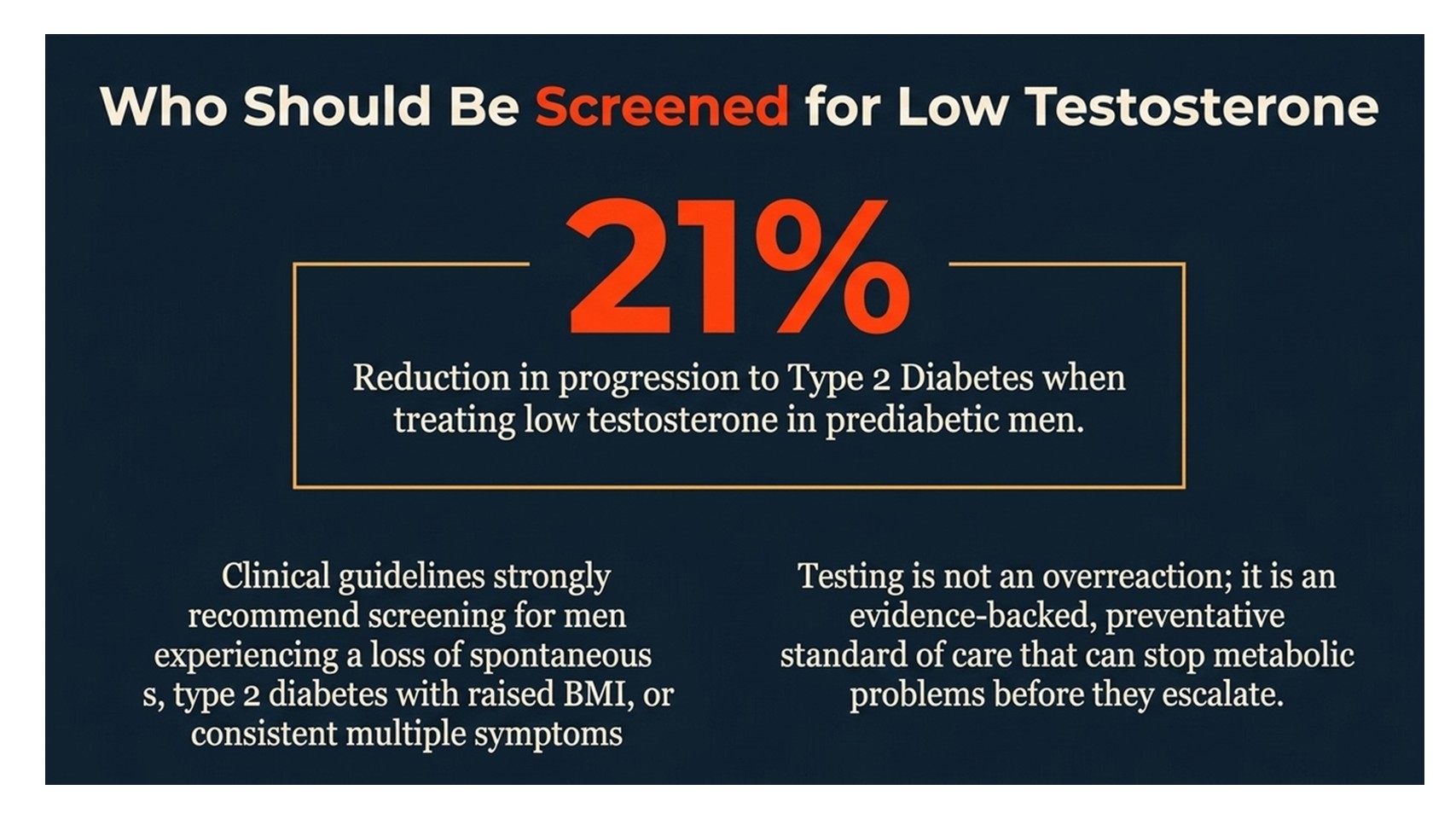
- The prediabetes link. In a major UK trial, treating low testosterone in men with prediabetes reduced their progression to full type 2 diabetes by 21%.
- Prevention, not just symptom relief. Testosterone is not just a symptom of metabolic problems. It can be part of preventing them.
The Key Points
- Low testosterone shows up as a pattern of smaller symptoms across four domains: sexual, physical, psychological, and metabolic, which is why it is easy to miss.
- Reduced or absent morning erections are a recognised marker for future cardiovascular risk, not only a sexual symptom.
- Screening is recommended for men with erectile dysfunction, type 2 diabetes with raised BMI or waist circumference, long term use of certain medications, or multiple consistent symptoms, each backed by clinical evidence.
What This Means For You
If you recognise several of these signs together, rather than just one, it is worth taking seriously, rather than putting it down to a busy period or getting older.
This applies whether you are newly noticing these changes or have been feeling this way for some time without putting a name to it. The pattern matters more than any single symptom, and a simple blood test is the only way to know for certain.
If you would like to find out whether testing makes sense for you, you are welcome to book a consultation with me at IM Clinic.
Author: Dr Imran Mughal, Private Specialist GP
Website: www.imclinic.co.uk
Book a consultation: https://notes.thanksdoc.co.uk/book/clinic/im-clinic
References