



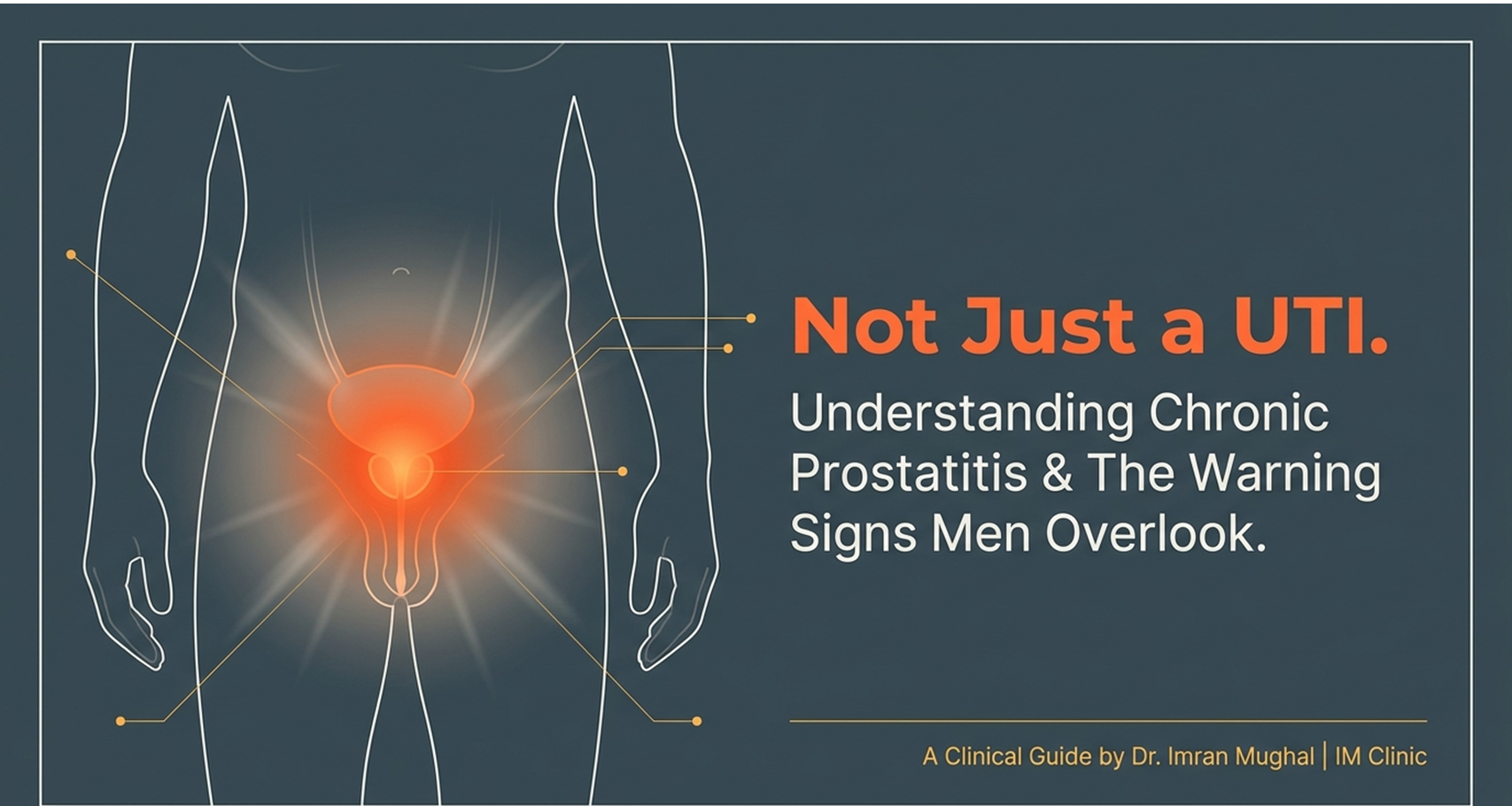
Not Just a UTI: Understanding Chronic Prostatitis
- Urinary tract infections are a common diagnosis in women.
- In men, a UTI is relatively uncommon, so when one does appear, it deserves a closer look.
- A UTI in a man needs a careful history and proper investigation.
- It could be a sign of chronic prostatitis rather than a straightforward infection.
- Another common pattern: you are diagnosed with a UTI, treated, but the symptoms keep coming back.
- In my experience, chronic prostatitis is still one of the most commonly overlooked diagnoses in general practice.
Wondering if your symptoms fit a recognised pattern?
What Is the Prostate?
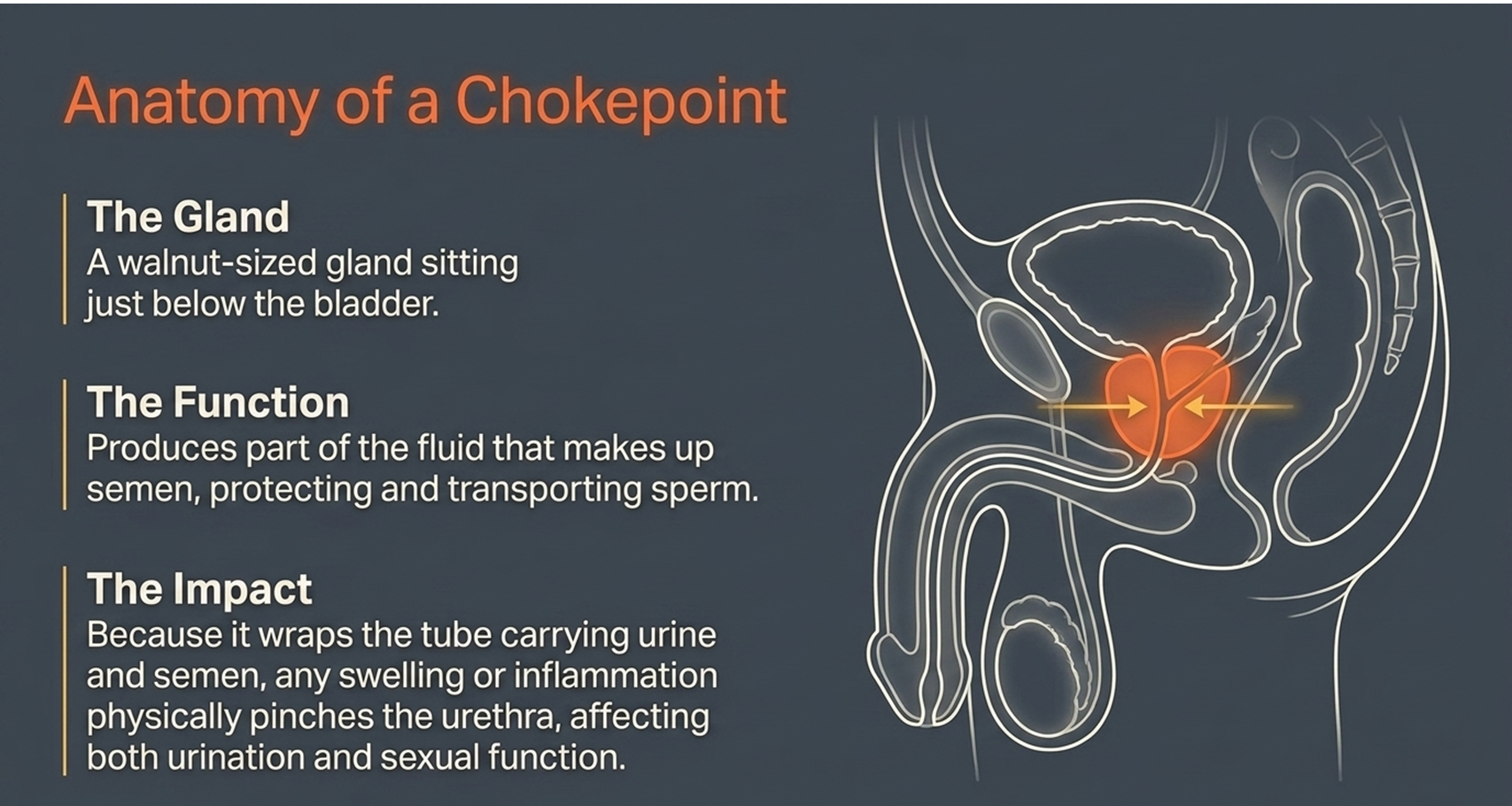
- The prostate is a small gland, about the size of a walnut, sitting just below the bladder.
- It wraps around the top of the urethra, the tube that carries urine and semen out of the body.
- Its main job is producing part of the fluid that makes up semen, helping to protect and transport sperm.
- Because of where it sits, swelling or inflammation in the prostate can affect both urination and sexual function.
Chronic Prostatitis: What It Actually Is
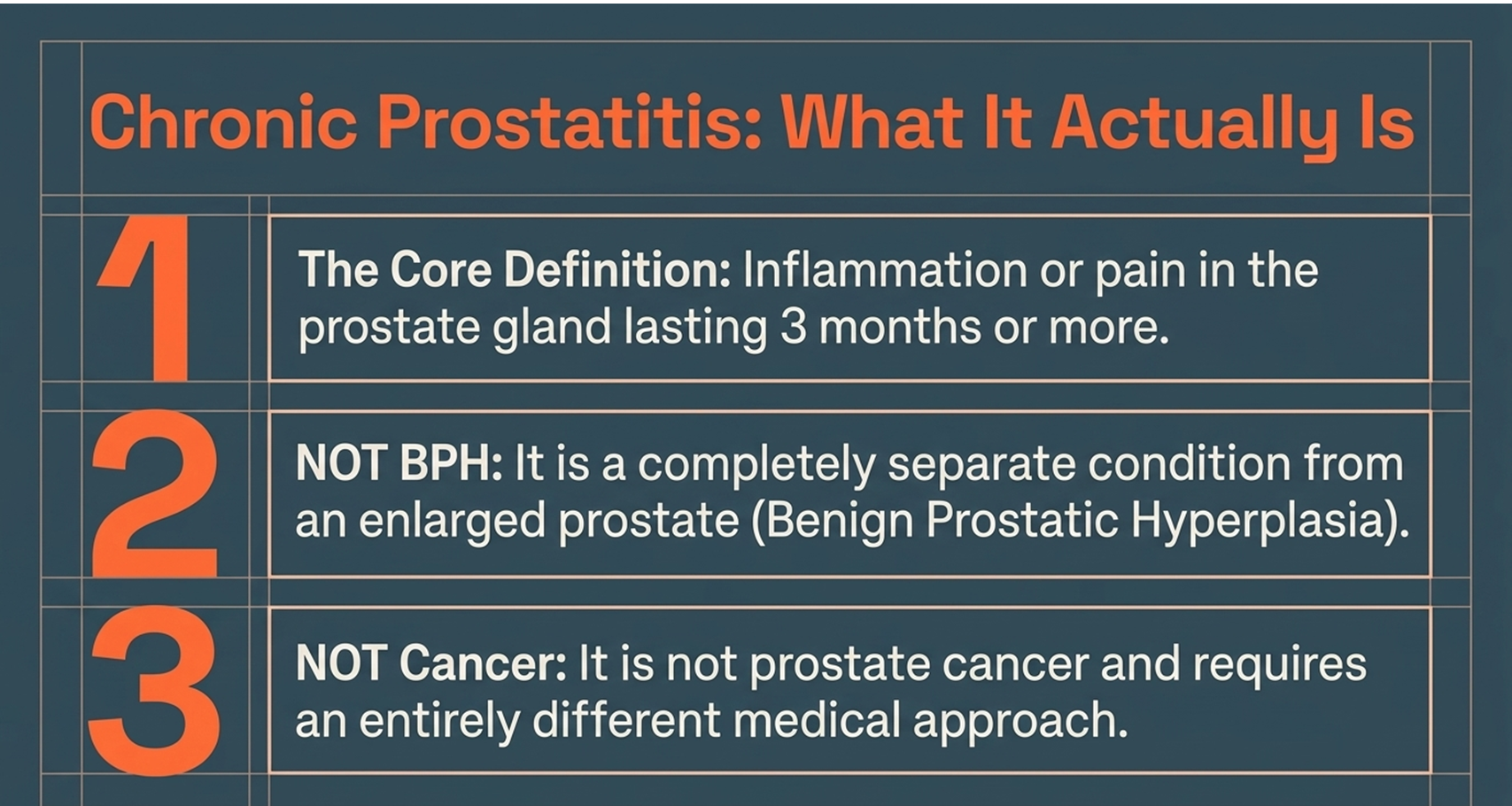
- Chronic prostatitis is inflammation or pain in the prostate gland lasting 3 months or more.
- It is a separate condition from an enlarged prostate (BPH) and from prostate cancer.
- Around 90 in every 100 cases are chronic pelvic pain syndrome, meaning there is real pain but no bacteria found on testing.
- Naming confusion is common in men’s health. The same is true of why andropause is the wrong word for another widely misunderstood condition.
Why see the same doctor every time?
- One GP, start to finish. Dr Imran Mughal follows your case from the first appointment onward, not a different clinician each visit.
- No repeating your story. Chronic prostatitis often means years of being passed between departments. Message your own doctor directly instead.
- A plan built around you. Investigations and treatment are reviewed against your actual history, not treated as a fresh case each time.
Risk Factors for Chronic Prostatitis
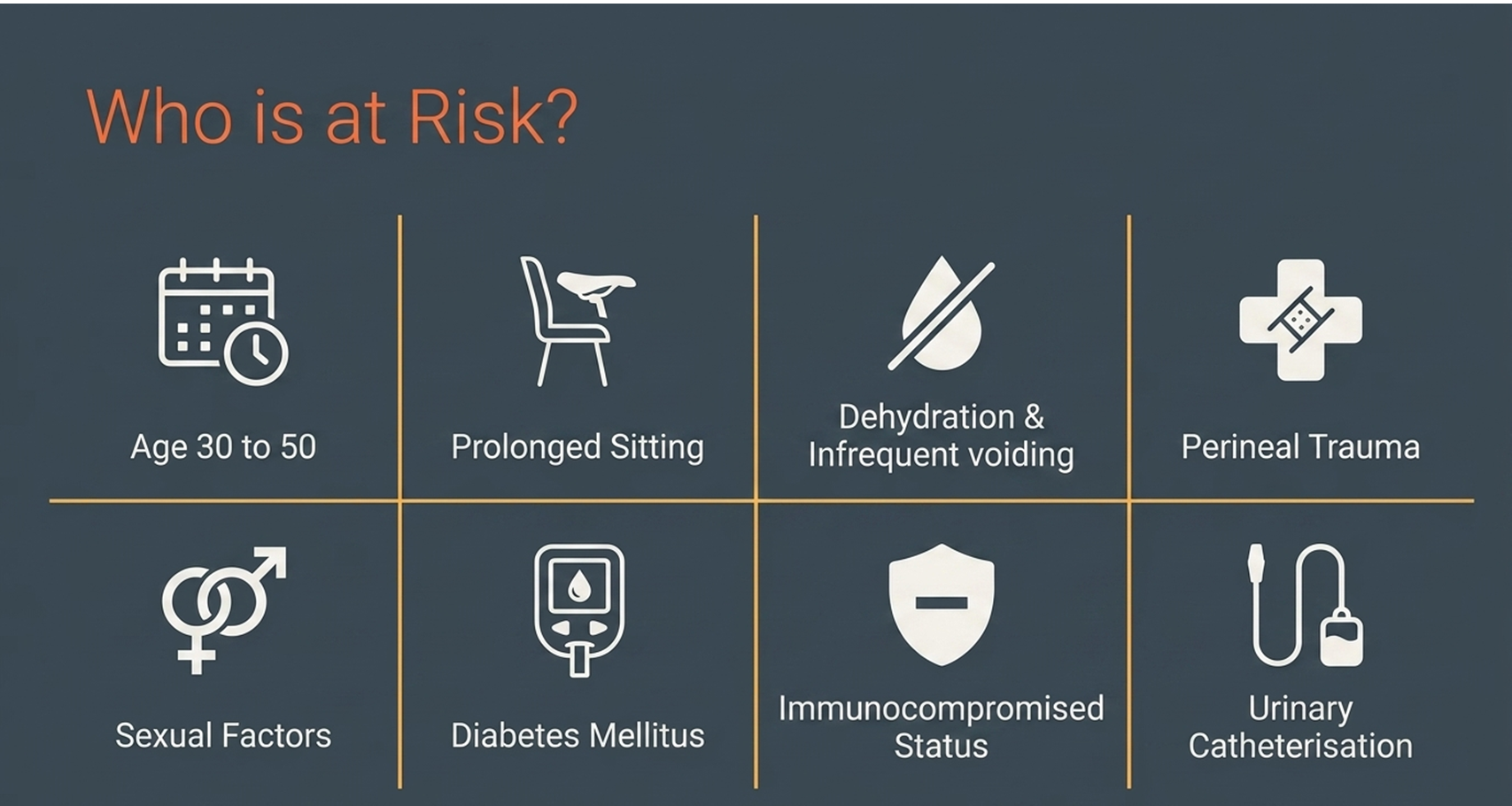
- Age 30 to 50 for the chronic forms. Acute prostatitis can occur at any adult age.
- Dehydration and infrequent voiding.
- Prolonged sitting, for example cycling or truck driving.
- Perineal trauma.
- Sexual factors, including irregular ejaculation frequency and multiple partners.
- Diabetes mellitus.
- Immunocompromised status, meaning a weakened immune system.
- Urinary catheterisation.
Why Chronic Prostatitis Gets Mistaken for a UTI
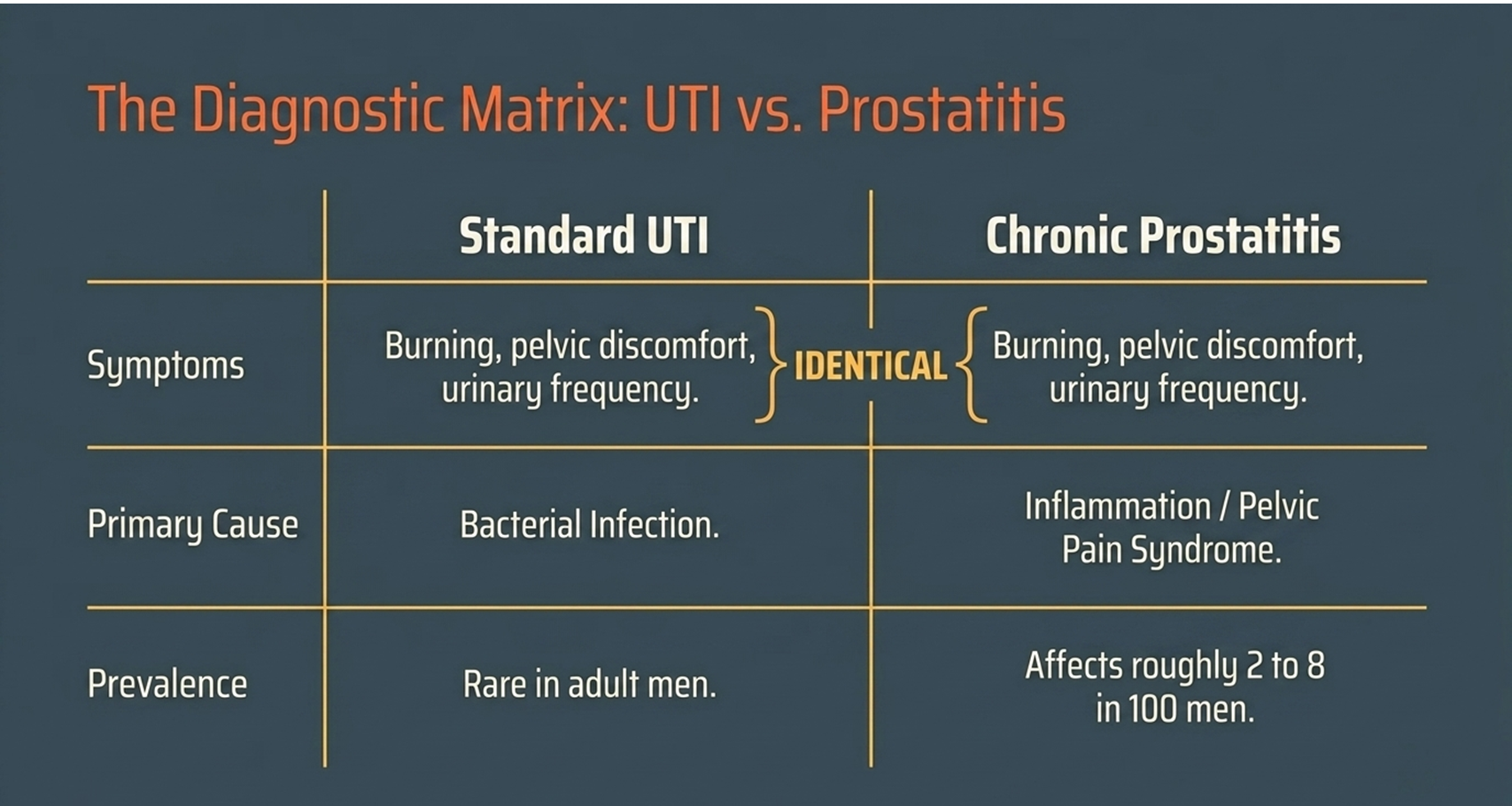
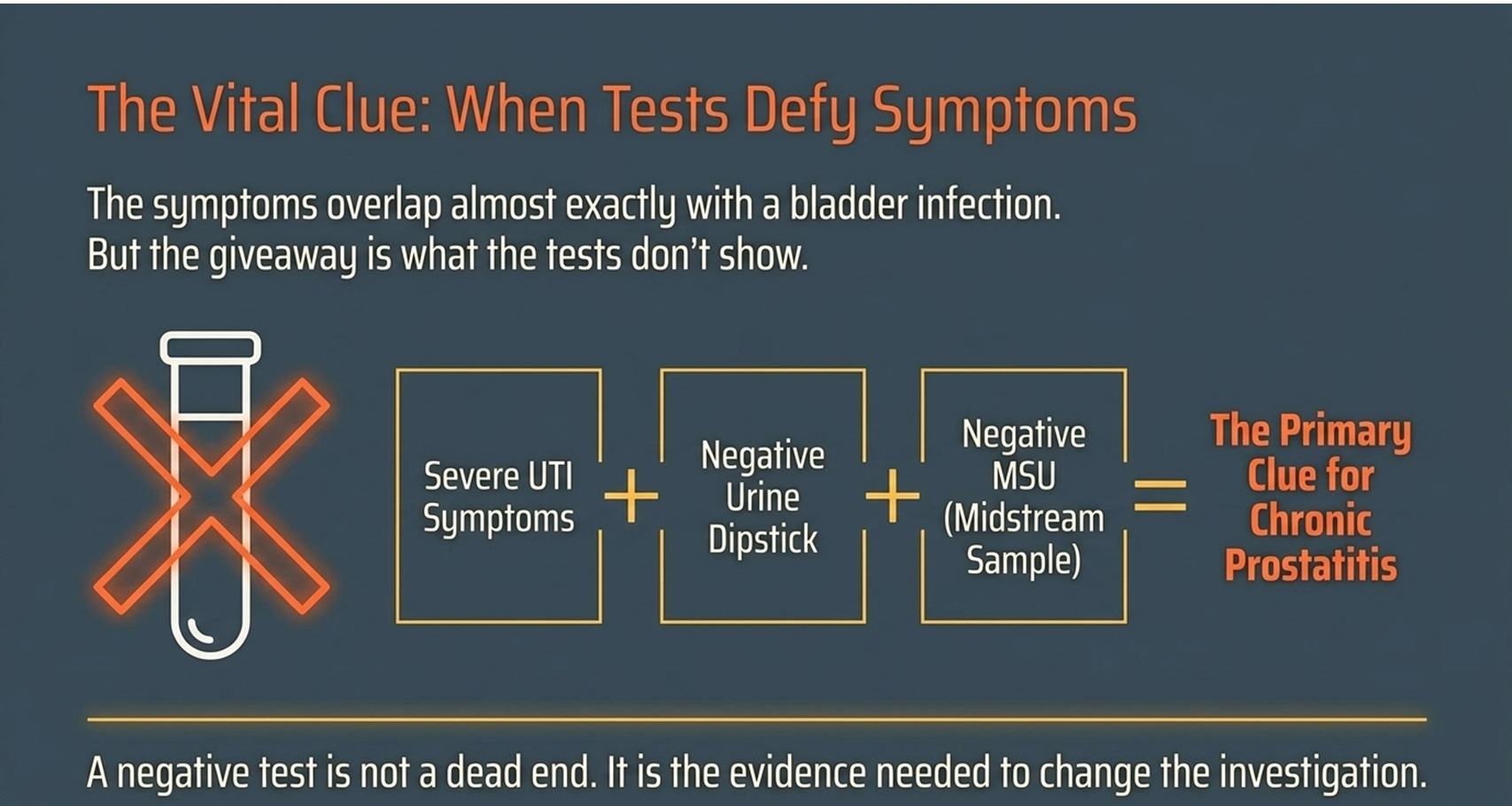
- The symptoms overlap almost exactly with a bladder infection: burning on urination, pelvic discomfort, frequency.
- The key clue is this: symptoms of a UTI, but a negative urine dipstick and a negative MSU (midstream urine sample).
- Chronic prostatitis has a lifetime prevalence of roughly 2 to 8 in every 100 men, yet awareness among primary care and urgent care clinicians remains low.
- This is not the only men’s health issue that quietly gets missed. We’ve written before about the warning signs of low testosterone men often miss, another condition that hides behind vague symptoms.
Investigations for Chronic Prostatitis
- A urine test to rule out a standard urinary infection.
- A clinical examination.
- Further investigation if needed, depending on which type of prostatitis is suspected.
- For chronic bacterial prostatitis, the diagnosis is usually made clinically, after ruling out other causes.
- If symptoms become chronic, the NIH Chronic Prostatitis Symptom Index can be used to track severity.
When Tests Keep Coming Back Clear
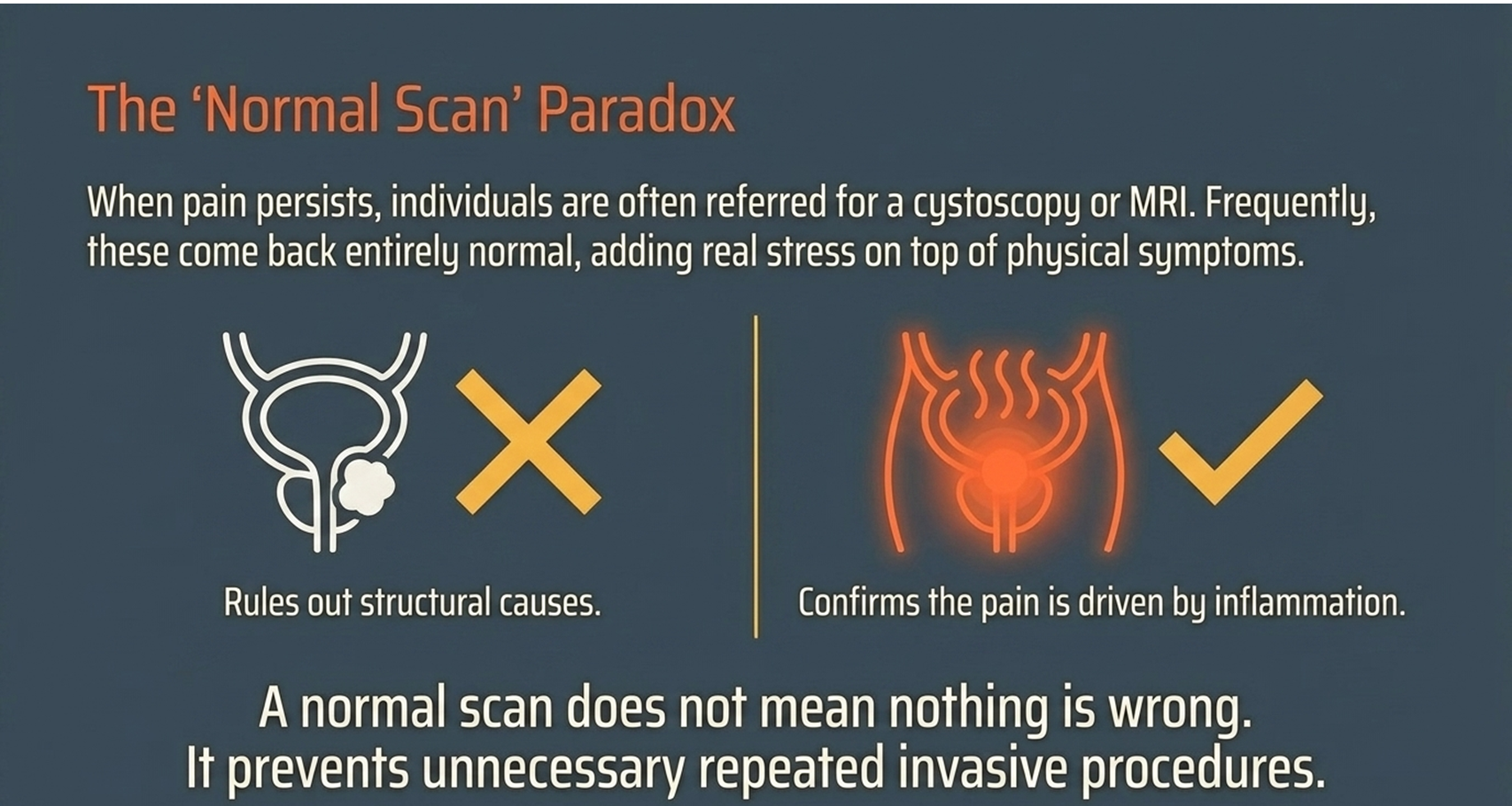
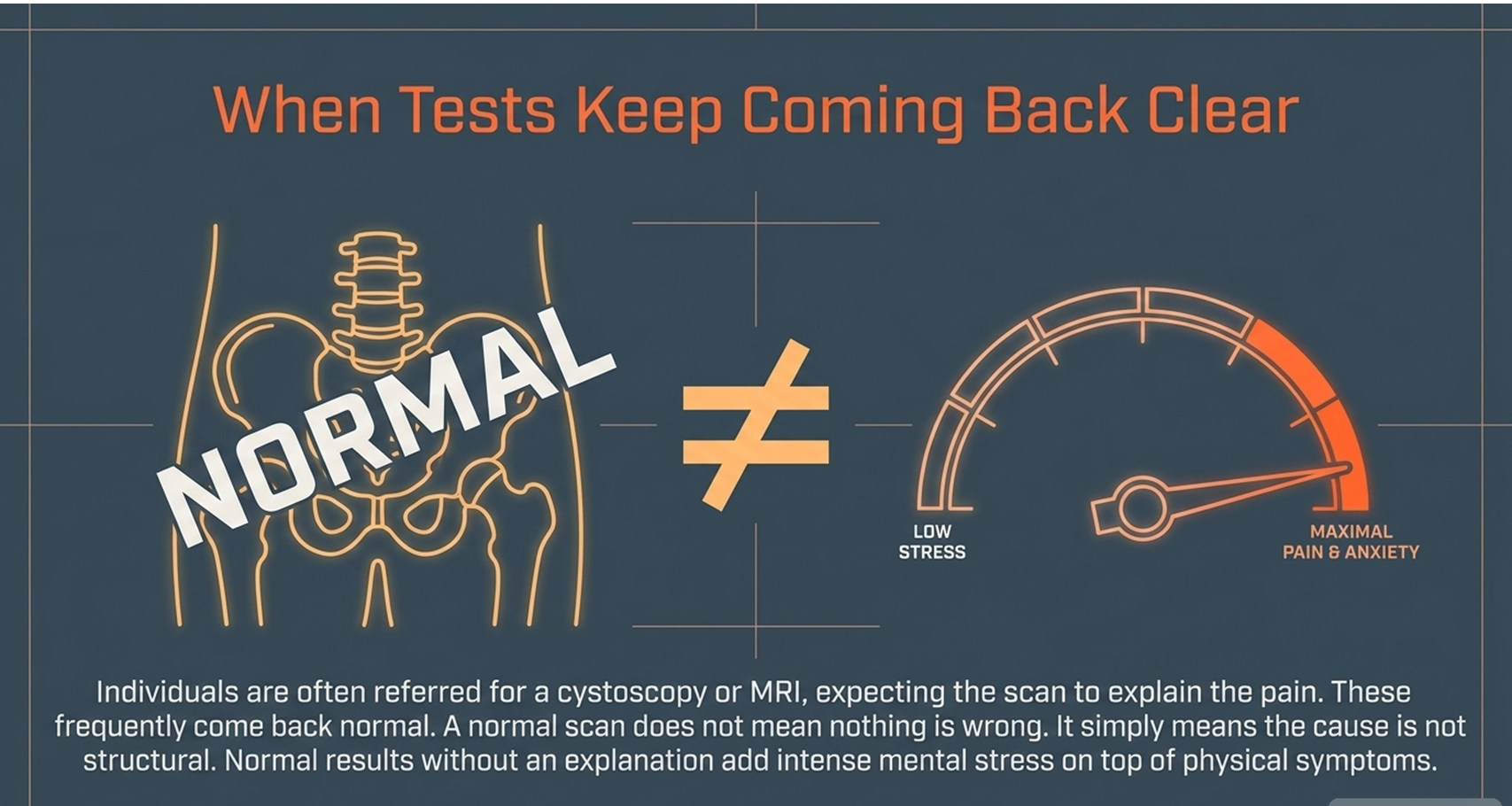
- Individuals are often referred on for cystoscopy or an MRI, expecting the scan to explain the pain.
- These investigations frequently come back normal.
- A normal scan does not mean nothing is wrong. It means the cause is not structural.
- Specialist guidance advises against repeated antibiotic courses or invasive procedures once genuine infection has been ruled out.
- Normal results without an explanation often add real stress on top of the physical symptoms, similar to how unexplained symptoms play out in our piece on the real causes of chronic fatigue.
Getting the Right Treatment for Suspected UTI
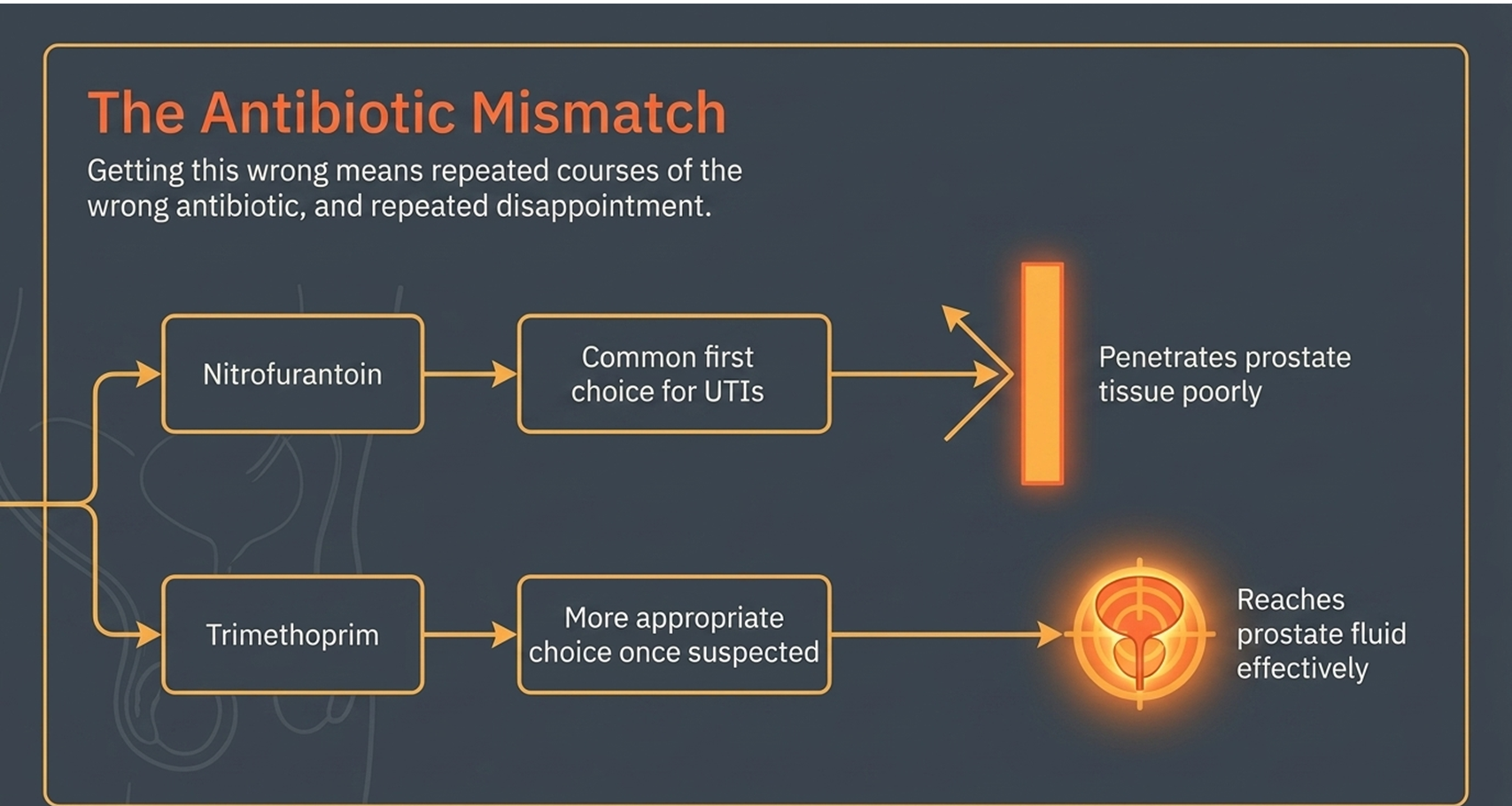
- Not every antibiotic reaches the prostate gland in useful amounts.
- Nitrofurantoin, a common first choice for UTIs, penetrates prostate tissue poorly.
- Trimethoprim reaches prostate fluid well and is the more appropriate choice once prostatitis is suspected.
- Getting this wrong means repeated courses of the wrong antibiotic, and repeated disappointment for the individual.
Treatment for Chronic Prostatitis
- For acute bacterial prostatitis, treatment is usually a course of antibiotics for 2 to 4 weeks.
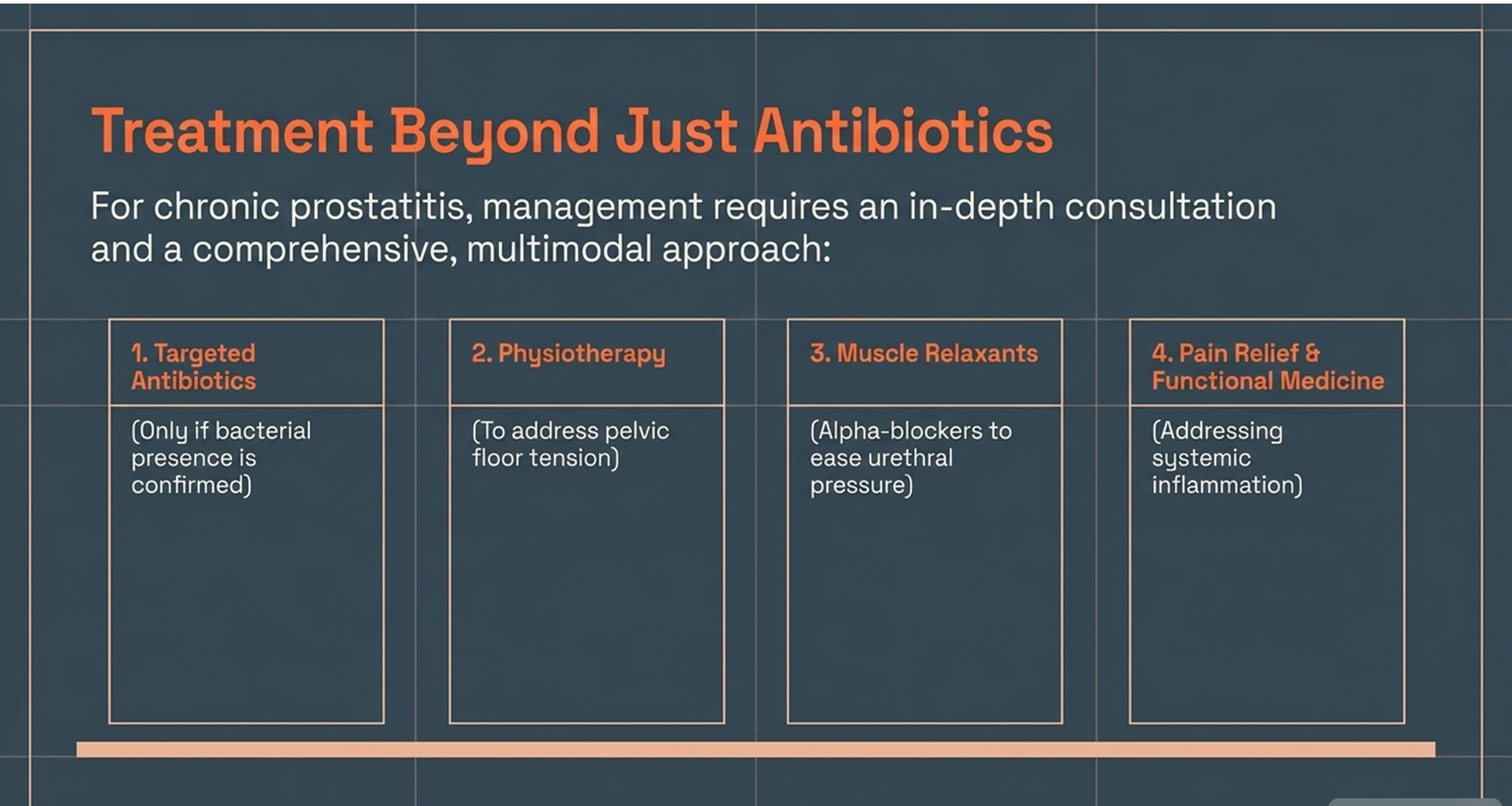
- For chronic prostatitis, management usually needs an in depth consultation and a multimodal approach, including antibiotics, physiotherapy, medications to relax the muscles such as alpha blockers, and pain relief.
- In functional medicine, there is often more that can be done for chronic prostatitis. If you think this may apply to you, get in touch for a full assessment.
The Key Points
- The prostate is a walnut sized gland below the bladder that helps produce semen and sits around the urethra.
- Chronic prostatitis is inflammation or pain in the prostate lasting 3 months or more, separate from BPH or prostate cancer.
- Risk factors include age 30 to 50, prolonged sitting, dehydration, diabetes, and catheterisation.
- Symptoms mimic a UTI exactly, but a negative dip and MSU are the clue to look for.
- Investigations usually involve a urine test and examination, with the NIH symptom index used to track severity in chronic cases.
- A normal cystoscopy or MRI rules out structural causes rather than meaning nothing is wrong.
- Trimethoprim reaches the prostate effectively, while nitrofurantoin does not.
- Treatment ranges from a short course of antibiotics for acute cases to a multimodal approach for chronic cases, including physiotherapy and muscle relaxing medication.
Why see the same doctor every time?
- One GP, start to finish. Dr Imran Mughal follows your case from the first appointment onward, not a different clinician each visit.
- No repeating your story. Chronic prostatitis often means years of being passed between departments. Message your own doctor directly instead.
- A plan built around you. Investigations and treatment are reviewed against your actual history, not treated as a fresh case each time.
What This Means For You
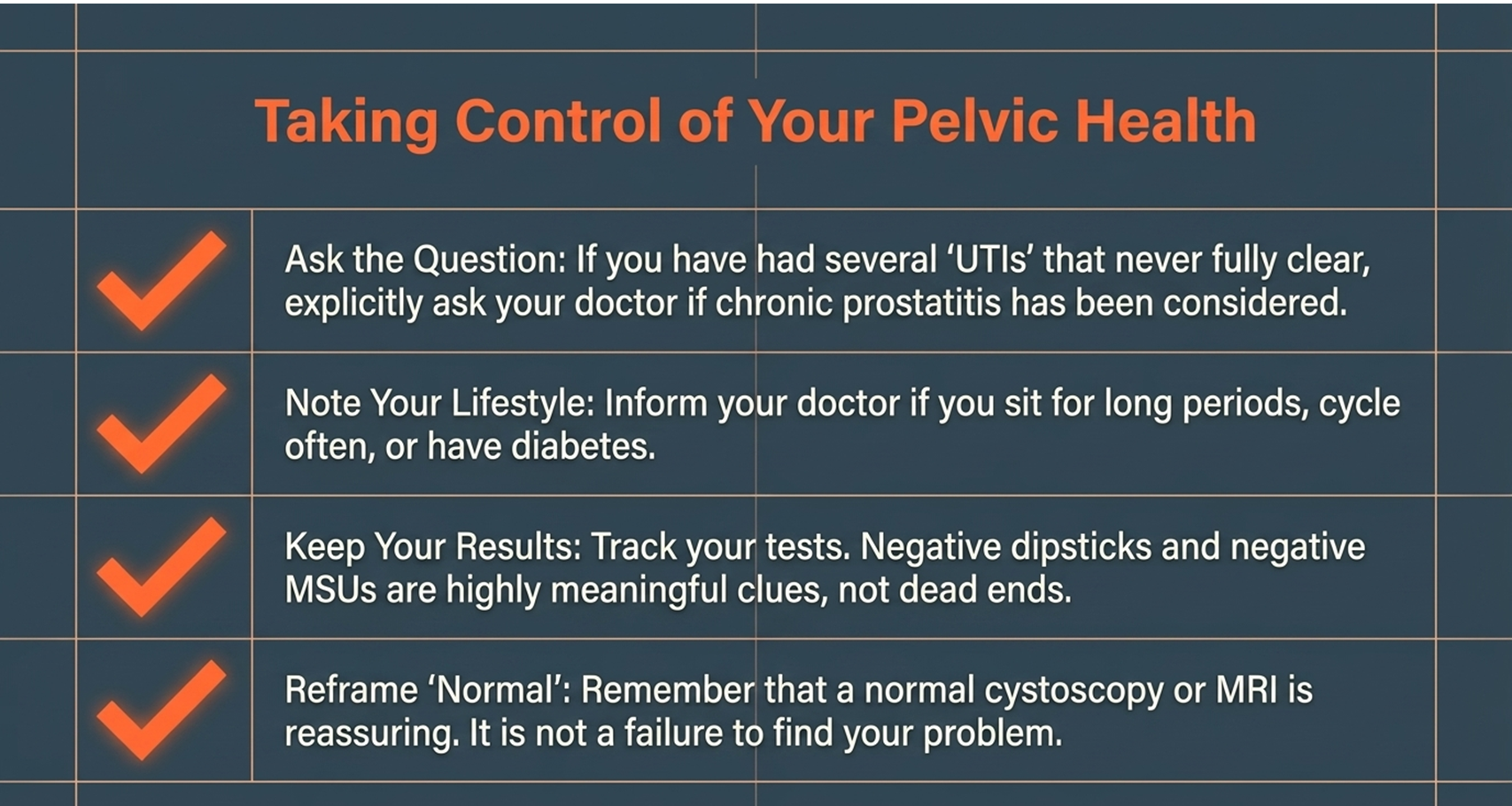
- If you’ve had several “UTIs” that never fully clear, ask whether chronic prostatitis has been considered.
- If you sit for long periods, cycle often, or have diabetes, be aware these raise your risk.
- Keep a note of your results. Negative dips and negative MSUs are meaningful, not a dead end.
- A normal cystoscopy or MRI is reassuring. It is not a failure to find your problem.
- At IM Clinic, we take time to look beyond the standard UTI pathway when the symptoms don’t add up.
Author: Dr Imran Mughal, Private Specialist GP
Website: www.imclinic.co.uk
Book a consultation: notes.thanksdoc.co.uk/book/clinic/im-clinic
References
American Academy of Family Physicians. Common Questions About Chronic Prostatitis. 2016.
Pendegast H, et al. Chronic Prostatitis and Chronic Pelvic Pain Syndrome in Men. StatPearls. 2024.
NICE. Prostatitis (acute): antimicrobial prescribing guideline, NG110. 2018.
American Urological Association. Diagnosis and Management of Male Chronic Pelvic Pain Guideline.







We would love to hear your thoughts. A few things to keep in mind before you post: