


Osteoarthritis: Why “Tear, Flare, Repair” Beats “Wear and Tear”
Osteoarthritis is one of the most common questions we get asked, on social media and in clinic.
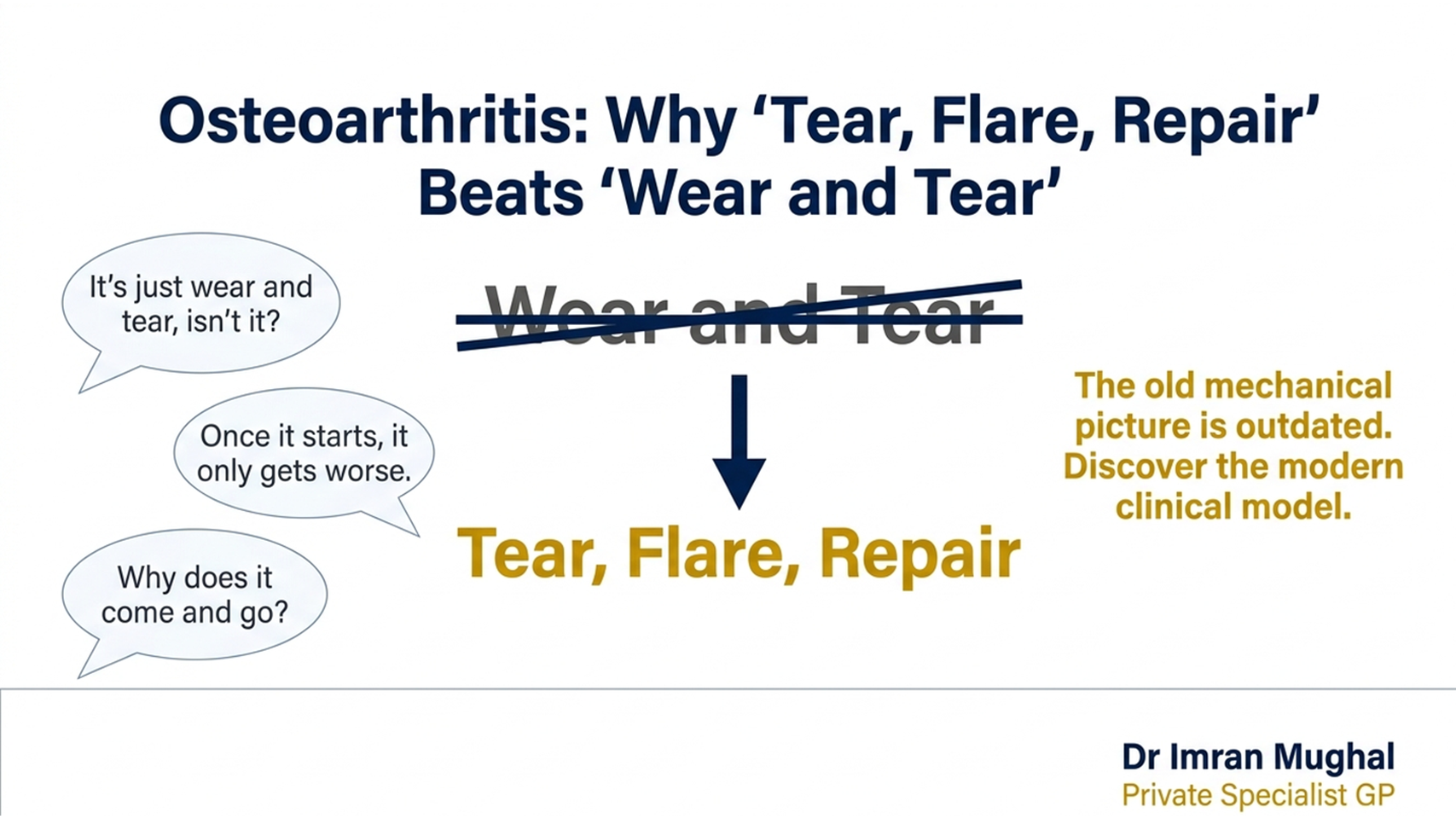
- “It’s just wear and tear, isn’t it.”
- “Once it starts, it only gets worse.”
- “Why does it come and go instead of just being constant?”
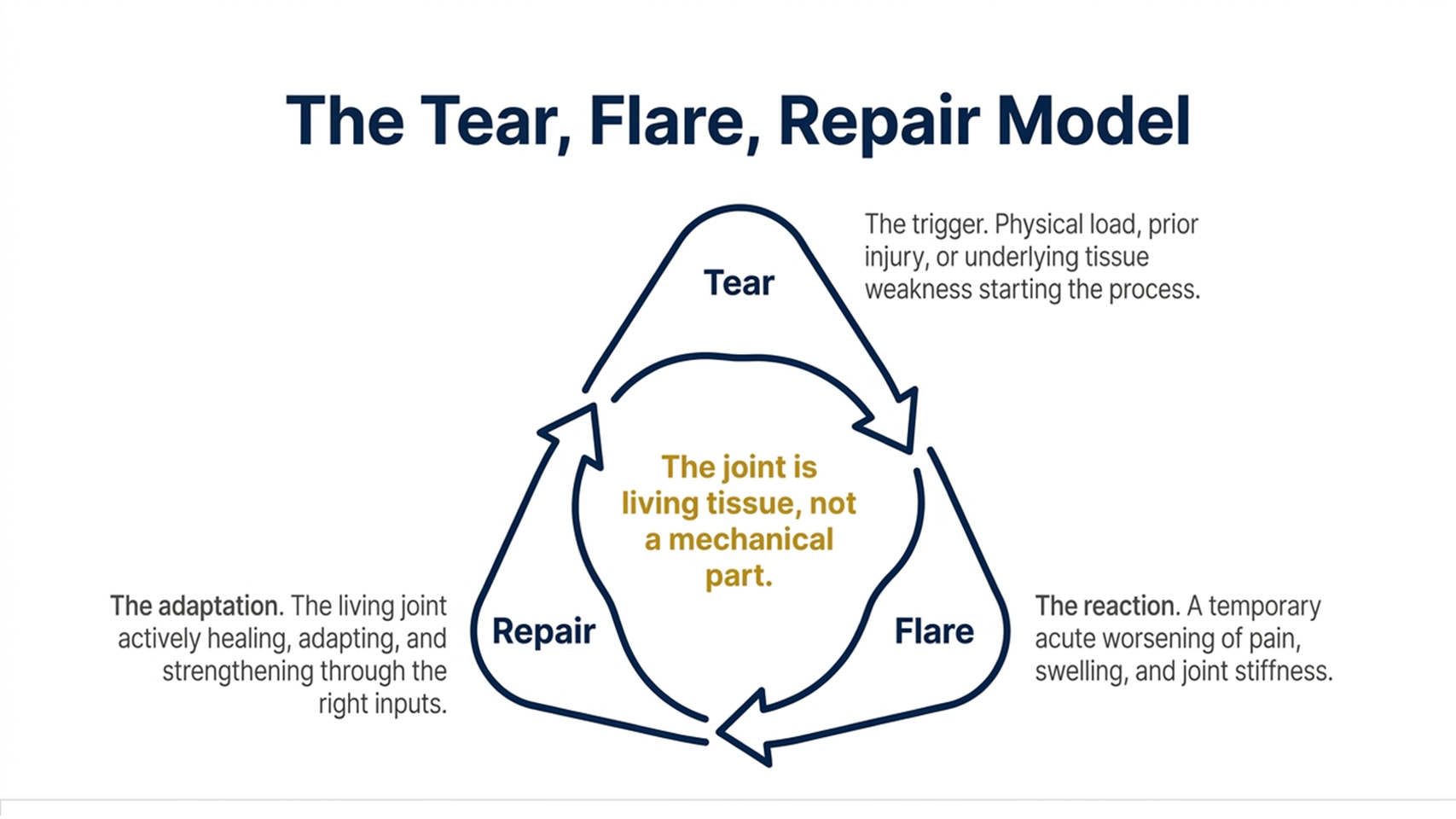
The old “wear and tear” picture doesn’t actually explain what’s happening. Modern clinical understanding uses a different model: tear, flare, and repair.
What Osteoarthritis Actually Is
Osteoarthritis (OA) is a chronic joint condition causing activity-related pain and reduced function.
- It typically affects the weight-bearing joints such as the knees, hips, hands, and foot joints.
- However, it can also affect the spine, mainly in the neck and lower back.
- It is the most common form of arthritis.
- Symptoms range from mild and occasional to severe and persistent.
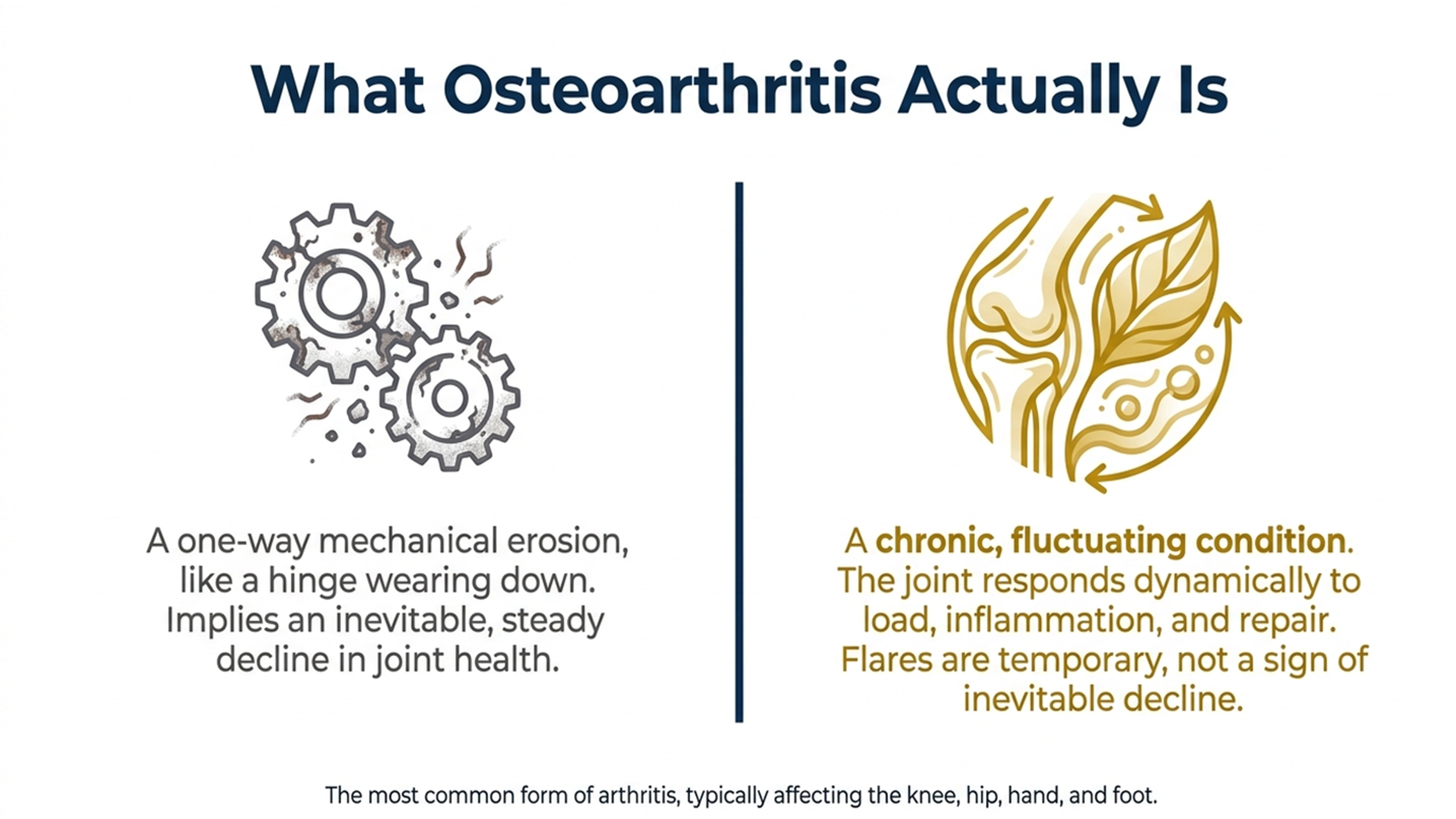
- Importantly, the condition does not inevitably get worse. Symptoms fluctuate, and flares are common rather than a sign of steady decline.
The old “wear and tear” language framed OA as a one-way mechanical erosion, like a hinge wearing down. That framing is outdated. The joint is living tissue, not a mechanical part, and it responds to load, inflammation and repair in a dynamic way. That is what “tear, flare, repair” describes.
Private specialist care, from one doctor
- Direct access to a Private Specialist GP, not a rotating team.
- Continuity that means nothing gets missed between appointments.
- Personalised care built around your full health picture, not just today’s symptom.
The Tear, Flare, Repair Model
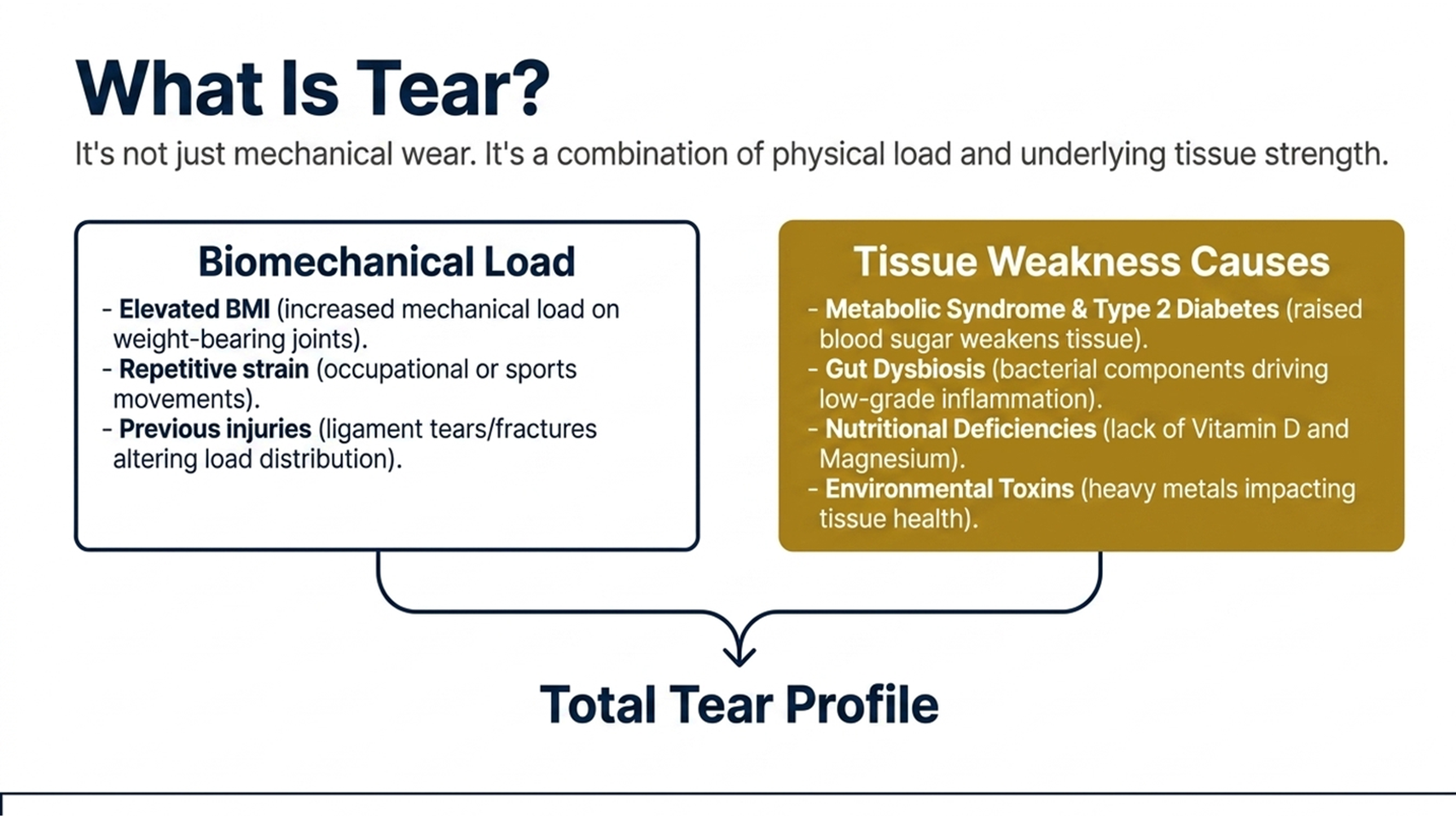
What Is Tear?
In plain terms: tear is what starts the problem in the joint. It is any change or stress to the joint tissue itself, whether that is from physical load, an old injury, or the tissue being weaker than it should be to begin with.
A tear does not only mean mechanical wear. It reflects a mix of biomechanical load and the underlying strength of the joint tissue itself.
Biomechanical causes:
- Elevated BMI. Extra body weight increases direct mechanical load on weight-bearing joints such as the knee and hip.
- Mechanical load. Repetitive strain from certain occupations, sports or movement patterns.
- Previous injury. An old ligament tear, fracture, or joint injury changes how load is distributed through the joint afterwards.
Tissue weakness causes:
Some people develop tears even without an obvious mechanical cause, because the cartilage and joint tissue itself is more vulnerable. This can come from:
- Metabolic syndrome, including insulin resistance, prediabetes, and type 2 diabetes. Raised blood sugar and insulin resistance are linked to weaker, more inflamed joint tissue, not just extra load from associated weight gain. This same metabolic dysfunction is often linked with conditions like fatty liver disease.
- Gut dysbiosis and endotoxaemia. An imbalanced gut microbiome can allow bacterial components into the bloodstream, driving low-grade inflammation that affects joint tissue.
- Nutritional deficiencies, particularly vitamin D and magnesium, both of which play a role in bone and joint tissue health.
- Lifestyle exposure to heavy metals and environmental toxins, a developing area of evidence rather than settled guidance, but worth including as a contributing factor.
This matters because tear is not always about what someone has physically done to their joint. Two people with identical activity levels can develop very different amounts of joint tear, depending on their metabolic health, gut health and nutritional status.
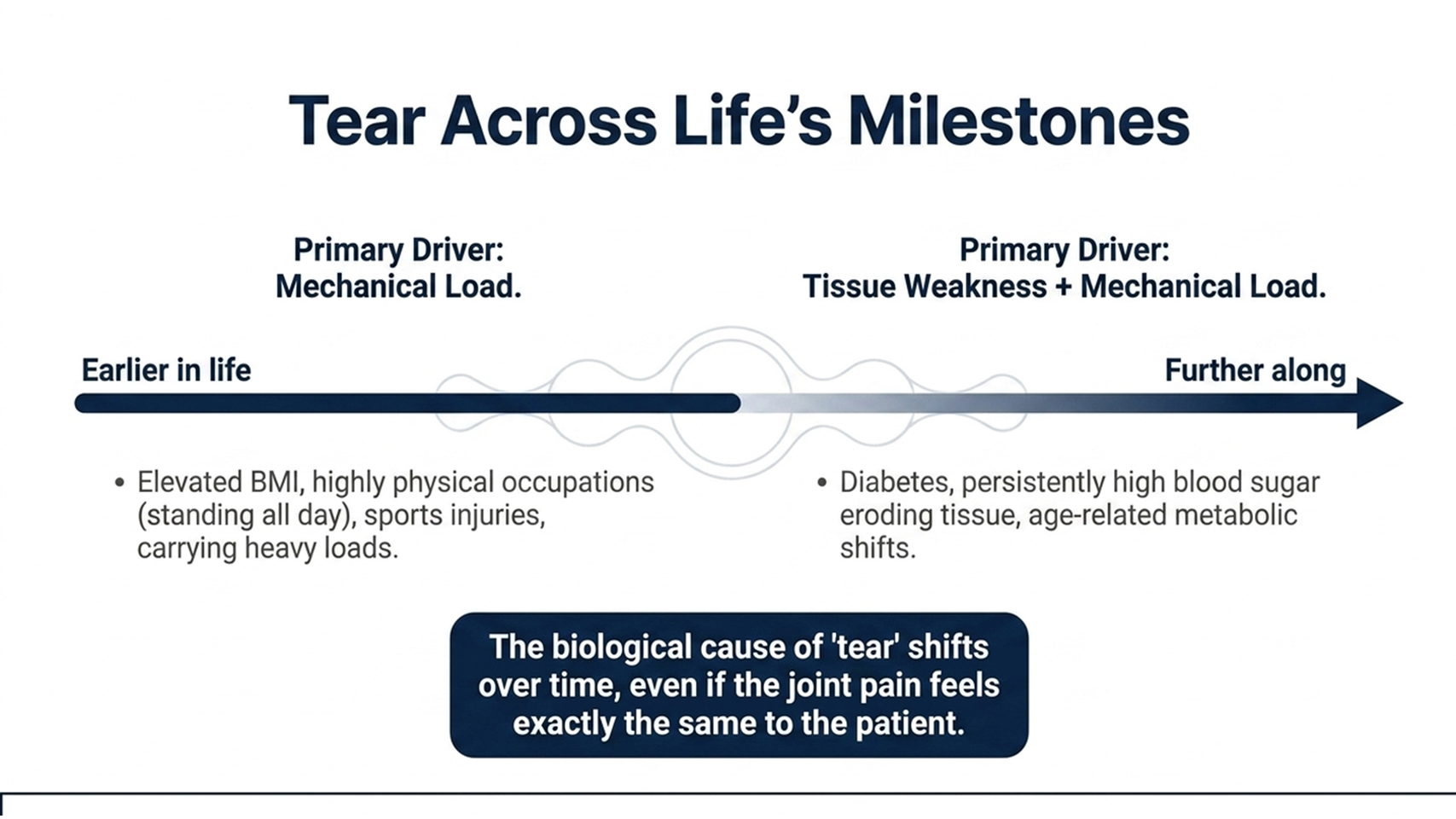
Tear Across Life’s Milestones
The balance between biomechanical and tissue-weakness tears tends to shift as people move through life.
- Earlier on: people with an elevated BMI are more prone to early tear, largely through mechanical load. This is compounded by certain kinds of work, particularly jobs that involve being on your feet all day, weight bearing, or carrying heavy loads.
- As people move further along life’s milestones, other conditions become more common, particularly diabetes. Poorly controlled diabetes means persistently high blood sugar, which can erode and weaken joint tissue over time, adding a tissue weakness driver on top of, or instead of, mechanical load.
The reason behind someone’s tear can look quite different depending on their stage of life and health background, even when the joint pain itself looks the same.
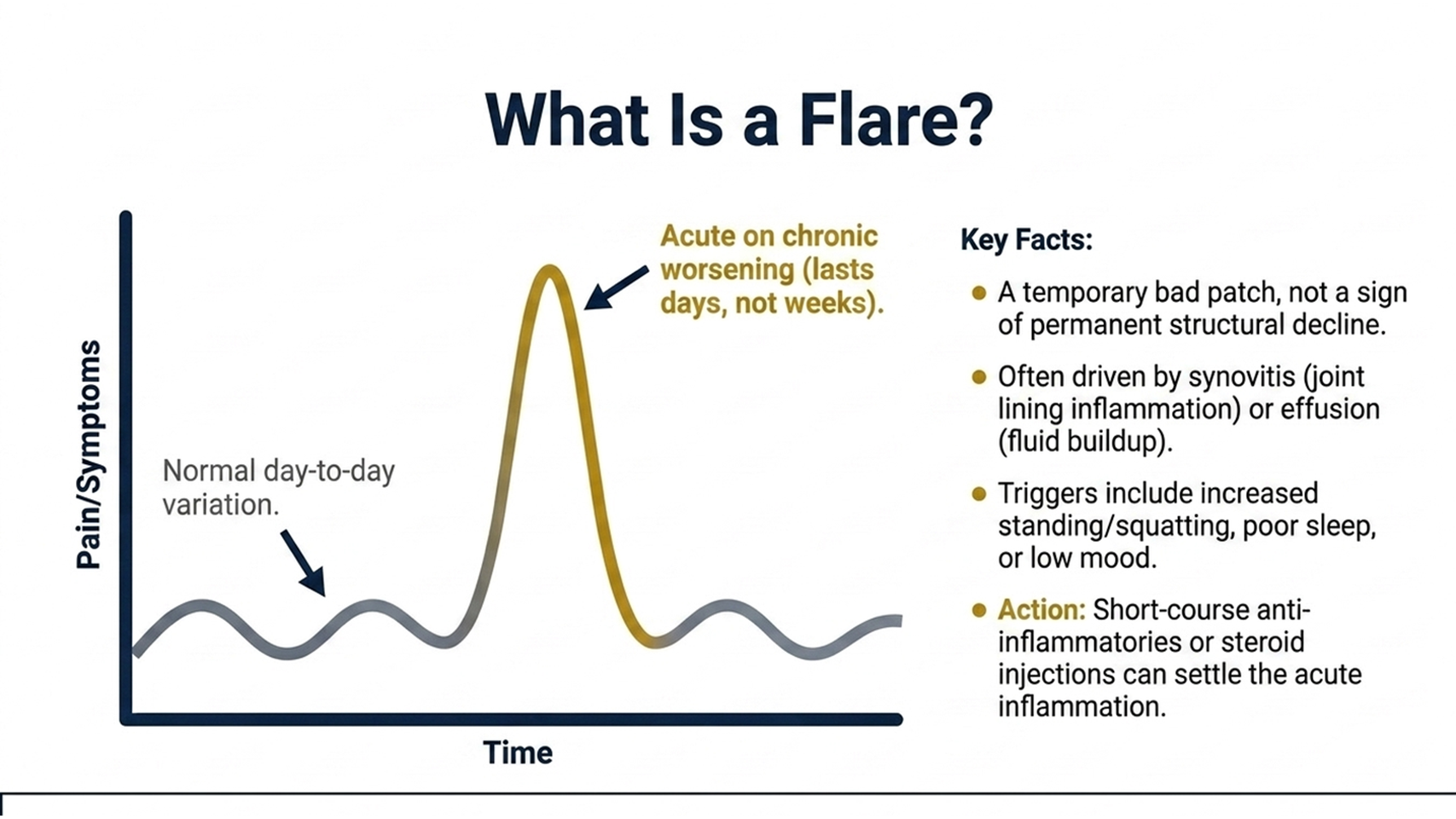
What Is a Flare?
In plain terms: a flare is a temporary bad patch. It is a short spell where pain, swelling and stiffness get noticeably worse than usual, then settle back down again.
- A flare is an acute-on-chronic, temporary worsening of pain, swelling and stiffness.
- Usually lasts a few days, and represents a drop in function beyond normal day-to-day variation.
- Can affect sleep, activity and mood, sometimes enough to need a short change in treatment.
- Triggers include activity such as increased standing, kneeling or squatting, and psychosocial factors such as poor sleep or low mood.
- Flares often involve synovitis (inflammation of the joint lining) or effusion (fluid buildup), which is why short courses of anti-inflammatory treatment, such as ibuprofen or naproxen, including steroid injections, can help during a flare specifically, rather than being needed all the time.
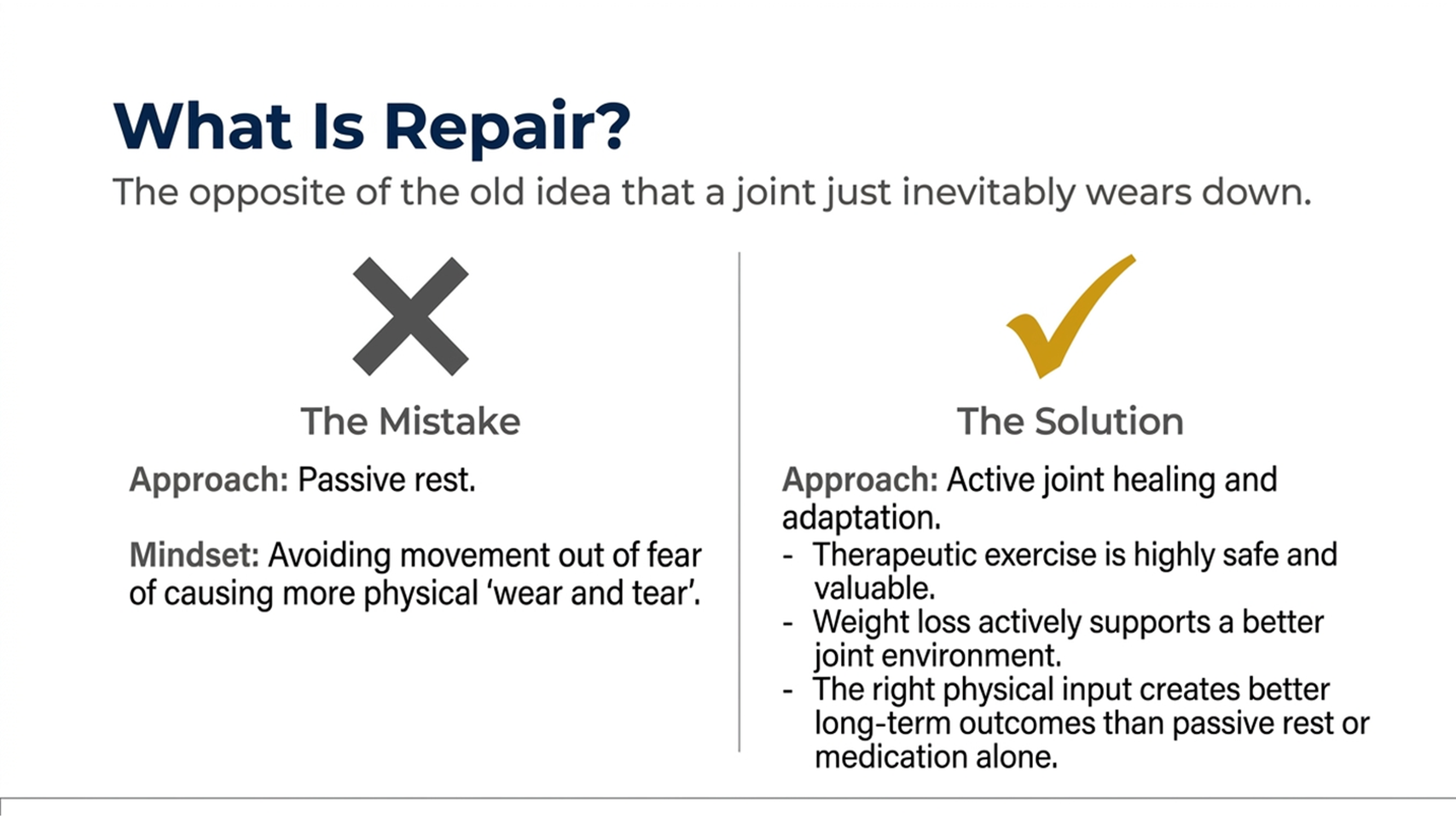
What Is Repair?
In plain terms: repair is the joint healing and adapting, and what you actively do to help that along. It is the opposite of the old idea that a joint just wears down and there is nothing to be done.
- Joints are not simply wearing out. Exercise is safe and valuable, not something to be avoided for fear of causing further damage.
- Therapeutic exercise and weight loss are the primary tools that support repair, not passive rest.
- The joint environment can genuinely improve with the right input, supporting better long-term outcomes than rest or medication alone.
(How to put this into practice, including the full NICE guidance and a lifestyle medicine approach, is covered in Part 2.)
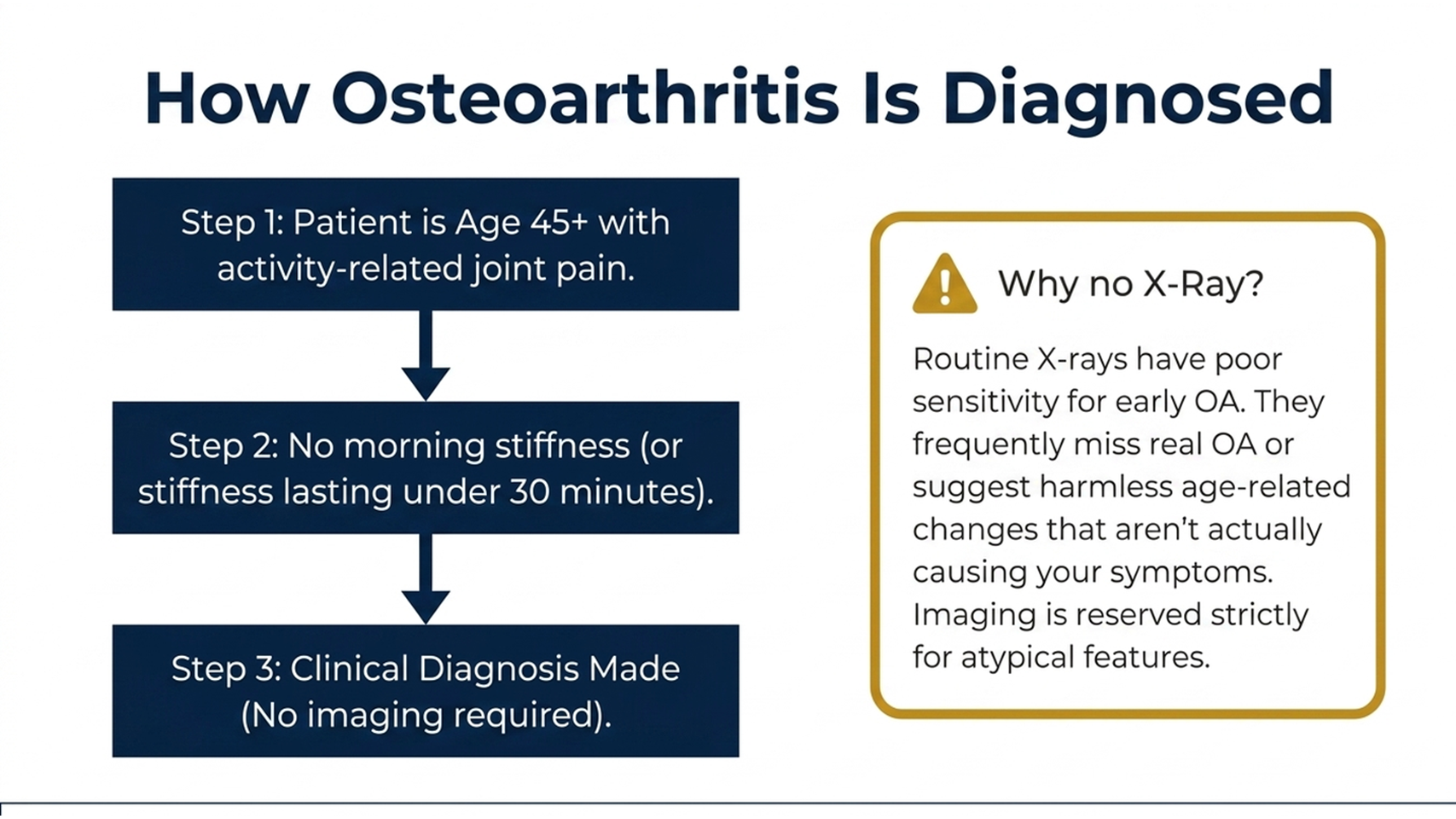
How Osteoarthritis Is Diagnosed
- Osteoarthritis can usually be diagnosed clinically, without imaging, in people 45 or older with activity-related joint pain and no morning stiffness, or stiffness lasting under 30 minutes.
- Routine X-rays are not recommended for initial diagnosis. They have poor sensitivity and specificity for early-stage disease, meaning they can miss real OA or suggest changes that are not actually causing the symptoms.
- Imaging is reserved for atypical features, or when another diagnosis is suspected.
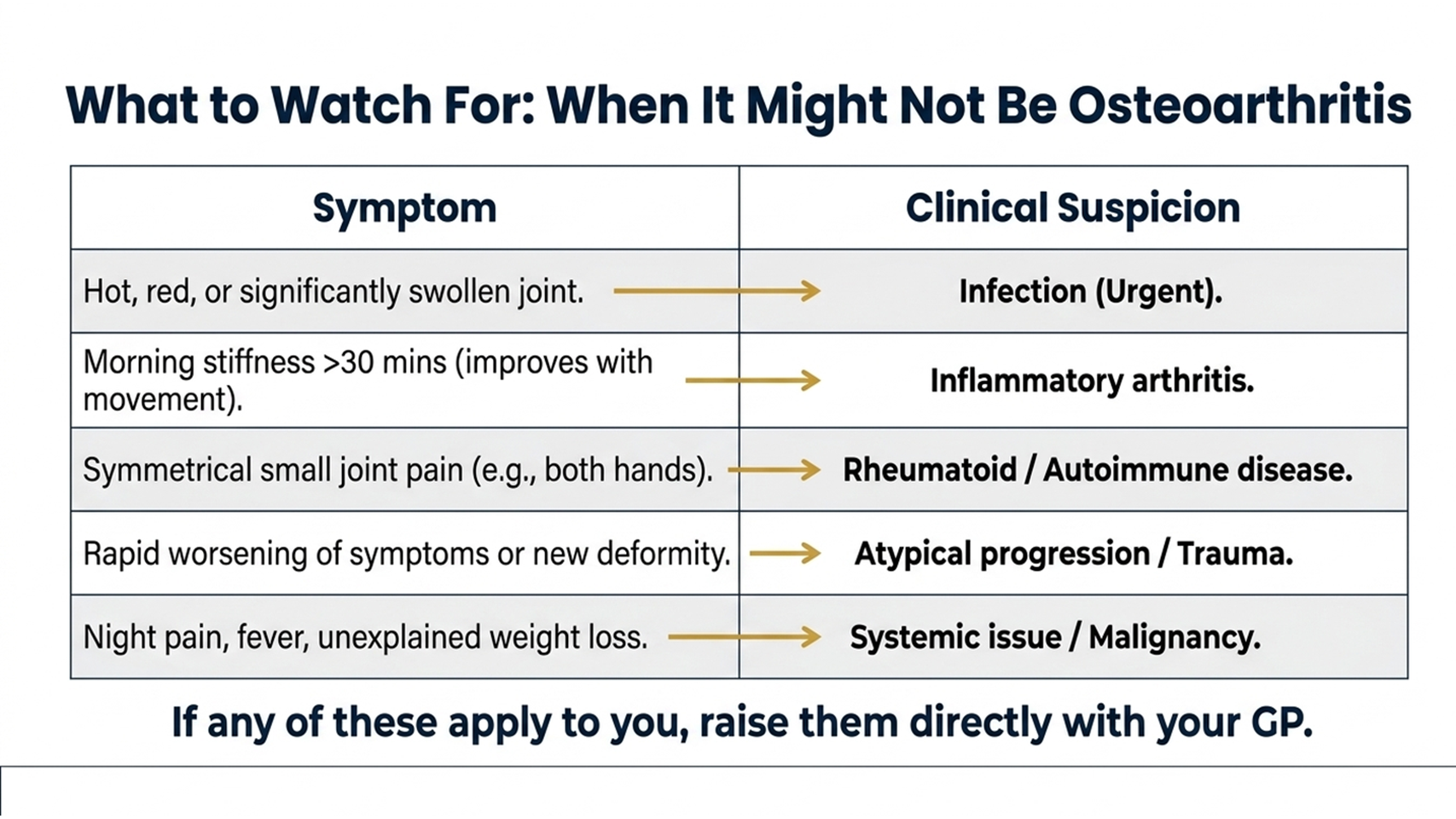
What to Watch For: When It Might Not Be Osteoarthritis
Most joint pain fitting the typical pattern is osteoarthritis. But certain features should prompt a second look, since they point towards a different or additional diagnosis, such as gout, rheumatoid or other inflammatory arthritis, septic arthritis, or in rare cases, malignancy.
- A hot, red, or significantly swollen joint. Not typical of osteoarthritis; needs urgent assessment to rule out infection.
- Prolonged morning stiffness, over 30 minutes, especially if it improves with movement rather than worsening with activity. This pattern points towards inflammatory arthritis rather than OA.
- Symmetrical small joint involvement, particularly in the hands, or a personal or family history of autoimmune disease. This should prompt specific screening for rheumatoid arthritis rather than assuming OA.
- Rapid worsening of symptoms or new deformity. Osteoarthritis typically progresses slowly, so a fast change is atypical.
- Recent significant trauma to the joint.
- Unexplained weight loss, fever, or night pain that wakes you up. Not typical osteoarthritis features, and warrant further investigation.
If any of these apply, this is worth raising directly with your GP rather than assuming it is simply osteoarthritis.
The Key Points
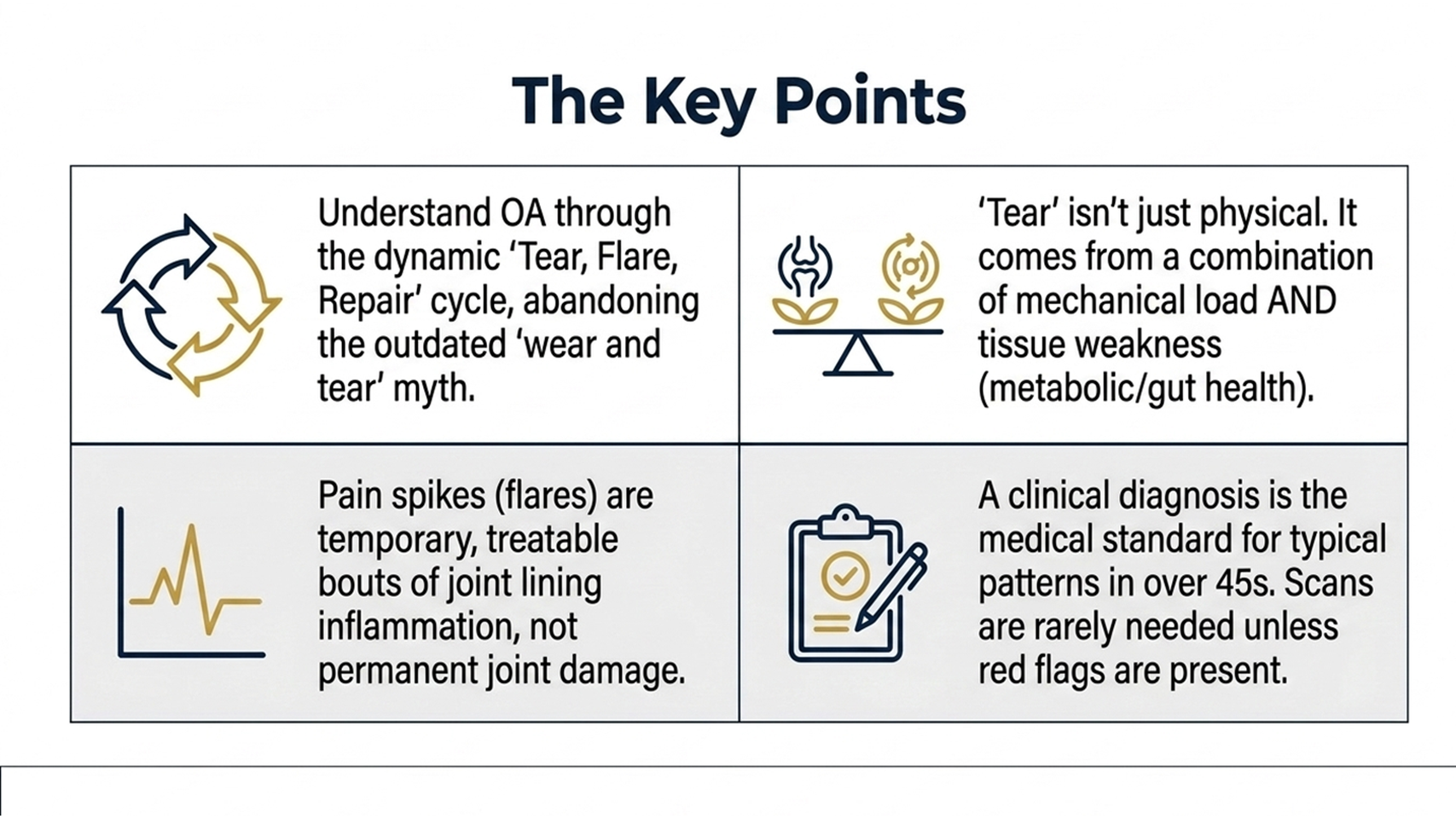
- Osteoarthritis is better understood through tear, flare and repair than the old wear and tear idea.
- Tear can come from mechanical load, or from underlying tissue weakness linked to metabolic health, gut health and nutrition, and often both at once.
- Flares are temporary, usually lasting a few days, and are often driven by inflammation in the joint lining.
- Diagnosis is usually clinical, without needing a scan, in people 45 or older with a typical pattern.
- Certain features, like a hot swollen joint, prolonged stiffness, or symmetrical hand involvement, mean it is worth checking for a different cause.
Private specialist care, from one doctor
- Direct access to a Private Specialist GP, not a rotating team.
- Continuity that means nothing gets missed between appointments.
- Personalised care built around your full health picture, not just today’s symptom.
What This Means For You
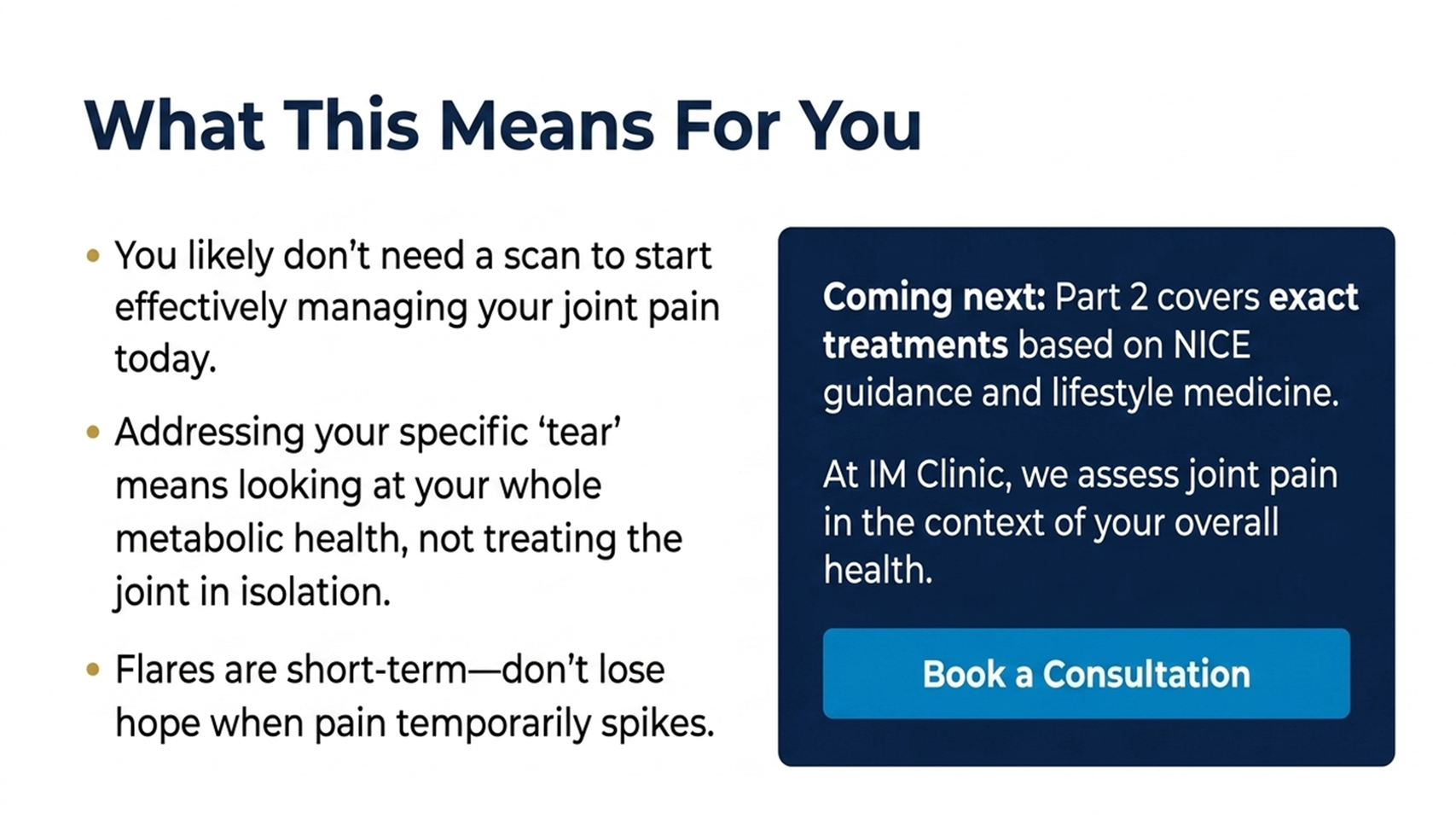
- If your joint pain fits the typical pattern, you likely do not need a scan to get a diagnosis or start managing it.
- Where your tear is coming from, whether mechanical load, tissue weakness, or both, shapes what is worth addressing, not just the joint itself.
- A flare does not mean things are getting steadily worse; it is usually a short-term, treatable episode.
- If you notice a hot, swollen joint, symmetrical hand pain, or unexplained weight loss alongside your joint symptoms, mention this specifically to your GP.
- Part 2 of this series covers exactly what helps, based on NICE guidance and a wider lifestyle medicine approach.
- At IM Clinic, we assess joint pain in the context of your overall health, not in isolation.
Author: Dr Imran Mughal, Private Specialist GP
Website: www.imclinic.co.uk
Book a consultation: Book a consultation
References
NICE. Osteoarthritis in over 16s: diagnosis and management (NG226). 2022. https://www.nice.org.uk/guidance/ng226
NICE. Osteoarthritis quality standard (QS87), Quality statement 1: Diagnosis. https://www.nice.org.uk/guidance/qs87/chapter/quality-statement-1-diagnosis
Wang X, Hunter D, Xu J, Ding C. Metabolic triggered inflammation in osteoarthritis. Osteoarthritis and Cartilage. 2015. https://www.sciencedirect.com/science/article/pii/S1063458414012801
Thomas S, Browne H, Mobasheri A, Rayman MP. What is the evidence for a role for diet and nutrition in osteoarthritis? Rheumatology. 2018. https://pubmed.ncbi.nlm.nih.gov/29684218/





We would love to hear your thoughts. A few things to keep in mind before you post: